00019415362025FYFALSEP1Yhttp://fasb.org/us-gaap/2025#RevenueFromContractWithCustomerExcludingAssessedTaxhttp://fasb.org/us-gaap/2025#RevenueFromContractWithCustomerExcludingAssessedTax0.05555550.0833333http://fasb.org/us-gaap/2025#OtherAssetsNoncurrenthttp://fasb.org/us-gaap/2025#OtherAssetsNoncurrenthttp://fasb.org/us-gaap/2025#AccruedLiabilitiesCurrenthttp://fasb.org/us-gaap/2025#AccruedLiabilitiesCurrenthttp://fasb.org/us-gaap/2025#AccountsPayableAndAccruedLiabilitiesNoncurrenthttp://fasb.org/us-gaap/2025#AccountsPayableAndAccruedLiabilitiesNoncurrent1iso4217:USDxbrli:sharesiso4217:USDxbrli:sharesbaer:aircraftxbrli:purebaer:tranchebaer:boardMemberiso4217:EURbaer:hourbaer:paymentbaer:creditFacilitybaer:propertybaer:hangarutr:sqftbaer:leaseAgreementbaer:executivebaer:segment00019415362025-01-012025-12-310001941536us-gaap:WarrantMember2025-01-012025-12-3100019415362025-06-3000019415362026-03-0300019415362025-12-3100019415362024-12-310001941536us-gaap:SeriesAPreferredStockMember2024-12-310001941536us-gaap:SeriesAPreferredStockMember2025-12-310001941536us-gaap:RelatedPartyMember2025-12-310001941536us-gaap:RelatedPartyMember2024-12-3100019415362024-01-012024-12-310001941536us-gaap:RelatedPartyMember2025-01-012025-12-310001941536us-gaap:RelatedPartyMember2024-01-012024-12-310001941536baer:ReportableSegmentMember2025-01-012025-12-310001941536baer:ReportableSegmentMember2024-01-012024-12-3100019415362023-12-310001941536us-gaap:CommonStockMember2023-12-310001941536us-gaap:AdditionalPaidInCapitalMember2023-12-310001941536us-gaap:RetainedEarningsMember2023-12-310001941536us-gaap:AccumulatedOtherComprehensiveIncomeMember2023-12-310001941536us-gaap:RetainedEarningsMember2024-01-012024-12-310001941536us-gaap:AccumulatedOtherComprehensiveIncomeMember2024-01-012024-12-310001941536us-gaap:CommonStockMember2024-01-012024-12-310001941536us-gaap:AdditionalPaidInCapitalMember2024-01-012024-12-310001941536us-gaap:SeriesAPreferredStockMember2024-01-012024-12-310001941536us-gaap:SeriesAPreferredStockMemberus-gaap:AdditionalPaidInCapitalMember2024-01-012024-12-310001941536us-gaap:CommonStockMember2024-12-310001941536us-gaap:AdditionalPaidInCapitalMember2024-12-310001941536us-gaap:RetainedEarningsMember2024-12-310001941536us-gaap:AccumulatedOtherComprehensiveIncomeMember2024-12-310001941536us-gaap:RetainedEarningsMember2025-01-012025-12-310001941536us-gaap:AccumulatedOtherComprehensiveIncomeMember2025-01-012025-12-310001941536us-gaap:SeriesAPreferredStockMember2025-01-012025-12-310001941536us-gaap:SeriesAPreferredStockMemberus-gaap:AdditionalPaidInCapitalMember2025-01-012025-12-310001941536us-gaap:CommonStockMember2025-01-012025-12-310001941536us-gaap:AdditionalPaidInCapitalMember2025-01-012025-12-310001941536us-gaap:CommonStockMember2025-12-310001941536us-gaap:AdditionalPaidInCapitalMember2025-12-310001941536us-gaap:RetainedEarningsMember2025-12-310001941536us-gaap:AccumulatedOtherComprehensiveIncomeMember2025-12-310001941536baer:CL415EAFMember2025-01-012025-12-310001941536baer:CanadairCL215TMember2025-01-012025-12-310001941536baer:DaherKodiaks100Member2025-01-012025-12-310001941536baer:PilatusPC12Member2025-01-012025-12-310001941536baer:BeechcraftKingAir350Member2025-01-012025-12-310001941536baer:TwinCommanderSurveillanceMember2025-01-012025-12-310001941536baer:KingAirAircraftMemberbaer:AircraftMember2025-10-012025-10-010001941536baer:HangarAndOfficeFacilitiesAtTheBozemanYellowstoneInternationalAirportMember2025-10-282025-10-280001941536baer:Series2022BondsMember2025-10-280001941536us-gaap:SecuredDebtMemberbaer:InitialTermLoansMemberus-gaap:LineOfCreditMember2025-10-280001941536us-gaap:RevolvingCreditFacilityMemberbaer:RevolverMemberus-gaap:LineOfCreditMember2025-10-280001941536us-gaap:SecuredDebtMemberbaer:DelayedDrawTermLoan1Memberus-gaap:LineOfCreditMember2025-10-280001941536baer:Series2022BondsMember2025-10-282025-10-280001941536us-gaap:DelayedDrawTermLoanMemberbaer:DelayedDrawTermLoan1Memberus-gaap:LineOfCreditMember2025-12-172025-12-170001941536baer:PilatusPC12Memberbaer:AircraftMember2025-12-170001941536baer:PilatusPC12Memberbaer:AircraftMember2025-12-172025-12-170001941536baer:SpanishScoopersMemberbaer:AircraftMember2025-12-310001941536baer:SpanishScoopersMemberbaer:AircraftMember2025-12-312025-12-310001941536baer:LegacyBridgerMemberbaer:LegacyBridgerIncentiveUnitsMember2023-01-242023-01-240001941536baer:LegacyBridgerMemberbaer:LegacyBridgerIncentiveUnitsMember2023-01-240001941536baer:LegacyBridgerMemberbaer:LegacyBridgerCommonSharesMember2023-01-242023-01-240001941536baer:LegacyBridgerMemberbaer:LegacyBridgerCommonSharesMember2023-01-240001941536baer:LegacyBridgerMemberbaer:LegacyBridgerSeriesCPreferredSharesMember2023-01-242023-01-2400019415362023-01-240001941536baer:LegacyBridgerMemberus-gaap:SeriesAPreferredStockMember2023-01-242023-01-2400019415362023-01-242023-01-240001941536baer:JackCreekInvestmentCorpMemberbaer:SponsorEarnoutSharesMember2023-01-242023-01-240001941536us-gaap:SeriesAPreferredStockMember2023-01-240001941536baer:PrivatePlacementWarrantsMember2023-01-240001941536baer:PublicWarrantsMember2023-01-240001941536us-gaap:RestrictedStockUnitsRSUMember2023-01-240001941536baer:NorthernFireManagementServicesLLCMemberus-gaap:VariableInterestEntityPrimaryBeneficiaryMemberbaer:BridgerAerospaceGroupLLCMember2025-01-012025-12-310001941536baer:NorthernFireManagementServicesLLCMemberbaer:CanadianCitizenMember2025-01-012025-12-3100019415362023-11-170001941536us-gaap:PreferredClassBMember2023-11-172023-11-170001941536baer:SpanishScoopersMemberbaer:MABMemberbaer:AircraftMember2025-12-230001941536baer:SpanishScoopersMemberbaer:MABMemberbaer:AircraftMember2025-12-232025-12-230001941536srt:MinimumMemberbaer:AircraftEnginesAndRotablePartsMember2025-12-310001941536srt:MaximumMemberbaer:AircraftEnginesAndRotablePartsMember2025-12-310001941536srt:MinimumMemberbaer:VehiclesEquipmentMember2025-12-310001941536srt:MaximumMemberbaer:VehiclesEquipmentMember2025-12-310001941536us-gaap:BuildingMember2025-12-310001941536srt:MinimumMemberus-gaap:LeaseholdImprovementsMember2025-12-310001941536srt:MinimumMember2025-12-310001941536srt:MaximumMember2025-12-3100019415362024-01-0100019415362026-01-012025-12-3100019415362027-01-012025-12-310001941536baer:FireSuppressionMember2025-01-012025-12-310001941536baer:FireSuppressionMember2024-01-012024-12-310001941536baer:AerialSurveillanceMember2025-01-012025-12-310001941536baer:AerialSurveillanceMember2024-01-012024-12-310001941536baer:MaintenanceRepairMember2025-01-012025-12-310001941536baer:MaintenanceRepairMember2024-01-012024-12-310001941536baer:OtherServicesMember2025-01-012025-12-310001941536baer:OtherServicesMember2024-01-012024-12-310001941536country:US2025-01-012025-12-310001941536country:US2024-01-012024-12-310001941536country:ES2025-01-012025-12-310001941536country:ES2024-01-012024-12-310001941536baer:CustomerOneMemberus-gaap:CustomerConcentrationRiskMemberus-gaap:RevenueFromContractWithCustomerMember2025-01-012025-12-310001941536baer:CustomerTwoMemberus-gaap:CustomerConcentrationRiskMemberus-gaap:RevenueFromContractWithCustomerMember2025-01-012025-12-310001941536baer:CustomerThreeMemberus-gaap:CustomerConcentrationRiskMemberus-gaap:RevenueFromContractWithCustomerMember2025-01-012025-12-310001941536baer:CustomerOneMemberus-gaap:CustomerConcentrationRiskMemberus-gaap:RevenueFromContractWithCustomerMember2024-01-012024-12-310001941536baer:CustomerTwoMemberus-gaap:CustomerConcentrationRiskMemberus-gaap:RevenueFromContractWithCustomerMember2024-01-012024-12-310001941536baer:CustomerOneMemberus-gaap:CustomerConcentrationRiskMemberus-gaap:AccountsReceivableMember2025-01-012025-12-310001941536baer:CustomerTwoMemberus-gaap:CustomerConcentrationRiskMemberus-gaap:AccountsReceivableMember2025-01-012025-12-310001941536baer:CustomerOneMemberus-gaap:CustomerConcentrationRiskMemberus-gaap:AccountsReceivableMember2024-01-012024-12-310001941536baer:CustomerTwoMemberus-gaap:CustomerConcentrationRiskMemberus-gaap:AccountsReceivableMember2024-01-012024-12-310001941536baer:CustomerThreeMemberus-gaap:CustomerConcentrationRiskMemberus-gaap:AccountsReceivableMember2024-01-012024-12-310001941536us-gaap:RestrictedStockUnitsRSUMember2025-12-310001941536baer:IgnisTechnologyMember2025-01-012025-12-310001941536baer:IgnisTechnologyMember2024-01-012024-12-310001941536baer:FMSAerospaceMember2025-01-012025-12-310001941536baer:FMSAerospaceMember2024-01-012024-12-310001941536us-gaap:MoneyMarketFundsMember2025-12-310001941536us-gaap:MoneyMarketFundsMember2024-12-310001941536us-gaap:TradeAccountsReceivableMember2025-12-310001941536us-gaap:TradeAccountsReceivableMember2024-12-310001941536baer:ContractAssetsMember2025-12-310001941536baer:ContractAssetsMember2024-12-310001941536baer:ForeignTaxReceivableMember2025-12-310001941536baer:ForeignTaxReceivableMember2024-12-310001941536baer:VehiclesAndEquipmentMember2025-12-310001941536baer:VehiclesAndEquipmentMember2024-12-310001941536us-gaap:BuildingMember2024-12-310001941536us-gaap:LeaseholdImprovementsMember2025-12-310001941536us-gaap:LeaseholdImprovementsMember2024-12-310001941536us-gaap:LicenseMember2025-12-310001941536us-gaap:LicenseMember2024-12-310001941536us-gaap:SoftwareAndSoftwareDevelopmentCostsMember2025-12-310001941536us-gaap:SoftwareAndSoftwareDevelopmentCostsMember2024-12-310001941536us-gaap:ConstructionInProgressMember2025-12-310001941536us-gaap:ConstructionInProgressMember2024-12-310001941536us-gaap:CostOfSalesMember2025-01-012025-12-310001941536us-gaap:SellingGeneralAndAdministrativeExpensesMember2025-01-012025-12-310001941536us-gaap:CostOfSalesMember2024-01-012024-12-310001941536us-gaap:SellingGeneralAndAdministrativeExpensesMember2024-01-012024-12-310001941536baer:FairValueMemberbaer:FMSAerospaceMember2024-06-282024-06-280001941536baer:FairValueMemberbaer:FMSAerospaceMemberus-gaap:RestrictedStockMember2024-06-282024-06-280001941536baer:FMSAerospaceMember2024-06-282024-06-280001941536baer:FMSAerospaceMember2025-12-310001941536baer:FMSAerospaceMember2024-07-012025-12-310001941536baer:FMSAerospaceMember2024-06-280001941536baer:FMSAerospaceMember2025-03-310001941536baer:FMSAerospaceMember2025-03-312025-03-310001941536baer:FMSAerospaceMember2024-12-310001941536baer:FMSAerospaceMember2025-01-012025-03-310001941536baer:FMSAerospaceMemberus-gaap:TradeNamesMember2025-12-310001941536baer:FMSAerospaceMemberus-gaap:CustomerRelationshipsMember2025-12-310001941536baer:FMSAerospaceMemberus-gaap:CustomerContractsMember2025-12-310001941536baer:BAGHReportingUnitMember2024-12-310001941536baer:BAGHReportingUnitMember2025-12-310001941536us-gaap:InProcessResearchAndDevelopmentMember2025-12-310001941536us-gaap:CustomerContractsMember2025-12-310001941536us-gaap:TradeNamesMember2025-12-310001941536us-gaap:ComputerSoftwareIntangibleAssetMember2025-12-310001941536us-gaap:CustomerRelationshipsMember2025-12-310001941536us-gaap:LicensingAgreementsMember2025-12-310001941536us-gaap:CustomerContractsMember2024-12-310001941536us-gaap:InProcessResearchAndDevelopmentMember2024-12-310001941536us-gaap:TradeNamesMember2024-12-310001941536us-gaap:ComputerSoftwareIntangibleAssetMember2024-12-310001941536us-gaap:CustomerRelationshipsMember2024-12-310001941536us-gaap:LicensingAgreementsMember2024-12-310001941536baer:JCICPublicWarrantsMember2023-01-240001941536baer:PublicWarrantsMember2025-01-012025-12-310001941536baer:PublicWarrantsMembersrt:MaximumMember2025-12-310001941536baer:PublicWarrantsMemberus-gaap:CommonStockMember2025-01-012025-12-310001941536baer:PublicWarrantsMembersrt:MinimumMemberus-gaap:CommonStockMember2025-12-310001941536baer:PublicWarrantsMembersrt:MaximumMemberus-gaap:CommonStockMember2025-12-310001941536baer:PublicWarrantsMember2024-12-310001941536baer:PublicWarrantsMember2025-12-310001941536baer:JCICPrivatePlacementWarrantsMember2023-01-240001941536baer:PrivatePlacementWarrantsMember2024-12-310001941536baer:PrivatePlacementWarrantsMember2025-12-310001941536baer:PrivatePlacementWarrantsMemberus-gaap:CommonStockMember2025-12-310001941536baer:PrivatePlacementWarrantsMemberus-gaap:CommonStockMember2024-12-310001941536baer:IgnisTechnologyMemberus-gaap:RestrictedStockMember2025-04-012025-06-300001941536baer:IgnisTechnologyMember2025-04-012025-06-300001941536baer:IgnisTechnologyMemberus-gaap:RestrictedStockMember2025-06-300001941536baer:IgnisTechnologyMember2025-12-310001941536baer:FMSAerospaceMember2025-04-012025-06-300001941536baer:FMSAcquisitionMergerMember2025-01-012025-12-310001941536baer:FMSAcquisitionMergerMember2024-01-012024-12-310001941536baer:SOFR0.11448Member2025-12-310001941536baer:ContractualSOFRMarginMember2025-12-310001941536us-gaap:InterestRateSwapMember2024-12-310001941536baer:LongTermDebtBearingFixedInterestRateMemberus-gaap:FairValueInputsLevel2Member2025-12-310001941536baer:LongTermDebtBearingVariableInterestRateMemberus-gaap:FairValueInputsLevel2Member2025-12-310001941536baer:LongTermDebtBearingFixedInterestRateMemberus-gaap:FairValueInputsLevel2Member2024-12-310001941536baer:LongTermDebtBearingVariableInterestRateMemberus-gaap:FairValueInputsLevel2Member2024-12-310001941536baer:LongTermDebtBearingFixedInterestRateMemberus-gaap:EstimateOfFairValueFairValueDisclosureMemberus-gaap:FairValueInputsLevel2Member2024-12-310001941536us-gaap:FairValueInputsLevel1Member2025-12-310001941536us-gaap:FairValueInputsLevel2Member2025-12-310001941536us-gaap:FairValueInputsLevel3Member2025-12-310001941536baer:PublicWarrantsMemberus-gaap:FairValueInputsLevel1Member2025-12-310001941536baer:PublicWarrantsMemberus-gaap:FairValueInputsLevel2Member2025-12-310001941536baer:PublicWarrantsMemberus-gaap:FairValueInputsLevel3Member2025-12-310001941536baer:PrivatePlacementWarrantsMemberus-gaap:FairValueInputsLevel1Member2025-12-310001941536baer:PrivatePlacementWarrantsMemberus-gaap:FairValueInputsLevel2Member2025-12-310001941536baer:PrivatePlacementWarrantsMemberus-gaap:FairValueInputsLevel3Member2025-12-310001941536us-gaap:FairValueInputsLevel1Member2024-12-310001941536us-gaap:FairValueInputsLevel2Member2024-12-310001941536us-gaap:FairValueInputsLevel3Member2024-12-310001941536us-gaap:MoneyMarketFundsMemberus-gaap:FairValueInputsLevel1Member2024-12-310001941536us-gaap:MoneyMarketFundsMemberus-gaap:FairValueInputsLevel2Member2024-12-310001941536us-gaap:MoneyMarketFundsMemberus-gaap:FairValueInputsLevel3Member2024-12-310001941536baer:PublicWarrantsMemberus-gaap:FairValueInputsLevel1Member2024-12-310001941536baer:PublicWarrantsMemberus-gaap:FairValueInputsLevel2Member2024-12-310001941536baer:PublicWarrantsMemberus-gaap:FairValueInputsLevel3Member2024-12-310001941536baer:PrivatePlacementWarrantsMemberus-gaap:FairValueInputsLevel1Member2024-12-310001941536baer:PrivatePlacementWarrantsMemberus-gaap:FairValueInputsLevel2Member2024-12-310001941536baer:PrivatePlacementWarrantsMemberus-gaap:FairValueInputsLevel3Member2024-12-310001941536baer:PublicWarrantsMember2025-01-012025-12-310001941536baer:PublicAndPrivatePlacementWarrantsMember2025-01-012025-12-310001941536baer:PrivatePlacementWarrantsMember2025-01-012025-12-310001941536baer:Series2022BondsMember2022-07-212022-07-210001941536baer:Series2022BondsMember2022-08-102022-08-100001941536baer:Series2022BondsMember2022-07-210001941536baer:UMBLoanAircraftHangarMember2019-09-300001941536baer:UMBLoanAircraftHangarMember2019-09-302019-09-300001941536baer:UMBLoanAircraftHangarMemberus-gaap:SecuredOvernightFinancingRateSofrMember2019-09-302019-09-3000019415362020-12-310001941536baer:LiveOakBankMemberus-gaap:PrimeRateMemberbaer:LiveOakBankBAT2Member2020-08-210001941536baer:LiveOakBankMemberus-gaap:PrimeRateMemberbaer:LiveOakBankBAT1Member2020-10-010001941536baer:LiveOakBankMemberus-gaap:PrimeRateMemberbaer:LiveOakBankBAT2Member2020-08-212020-08-210001941536baer:LiveOakBankMemberus-gaap:PrimeRateMemberbaer:LiveOakBankBAT1Member2020-10-012020-10-010001941536us-gaap:DelayedDrawTermLoanMemberbaer:DelayedDrawTermLoan1Memberus-gaap:LineOfCreditMember2025-10-280001941536baer:A2025CreditAgreementMemberus-gaap:LineOfCreditMember2025-10-280001941536baer:A2025CreditAgreementMemberus-gaap:LineOfCreditMember2025-10-282025-10-280001941536us-gaap:SecuredDebtMemberbaer:InitialTermLoansMemberus-gaap:LineOfCreditMember2025-12-310001941536us-gaap:DelayedDrawTermLoanMemberbaer:DelayedDrawTermLoan1Memberus-gaap:LineOfCreditMember2025-12-310001941536us-gaap:RevolvingCreditFacilityMemberbaer:RevolverMemberus-gaap:LineOfCreditMember2025-12-310001941536baer:UMBLoanAircraftHangarSeries2022BondsMember2025-10-282025-10-2800019415362025-10-280001941536baer:LiveOakBankBAT2Member2025-10-282025-10-280001941536baer:LiveOakBankBAT1Member2025-10-282025-10-280001941536baer:Series2022BondsUMBLoanTwoCreditFacilitiesWithLiveOakBankMember2025-01-012025-12-310001941536baer:Series2022BondsUMBLoanTwoCreditFacilitiesWithLiveOakBankMember2025-10-282025-10-280001941536baer:A2025CreditAgreementMemberus-gaap:DebtInstrumentRedemptionPeriodOneMemberus-gaap:LineOfCreditMember2025-10-282025-10-280001941536baer:A2025CreditAgreementMemberus-gaap:DebtInstrumentRedemptionPeriodTwoMemberus-gaap:LineOfCreditMember2025-10-282025-10-280001941536baer:A2025CreditAgreementMemberus-gaap:DebtInstrumentRedemptionPeriodThreeMemberus-gaap:LineOfCreditMember2025-10-282025-10-280001941536baer:A2025CreditAgreementMemberus-gaap:LineOfCreditMemberbaer:ThroughDecember312026Member2025-10-282025-10-280001941536baer:A2025CreditAgreementMemberus-gaap:LineOfCreditMemberbaer:March312027ThroughDecember312026Member2025-10-282025-10-280001941536baer:A2025CreditAgreementMemberus-gaap:LineOfCreditMemberbaer:FromMarch312028Member2025-10-282025-10-280001941536us-gaap:SecuredDebtMemberus-gaap:SecuredOvernightFinancingRateSofrMemberbaer:InitialTermLoansMemberus-gaap:LineOfCreditMember2025-10-282025-10-280001941536us-gaap:SecuredDebtMemberbaer:AlternativeBaseRateMemberbaer:InitialTermLoansMemberus-gaap:LineOfCreditMember2025-10-282025-10-280001941536us-gaap:SecuredDebtMemberbaer:AlternativeBaseRateFederalFundsEffectiveRateMemberbaer:InitialTermLoansMemberus-gaap:LineOfCreditMember2025-10-282025-10-280001941536us-gaap:SecuredDebtMemberbaer:AlternativeBaseRateAdjustedTermSOFRMemberbaer:InitialTermLoansMemberus-gaap:LineOfCreditMember2025-10-282025-10-280001941536us-gaap:SecuredDebtMemberbaer:InitialTermLoansMembersrt:MinimumMemberus-gaap:LineOfCreditMember2025-10-280001941536us-gaap:RevolvingCreditFacilityMemberbaer:RevolverMemberus-gaap:LineOfCreditMember2025-10-282025-10-280001941536us-gaap:RevolvingCreditFacilityMemberbaer:RevolverMemberus-gaap:LineOfCreditMember2025-01-012025-12-310001941536us-gaap:DelayedDrawTermLoanMemberbaer:DelayedDrawTermLoan1Membersrt:MinimumMemberus-gaap:LineOfCreditMember2025-10-280001941536us-gaap:DelayedDrawTermLoanMemberbaer:DelayedDrawTermLoan1Membersrt:MaximumMemberus-gaap:LineOfCreditMember2025-10-280001941536us-gaap:DelayedDrawTermLoanMemberbaer:DelayedDrawTermLoan1Memberus-gaap:LineOfCreditMember2025-10-282025-10-280001941536us-gaap:DelayedDrawTermLoanMemberbaer:DelayedDrawTermLoan1Memberus-gaap:LineOfCreditMember2025-01-012025-12-310001941536us-gaap:DelayedDrawTermLoanMemberus-gaap:SecuredOvernightFinancingRateSofrMemberbaer:DelayedDrawTermLoan1Memberus-gaap:LineOfCreditMember2025-12-172025-12-170001941536us-gaap:DelayedDrawTermLoanMemberbaer:DelayedDrawTermLoan1Memberus-gaap:LineOfCreditMember2025-12-170001941536baer:DaherKodiaks100Member2020-02-030001941536baer:UMBLoanKodiakAircraftMember2020-02-030001941536baer:UMBLoanKodiakAircraftMember2020-02-032020-02-030001941536baer:UMBLoanKodiakAircraftMemberus-gaap:SecuredOvernightFinancingRateSofrMember2020-02-032020-02-030001941536baer:UMBLoanKodiakAircraftMember2025-01-012025-12-310001941536baer:OtherDebtMembersrt:MinimumMember2025-12-310001941536baer:OtherDebtMembersrt:MaximumMember2025-12-310001941536baer:Series2022BondsMember2025-12-310001941536baer:Series2022BondsMember2024-12-310001941536baer:LiveOakBankBAT1Member2025-12-310001941536baer:LiveOakBankBAT1Member2024-12-310001941536baer:LiveOakBankBAT2Member2025-12-310001941536baer:LiveOakBankBAT2Member2024-12-310001941536baer:UMBLoanAircraftHangarMember2025-12-310001941536baer:UMBLoanAircraftHangarMember2024-12-310001941536baer:InitialTermLoansMember2025-12-310001941536baer:InitialTermLoansMember2024-12-310001941536baer:DelayedDrawTermLoan1Member2025-12-310001941536baer:DelayedDrawTermLoan1Member2024-12-310001941536baer:UMBLoanKodiakAircraftMember2025-12-310001941536baer:UMBLoanKodiakAircraftMember2024-12-310001941536baer:OtherDebtMember2025-12-310001941536baer:OtherDebtMember2024-12-3100019415362025-10-282025-10-2800019415362023-11-172023-11-170001941536us-gaap:PreferredClassAMember2025-12-310001941536us-gaap:PreferredClassAMember2025-01-012025-12-310001941536us-gaap:PreferredClassAMember2024-12-310001941536us-gaap:PreferredClassAMember2023-01-240001941536us-gaap:PreferredClassAMember2023-12-310001941536us-gaap:PreferredClassAMember2024-01-012024-12-310001941536us-gaap:CommonClassAMember2023-01-242023-01-240001941536baer:LegacyBridgerCommonShareholdersMemberus-gaap:CommonClassAMember2023-01-242023-01-240001941536baer:PublicShareholdersMemberus-gaap:CommonClassAMember2023-01-242023-01-240001941536baer:JCICSponsorAndIndependentDirectorsOfJCICMemberus-gaap:CommonClassAMember2023-01-242023-01-240001941536baer:LegacyBridgerCommonShareholdersMember2023-01-240001941536baer:JCICSponsorMember2023-01-240001941536us-gaap:RestrictedStockUnitsRSUMember2025-01-012025-12-310001941536us-gaap:RestrictedStockUnitsRSUMember2024-12-310001941536us-gaap:RestrictedStockUnitsRSUMember2023-12-310001941536us-gaap:RestrictedStockUnitsRSUMember2024-01-012024-12-310001941536us-gaap:CostOfSalesMemberus-gaap:RestrictedStockUnitsRSUMember2025-01-012025-12-310001941536us-gaap:SellingGeneralAndAdministrativeExpensesMemberus-gaap:RestrictedStockUnitsRSUMember2025-01-012025-12-310001941536us-gaap:CostOfSalesMemberus-gaap:RestrictedStockUnitsRSUMember2024-01-012024-12-310001941536us-gaap:SellingGeneralAndAdministrativeExpensesMemberus-gaap:RestrictedStockUnitsRSUMember2024-01-012024-12-310001941536baer:IncentiveUnitsMemberbaer:TimevestingIncentiveUnitsMember2022-01-012022-12-310001941536baer:TimeBasedIncentiveUnitsMemberus-gaap:ShareBasedCompensationAwardTrancheOneMember2022-01-012022-12-310001941536baer:IncentiveUnitsMemberbaer:ExitVestingIncentiveUnitsMember2022-01-012022-12-310001941536baer:ExitVestingUnitsMemberus-gaap:ShareBasedCompensationAwardTrancheTwoMember2024-12-310001941536baer:ExitVestingUnitsMemberus-gaap:ShareBasedCompensationAwardTrancheTwoMember2025-12-310001941536baer:A2025ATMAgreementMember2025-03-182025-03-180001941536baer:A2025ATMAgreementMember2024-01-012024-12-310001941536baer:A2024ATMAgreementMember2024-01-262024-01-260001941536baer:A2024ATMSharesMember2024-02-062024-02-060001941536baer:A2024ATMSharesMember2024-04-162024-04-160001941536baer:A2024ATMAgreementMember2024-01-012024-12-310001941536baer:A2024ATMAgreementMember2024-12-310001941536baer:PurchaseAgreementCertainDirectorsExecutiveOfficersMember2024-04-150001941536baer:PurchaseAgreementCertainDirectorsExecutiveOfficersMember2024-04-152024-04-150001941536baer:PurchaseAgreementCertainDirectorsExecutiveOfficersMember2024-04-152024-12-310001941536baer:PurchaseAgreementCertainDirectorsExecutiveOfficersMember2024-12-310001941536us-gaap:RelatedPartyMemberbaer:MrTimothySheehyMemberbaer:TrainingExpensesMember2025-01-012025-12-310001941536us-gaap:RelatedPartyMemberbaer:MrTimothySheehyMemberbaer:TrainingExpensesMember2024-01-012024-12-310001941536us-gaap:RelatedPartyMemberbaer:MrTimothySheehyMemberbaer:TrainingExpensesMember2025-12-310001941536us-gaap:RelatedPartyMemberbaer:MrTimothySheehyMemberbaer:TrainingExpensesMember2024-12-310001941536us-gaap:RelatedPartyMemberbaer:MrTimothySheehyMemberbaer:U.S.SenateCampaignForMr.TimothySheehyMember2025-01-012025-12-310001941536us-gaap:RelatedPartyMemberbaer:MrTimothySheehyMemberbaer:U.S.SenateCampaignForMr.TimothySheehyMember2024-01-012024-12-310001941536us-gaap:RelatedPartyMember2023-11-170001941536us-gaap:PreferredClassBMemberus-gaap:RelatedPartyMember2023-11-172023-11-170001941536us-gaap:CommonClassAMemberus-gaap:RelatedPartyMemberbaer:MABMemberbaer:AvenueInvestorMember2023-11-172023-11-170001941536us-gaap:RelatedPartyMemberbaer:MABMemberbaer:AvenueInvestorMember2023-11-170001941536baer:BridgerMemberus-gaap:SeriesAPreferredStockMemberus-gaap:RelatedPartyMemberbaer:AvenueInvestorMember2025-12-310001941536baer:BAERMemberus-gaap:RelatedPartyMemberbaer:AvenueInvestorMember2025-12-310001941536baer:MrTimothySheehyMemberus-gaap:RelatedPartyMember2023-07-100001941536baer:MrTimothySheehyMemberus-gaap:RelatedPartyMember2025-01-012025-12-310001941536baer:MrTimothySheehyMemberus-gaap:RelatedPartyMember2024-01-012024-12-310001941536baer:MrTimothySheehyMemberus-gaap:RelatedPartyMember2024-12-310001941536baer:TwoThousandAndTwentyTwoBondsMemberus-gaap:RelatedPartyMember2022-07-212022-07-210001941536baer:TwoThousandAndTwentyTwoBondsMemberus-gaap:RelatedPartyMember2022-08-102022-08-1000019415362022-07-210001941536baer:TwoThousandAndTwentyTwoBondsMemberus-gaap:RelatedPartyMember2022-07-212022-08-100001941536baer:TwoThousandAndTwentyTwoBondsMemberus-gaap:RelatedPartyMember2024-01-012024-12-310001941536stpr:AL2025-01-012025-12-310001941536stpr:TX2025-01-012025-12-310001941536us-gaap:StateAndLocalTaxJurisdictionOtherMember2025-01-012025-12-310001941536us-gaap:DomesticCountryMember2025-12-310001941536us-gaap:StateAndLocalJurisdictionMember2025-12-310001941536us-gaap:SeriesAPreferredStockMember2025-01-012025-12-310001941536us-gaap:SeriesAPreferredStockMember2024-01-012024-12-310001941536us-gaap:RestrictedStockUnitsRSUMember2025-01-012025-12-310001941536us-gaap:RestrictedStockUnitsRSUMember2024-01-012024-12-310001941536us-gaap:WarrantMemberbaer:PublicWarrantsMember2025-01-012025-12-310001941536us-gaap:WarrantMemberbaer:PublicWarrantsMember2024-01-012024-12-310001941536us-gaap:WarrantMemberbaer:PrivatePlacementWarrantsMember2025-01-012025-12-310001941536us-gaap:WarrantMemberbaer:PrivatePlacementWarrantsMember2024-01-012024-12-310001941536baer:UnvestedLegacyBridgerIncentiveUnitsMember2025-01-012025-12-310001941536baer:UnvestedLegacyBridgerIncentiveUnitsMember2024-01-012024-12-310001941536baer:SponsorEarnoutSharesMember2025-01-012025-12-310001941536baer:SponsorEarnoutSharesMember2024-01-012024-12-310001941536country:US2025-12-310001941536country:US2024-12-310001941536country:ES2025-12-310001941536country:ES2024-12-310001941536baer:KingAirAircraftMembersrt:ScenarioForecastMemberbaer:AircraftMemberus-gaap:SubsequentEventMember2026-03-042027-12-3100019415362025-10-012025-12-31
UNITED STATES
SECURITIES AND EXCHANGE COMMISSION
Washington, D.C. 20549
______________________
FORM 10-K
______________________
(Mark One)
| | | | | |
| ☒ | ANNUAL REPORT PURSUANT TO SECTION 13 OR 15(d) OF THE SECURITIES EXCHANGE ACT OF 1934 |
For the fiscal year ended December 31, 2025
OR
| | | | | |
| ☐ | TRANSITION REPORT PURSUANT TO SECTION 13 OR 15(d) OF THE SECURITIES EXCHANGE ACT OF 1934 |
For the transition period from to
Commission file number: 001-41603
______________________
BRIDGER AEROSPACE GROUP HOLDINGS, INC.
(Exact name of registrant as specified in its charter)
______________________
| | | | | |
| Delaware | 88-3599336 |
(State or other jurisdiction of incorporation or organization) | (I.R.S. Employer
Identification No.) |
| |
90 Aviation Lane Belgrade, MT | 59714 |
| (Address of principal executive offices) | (Zip Code) |
(406) 813-0079
(Registrant’s telephone number, including area code)
______________________
Securities registered pursuant to Section 12(b) of the Act:
| | | | | | | | | | | | | | |
| Title of each class | | Trading Symbols | | Name of each exchange on which registered |
| Common Stock, $0.0001 par value per share | | BAER | | The Nasdaq Stock Market LLC |
| | | | |
| Warrants, each whole warrant exercisable for one share of Common Stock at an exercise price of $11.50 per share | | BAERW | | The Nasdaq Stock Market LLC |
Securities registered pursuant to Section 12(g) of the Act: None
______________________
Indicate by check mark if the registrant is a well-known seasoned issuer, as defined in Rule 405 of the Securities Act. Yes ☐ No ☒
Indicate by check mark if the registrant is not required to file reports pursuant to Section 13 or 15(d) of the Act. Yes ☐ No ☒
Indicate by check mark whether the registrant: (1) has filed all reports required to be filed by Section 13 or 15(d) of the Securities Exchange Act of 1934 during the preceding 12 months (or for such shorter period that the registrant was required to file such reports), and (2) has been subject to such filing requirements for the past 90 days. Yes ☒ No ☐
Indicate by check mark whether the registrant has submitted electronically every Interactive Data File required to be submitted pursuant to Rule 405 of Regulation S-T (§232.405 of this chapter) during the preceding 12 months (or for such shorter period that the registrant was required to submit such files). Yes ☒ No ☐
Indicate by check mark whether the registrant is a large accelerated filer, an accelerated filer, a non-accelerated filer, a smaller reporting company or an emerging growth company. (See definitions of “large accelerated filer,” “accelerated filer,” “smaller reporting company” and “emerging growth company” in Rule 12b-2 of the Exchange Act).
| | | | | | | | | | | | | | |
| Large accelerated filer | ☐ | | Accelerated filer | ☐ |
| | | | |
| Non-accelerated filer | ☒ | | Smaller reporting company | ☒ |
| | | | |
| | | Emerging growth company | ☒ |
If an emerging growth company, indicate by check mark if the registrant has elected not to use the extended transition period for complying with any new or revised financial accounting standards provided pursuant to Section 13(a) of the Exchange Act. ☐
Indicate by check mark whether the registrant has filed a report on and attestation to its management’s assessment of the effectiveness of its internal control over financial reporting under Section 404(b) of the Sarbanes-Oxley Act (15 U.S.C. 7262(b)) by the registered public accounting firm that prepared or issued its audit report. ☐
If securities are registered pursuant to Section 12(b) of the Act, indicate by check mark whether the financial statements of the registrant included in the filing reflect the correction of an error to previously issued financial statements. ☐
Indicate by check mark whether any of those error corrections are restatements that required a recovery analysis of incentive-based compensation received by any of the registrant’s executive officers during the relevant recovery period pursuant to §240.10D-1(b). ☐
Indicate by check mark whether the registrant is a shell company (as defined in Rule 12b-2 of the Exchange Act). Yes ☐ No ☒
The aggregate market value of Common Stock held by non-affiliates on June 30, 2025, the last business day of the registrant’s most recently completed second fiscal quarter, was approximately $76.3 million.
As of March 3, 2026, there were 55,923,319 shares of Common Stock, $0.0001 par value, issued and outstanding.
DOCUMENTS INCORPORATED BY REFERENCE
Portions of the registrant’s definitive proxy statement relating to the 2026 Annual Meeting of Stockholders, to be filed no later than 120 days after the end of the fiscal year to which this Annual Report on Form 10-K relates, are incorporated by reference into Part III of this Annual Report on Form 10-K where indicated.
TABLE OF CONTENTS
CAUTIONARY STATEMENT REGARDING FORWARD-LOOKING STATEMENTS
This Annual Report on Form 10-K contains forward-looking statements within the meaning of the Private Securities Litigation Reform Act of 1995, that include risks and uncertainties. Statements that are not current or historical facts, including statements about the beliefs and expectations of Bridger Aerospace Group Holdings, Inc. (the “Company,” “Bridger,” “we” or “us”), are forward-looking statements. Forward-looking statements generally are accompanied by words such as “believe,” “may,” “will,” “estimate,” “continue,” “anticipate,” “intend,” “expect,” “should,” “would,” “plan,” “project,” “forecast,” “predict,” “poised,” “positioned,” “potential,” “seem,” “seek,” “future,” “outlook,” “target” and similar expressions that predict or indicate future events or trends or that are not statements of historical matters, but the absence of these words does not mean that a statement is not forward-looking. These forward-looking statements include, but are not limited to, statements regarding: (1) the anticipated expansion of Bridger’s operations and increased deployment of Bridger’s aircraft fleet, the anticipated benefits therefrom and the ultimate structure of such acquisitions and/or right to use arrangements; (2) Bridger’s business and growth plans and future financial performance; (3) current and future demand for aerial firefighting services, including the duration or severity of any domestic or international wildfire seasons; (4) the magnitude, timing, and benefits from any cost reduction actions; (5) Bridger’s exploration of, need for, or completion of any future financings; (6) Bridger’s potential sources of liquidity and capital resources; and (7) anticipated investments in additional aircraft, capital resources, and research and development and the effect of these investments. These statements are based on various assumptions and estimates, that Bridger believes to be reasonable when made, but may not prove to be accurate. Forward-looking statements are not guarantees and are subject to risks, uncertainties, and changes in circumstances that are difficult to predict. These forward-looking statements are subject to a number of risks and uncertainties, including, but not limited to, those factors discussed in “Item 1. Business,” “Item 1A. Risk Factors,” “Item 3. Legal Proceedings,” “Item 7. Management’s Discussion and Analysis of Operations” and elsewhere in this report. Many of those factors are outside of Bridger’s control and could cause actual results to differ materially from the results expressed or implied by those forward-looking statements. Considering these risks, uncertainties and assumptions, the events described in the forward-looking statements might not occur or might occur to a different extent or at a different time than described herein. In addition, forward-looking statements reflect Bridger’s expectations, plans or forecasts of future events and views as of the date of this Annual Report on Form 10-K. Bridger anticipates that subsequent events and developments will cause Bridger’s assessments to change. Except to the extent required by law, Bridger undertakes no obligation to update or revise any forward-looking statements, whether because of new information, future events, a change in events, conditions, circumstances or assumptions underlying such statements, or otherwise. These forward-looking statements should not be relied upon as representing Bridger’s assessments as of any date subsequent to the date of this Annual Report on Form 10-K. Accordingly, undue reliance should not be placed upon the forward-looking statements contained in this Annual Report on Form 10-K.
PART I
ITEM 1. BUSINESS.
Business Overview
Bridger provides aerial wildfire surveillance, relief and suppression, and aerial firefighting services using next-generation technology and environmentally friendly and sustainable firefighting methods primarily throughout the United States, as well as airframe modification and integration solutions for governmental and commercial customers. Our mission is to deploy the most advanced technologies in aviation to protect lives, property, critical infrastructure, and the environment, delivering these capabilities where they are needed most, from wildfire response to defense and beyond. Through innovation and the use of advanced technology and software, focusing on aerial firefighting, disaster response, government applications and public safety, Bridger aims to set the global standard in aviation services.
Bridger was founded in 2014 in Bozeman, Montana by Tim Sheehy, former U.S. Navy SEAL officer and current United States Senator. Mr. Sheehy, who served as the Company’s initial Chief Executive Officer, envisioned applying advanced aviation technologies and combat-derived capabilities developed in military operations to combat wildfires. Since its founding, Bridger has built upon this foundation and is expanding its specialized aerial capabilities beyond traditional wildfire suppression to include mission-adjacent services for governmental and commercial customers.
On January 24, 2023, Bridger completed a reverse recapitalization (the “Reverse Recapitalization”) with Jack Creek Investment Corp. (“JCIC”). As a result of the Reverse Recapitalization, Bridger and its subsidiaries prior to the consummation of the Reverse Recapitalization and JCIC each became wholly-owned subsidiaries of the Company.
The current Chief Executive Officer, Sam Davis, was one of the original members of the Bridger leadership team. Mr. Davis rose through the ranks, contributing to the expansion of the fleet from a small number of legacy aircraft to its current scale and the broadening of the Company’s service offerings. Following Mr. Sheehy’s election to the United States Senate in 2024, Mr. Davis was appointed Chief Executive Officer by unanimous Board of Directors vote based on his successful leadership as Interim CEO. Under Mr. Davis’s stewardship, and with the support of a strong leadership team, the Company continues to pave the way as a full-spectrum aerial service provider in the field of aerial wildfire management, offering technology and services to provide front-line firefighters and incident commanders with critical fire data, overhead surveillance, and suppression support.
As of December 31, 2025, the Company has a team of 235 employees headquartered in Belgrade, Montana. The Company’s workforce includes pilots, maintenance personnel, engineers, developers, and support staff who provide aerial wildfire surveillance, suppression and related services, as well as customized airframe modification and integration solutions.
Business Description
Our portfolio is organized across three core offerings:
Fire Suppression: Consists of deploying CL-415EAF (“Super Scooper”) aircraft to drop large amounts of water as part of the initial and direct attack to slow, contain, and extinguish wildfires.
Aerial Surveillance: Consists of providing aerial surveillance via manned (“Air Attack”) aircraft for fire suppression aircraft over an incident and providing tactical coordination with the incident commander.
Maintenance, Repair and Overhaul (“MRO”): Consists of maintenance and repair services for return-to-service upgrades of certain Canadair CL-215 Amphibious (“Spanish Scoopers”) aircraft as well as airframe modification and integration solutions for governmental and commercial customers.
Fire Suppression
We provide direct aerial firefighting support for ground crews by operating Super Scoopers. These specialized amphibious aircraft drop high volumes of water directly onto active wildfires, complementing traditional ground-based suppression efforts. Many wildfires occur near major water sources, making it more time- and fuel-efficient to deploy Super Scoopers.
Aerial Surveillance
Wildfires can spread quickly and change course very rapidly. Our aerial surveillance services provide decision-makers rapid, current intelligence from useful aerial vantage points, giving them access to key information to support more effective deployment of ground firefighters and improved safety for the public at large. Our aerial surveillance services leverage Air Attack aircraft and sensor-enhanced manned aircraft for early detection, perimeter mapping, real-time video downlink, and command and control.
We have nine years of experience in providing U.S. Forest Service (“USFS”) Type 1 Air Tactical Group Supervisors (“ATGS”), and the related aerial platform, to relay the necessary information, to ground-based Interagency Incident Commanders (“Incident Commanders”), who are responsible for the overall management of the wildfire and determine how resources are deployed. We are one of the largest air tactical group platform providers in the U.S. and have contracts covering 100% of the U.S.
Our Multi-Mission Aircraft (“MMA”) are purpose-configured to support modern wildfire and government operations, delivering persistent aerial intelligence, command and control, and real-time situational awareness across unpredictable fire environments. Equipped with advanced sensors and communications systems, MMA enable early detection, fire behavior monitoring, and coordinated response, linking air and ground resources with actionable, time sensitive information.
Our integrated software capabilities (“Ignis”) further elevate the MMA capability by transforming airborne sensor data into real-time, incident-ready intelligence. Beyond providing real-time data, Ignis delivers a complete operational solution, streaming live video, geo-referenced imagery, and interactive mapping over Starlink directly into the incident workspace for immediate access via web and mobile devices.
MRO
We provide maintenance and repair services for return-to-service upgrades of the Spanish Scoopers. We also provide turnkey aerospace engineering services, including operations support, aircraft modification, and airworthiness certification for manned and unmanned, rotary- and fixed-wing platforms. These solutions serve both our own aircraft and governmental/commercial customers as a full integration package.
Our Aircraft
The Company deploys modern technology for real-time surveillance, data collection, and mission execution to support wildfire suppression as well as broader emergency response and resource management operations. Bridger maintains an expansive fleet of specialized firefighting aircraft primarily stationed in three hangars at the Bozeman Yellowstone International Airport in Belgrade, Montana. These aircraft form the foundation of the Company’s service offerings. Bridger continually invests in fleet expansion and modernization to enhance operational capabilities across diverse mission profiles, including wildfire suppression and other emergency and governmental aerial operations,
We currently operate an aircraft fleet of nineteen planes, comprised of the following:
•Eight Super Scoopers
◦Six Super Scoopers (which operate primarily in North America, primarily in the United States of America);
◦Two Spanish Scoopers (acquired in December 2025);
•Four Daher Kodiak 100s (“Daher Kodiaks”);
•Four Pilatus PC-12 (“Pilatus”) (three owned and one leased);
•Two Beechcraft King Air 350 (“King Air”); and
•One Twin Commander (“Twin Commander”).
Super Scooper Fleet
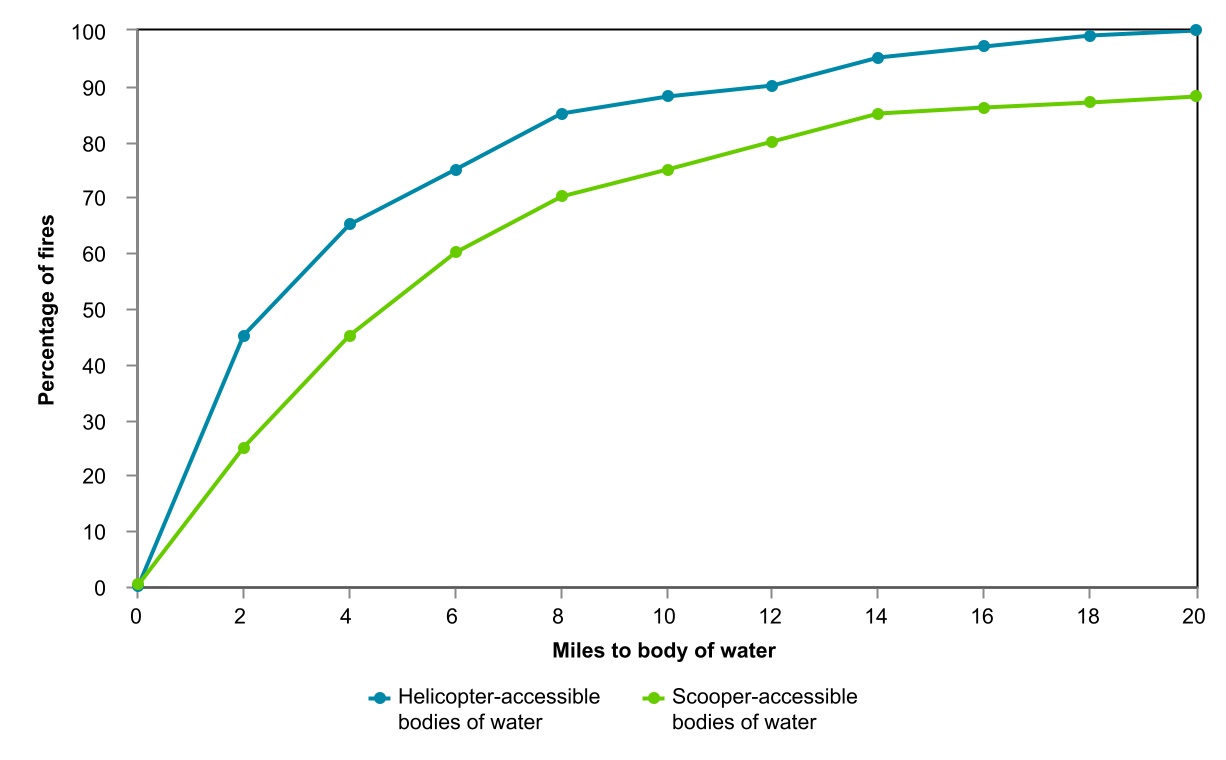
The Super Scooper is the only aircraft designed and built to fight wildfires and can fly more aggressively in extreme terrains than all other aircraft with equal or greater water capacity. The Super Scooper is an amphibious aircraft that skims the surface of a body of water to scoop water into onboard tanks to drop on a fire. The specific design of the Super Scooper allows for an aggressive low-altitude flight profile, which enables pilots to deliver their drops with more precision, hitting the fire harder and extinguishing it faster. Super Scoopers can scoop up to 1,412 gallons of water in approximately 12 seconds, and historically with 90% of wildfires within 20 miles of a major water source (see graph below), Super Scoopers provide an extremely effective tool to economically deliver large amounts of water to a fire without having to return to an airport to refill the water tanks. With a water source within a five-mile radius, the Super Scooper can drop on its target up to every seven minutes for a total of approximately 35 drops, or 50,000 gallons of water, before needing to refuel. As a result of our operations of these Super Scooper assets, in conjunction with our Air Attack fleet, we believe that we are one of the most full-spectrum aerial fire service providers in North America.
Source: 2012 Air Attack Against Wildfire Study by the Rand Homeland Security and Defense Center.
The Super Scooper aircraft has an excellent safety record, short take-off and landing capabilities (“STOL”) and a multi-crew flight deck. The Super Scooper has a cruising speed of 207 miles per hour. Additionally, the Super Scooper is a highly efficient aircraft when fighting wildland fires and has the ability to drop a higher volume of liquid than retardant-dropping fixed-wing aircraft over the same amount of time due to its ability to gather water from nearby bodies of water.
We have never been assessed with any safety violations and/or citations, nor have any of our aircraft, including our Super Scooper aircraft, ever been involved in any crashes or serious injuries. Our operations are governed by a comprehensive Safety Management System (“SMS”) specifically designed to proactively identify and mitigate risk, which has been formally audited by both the Federal Aviation Administration (“FAA”), third party auditors, the USFS, and the Department of Interior (“DOI”).
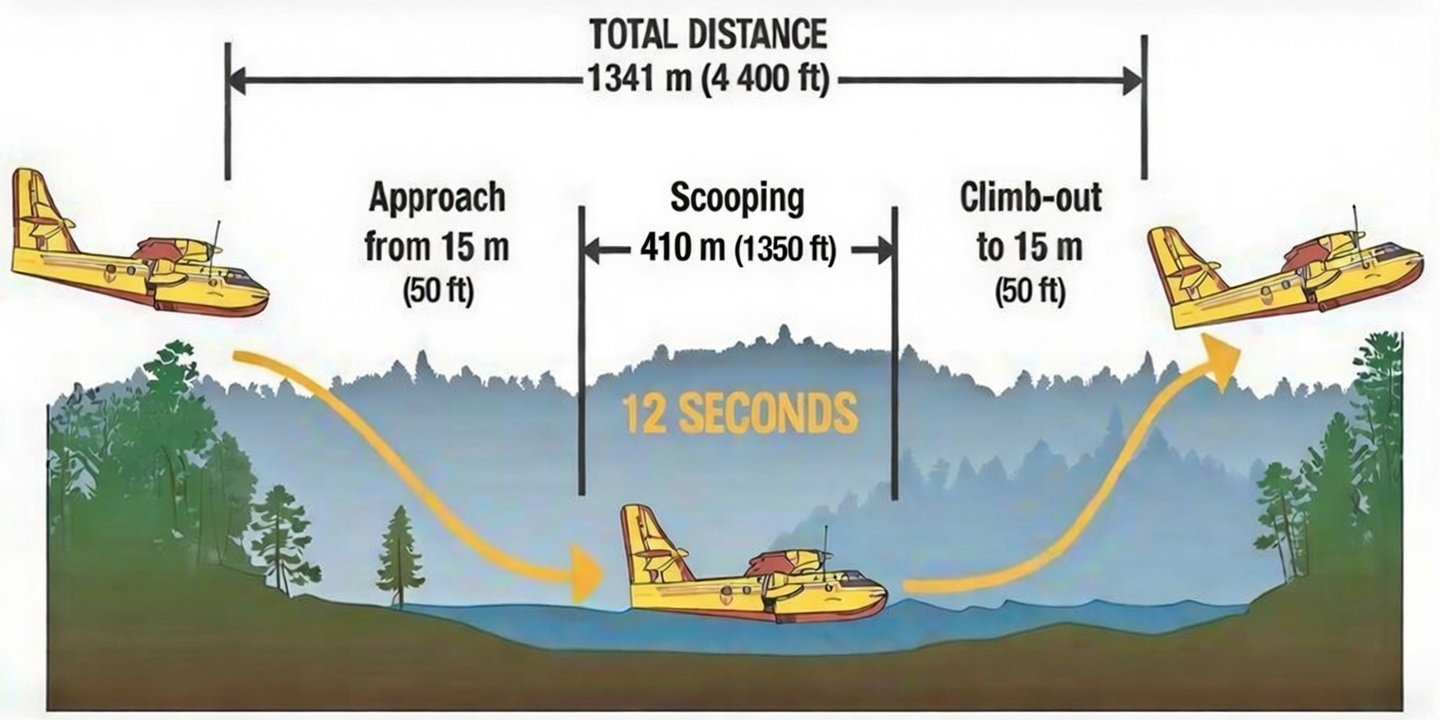
Furthermore, the Super Scooper has the ability to operate from smaller airports with runways as short as 2,500 feet in length while larger jet-powered aerial firefighting aircraft often need a runway of at least 4,000 feet in length. The Super Scooper is capable of scooping water in 12 seconds from bodies of water of 4,400 feet or more in length and can empty the water load in 3 seconds in one drop or split the drop into two.
A summary graphic of the Super Scooper and its efficiency in collecting water is provided below.
Source: United States Department of Agriculture Amphibious Water Scooper Aircraft Operations Plan 2016.
Aerial Surveillance Fleet
Our Air Attack fleet provides high level situational awareness of fire growth, ground firefighting elements, other aircraft within the fire traffic area, and changing weather conditions to Incident Commanders. Each aircraft is outfitted with a broad suite of communication technologies. The Daher Kodiaks and Pilatus are known for their rugged build and versatility in landing on challenging terrain, which is an asset given the inconsistent and harsh flying conditions that challenge aerial firefighting. Our Air Attack fleet is suitable for STOL, allowing for deployment in a greater range of scenarios. A high level of reliability allows the aircraft to be serviced and available on contract for more days, with fewer unscheduled in-field maintenance events. Above active wildfires, the aircraft can maintain the fuel efficiency required to loiter for four to seven hours with slow and stable flight characteristics, offering the ATGS greater visibility. Our newest platform, the King Air, gives us greater speed, higher payload, and greater distance for multi-mission work. The introduction of this platform to our fleet was strategic as a next generation platform to service larger capacity to match the trends in progressive wildfire management. Bridger is using its internal capabilities to stay on the leading edge with its sensor enhanced aircraft taking mission specific aircraft configurations and delivering critical data real-time to manage wildfire effectively.
Our MMA fleet delivers persistent aerial intelligence that enhances wildfire detection, monitoring, and coordination across the incident lifecycle. Equipped with advanced sensing, mapping, and communications systems, MMA provide Incident Command with real-time visibility into fire behavior, perimeter growth, heat signatures, weather influences, and resource movement, well beyond line-of-sight limitations. Designed for long endurance and stable loiter profiles, these aircraft remain on station for extended periods, continuously feeding actionable intelligence to air and ground decision-makers. Their modular architecture allows rapid adaptation to evolving mission needs, making MMA a force multiplier for initial attack, extended operations, and large-fire management while improving safety, efficiency, and operational outcomes.
Key Market Drivers and Opportunities
There are several key market drivers and opportunities for our business, including:
Recent legislation supporting fleet expansion and modernization
The Aerial Firefighting Enhancement Act of 2025, signed into law in June 2025, reauthorizes the Department of War to sell excess aircraft and parts for wildfire suppression purposes through 2035, expanding allowable uses to include water delivery in addition to fire retardant. This legislation directly facilitates access to cost-effective aircraft assets, creating opportunities for private operators like Bridger to acquire and integrate next-generation platforms, thereby expanding capacity to meet rising demand for efficient suppression methods.
Budgetary and structural shifts in federal wildfire management
The proposed consolidation of federal wildfire programs under the U.S. Wildland Fire Service (“USWFS”) within the DOI, as outlined in the Fiscal Year 2026 budget requests from DOI and the U.S. Department of Agriculture (“USDA”), aims to unify suppression, preparedness, and mitigation efforts across agencies. While Congress did not approve full funding for integrating USFS programs (under USDA) into DOI in the FY2026 appropriations, the initiative has advanced within DOI, unifying its internal wildfire operations (e.g., the Bureau of Land Management, the National Park Service, the Bureau of Indian Affairs, the U.S. Fish and Wildfire Service) under USWFS. This partial shift, supported by an Executive Order in June 2025 and Secretary Order 3443 in September 2025, streamlines coordination and could increase contracting opportunities for private aerial providers as federal agencies prioritize efficient, technology-enabled responses. Additionally, sustained funding for wildfire suppression (e.g., $1.39 billion for operations and $2.85 billion for the Wildfire Suppression Operations Reserve Fund in FY2026) underscores opportunities for expanded governmental missions, including surveillance and resource management beyond traditional wildfire suppression.
Federal and state funding for wildfire control
National funding for wildfire management is appropriated by Congress, and each state pays for wildland firefighting slightly differently. While fire suppression activities on wildlands in the U.S. are financed through federal funds, budget-making processes may restrict the amount allocated. According to the National Interagency Fire Center (“NIFC”) Suppression Costs Data, the average annual federal government fire suppression spending was $3.0 billion for the five-year period from 2019 to 2023, an increase of 28%, compared to $2.3 billion of average annual spending for the previous five-year period from 2014 to 2018. In addition, federal wildland fire management funding nationwide increased from about $6.2 billion in 2024 to roughly $7.3 billion in 2025, reflecting higher appropriations for both the USFS and the DOI to support wildfire suppression, preparedness, and fuels management. The funding is allocated to the DOI and the USFS. Our company then enters into short, medium and long-term contracts with federal agencies. On the state level, we are generally seeing significant increases in the number of state governments and private entities who are preparing themselves for the new fire reality. For example, in July 2023, the federal government announced the allocation of $185.0 million to support wildland fire management nationwide in 2023 and to assist land managers in planning for wildfire management activities in fiscal year 2024. This investment builds on $278.0 million, announced in March 2023 and December 2022, already allocated in 2023. In 2021, Washington State invested $328.0 million over the five following years to fight wildfires. While this level of commitment is notable, it is reflective of the increased awareness across federal, state, and private entities that wildfire risk has entered a new era of severity.
Given our long-standing customer relationships with governmental bodies, we have an opportunity to fulfill this increased demand for firefighting services driven by longer and more severe fire seasons. We view the increased demand as a means to further government agency ties and to capitalize on new aircraft investments.
Investments in mitigation and preparedness
Programs like the Community Wildfire Defense Grants, funded at $200 million in FY2025 for risk reduction projects across states and tribes, highlight growing federal emphasis on proactive measures (with continued funding and application rounds into FY2026 per USFS updates). Coupled with bills such as the Emergency Wildfire Fighting Technology Act of 2025 (H.R.836), which mandates evaluation of innovative aerial systems, and the Modernizing Wildfire Safety and Prevention Act of 2025, these initiatives drive demand for advanced aerial platforms and data-driven solutions, positioning companies with versatile fleets for long-term contracts.
In addition, federal leadership and proposed mandates underscore the priority of reducing wildfire response times to enhance initial attack success. Chief Brian Fennessy, appointed inaugural Chief of the USWFS under the DOI in January 2026, has emphasized that “wildfire response depends on coordination, clarity, and speed,” aligning with DOI efforts to streamline operations and improve efficiency in response to escalating wildfire risks (per Secretary’s Order 3443 and related announcements). Proposed legislation, including the Wildfire Response and Preparedness Act of 2025 (H.R. 4038), would establish national goals for response times of not more than 30 minutes (to the extent practicable) for incident evaluation and deployment of suppression assets within hours, compared to current initial attack response times which can span multiple hours (and often longer in remote western areas), reflecting ongoing congressional focus on faster containment to limit fire spread and damage. These developments support increased opportunities for aerial surveillance, rapid suppression, and technology-enabled services to meet evolving federal preparedness and response objectives.
Prolonged and year-round wildfire seasons
Climate change has contributed to extended wildfire seasons in many regions, particularly in the western United States, where fire seasons now start earlier, last longer into the fall, and include more frequent activity outside traditional summer peaks. According to the U.S. Environmental Protection Agency (“EPA”) Climate Change Indicators: Wildfires (updated as of 2025), an increase in the length of the fire season has been observed in some areas, driven by factors such as earlier spring melting, reduced snowpack, increased temperatures, and drought, which reduce water availability and dry fuels more readily. This shift erodes the concept of a distinct “off-season” (historically October to May in some western contexts) and heightens year-round demand for aerial surveillance, suppression, and emergency response capabilities.
According to an article on wildland fire research by the EPA, an “increase in acres burned can be attributed to several factors, including more than 100 years of fire suppression that has resulted in a build-up of burnable material, and a changing climate with hotter and drier conditions. Collectively these factors contribute to the increasing size and severity of wildfires.”
Human presence in the wildland-urban interface
Areas where human development intersects with undeveloped wildland vegetation, known as wildland-urban interface (“WUI”), continue to expand across the United States. According to USFS research, the WUI now encompasses approximately 9.4% of the land area of the contiguous United States yet contains more than 44 million homes, roughly 32% of all housing nationwide. From 1990 to 2020 the number of homes located in the WUI increased by nearly 46%, while WUI acreage grew by approximately 31%, placing more communities in areas exposed to wildfire risk. As residential development continues to expand into fire-prone landscapes, the number of people and assets vulnerable to wildfire has grown significantly. At the same time, national wildfire data compiled by the NIFC show that annual acreage burned varies widely year-to-year but regularly reaches millions of acres and exceeded 10 million acres in several recent seasons. As the WUI areas continue to grow and wildfires grow larger, more aggressive firefighting strategies are necessary to ensure public safety.
These trends have led the U.S. federal government to increase spending on fire suppression, with a compound annual growth rate of 7.0%, since 1985 to $3.2 billion in 2025, according to the NIFC Suppression Costs Data. Even with this increased spending and demand, unfulfilled requests for fixed wing aircraft for aerial firefighting grew at a compound annual growth rate of 4.6% between 2002 and 2025, with 738 unfulfilled requests in 2025, according to National Interagency Coordination Center.
Escalating fuels management challenges drive continued demand for fire suppression
There are around 500 million acres of federal land susceptible to wildfire and some estimates say nearly 100 million of that needs to be treated at any point in time. Current estimates are that approximately 2 million are treated on average annually through thinning, prescribed burns and targeted grazing. Even with draft legislation targeting proactive fuels management, it is quite likely it could take decades to counter the extent to which we have unmanaged forests and the continued heat and drought conditions that are creating more concentrated wildfire fuels. The aggressive management of these wildfires is best handled with Bridger’s Super Scoopers, purpose-built to directly attack fire when they first break out and in the critical moments when it can be extinguished or contained. Fire plays a vital, natural role in the wildland ecosystem, but today’s frequent megafires disrupt the balance, necessitating rapid, aggressive suppression to keep them contained as smaller, more natural burns.
More severe fire seasons drive demand for fire suppression and aerial surveillance services
NIFC Suppression Costs Data supports that the acreage burned in the U.S. has increased over time. While there is variability in the acreage burned in any given year, the annual average of 7.2 million acres burned from 2004 to 2023 has almost doubled the annual average acreage burned from 1985 to 2003 of 3.7 million.
While the North American wildfire off-season has historically occurred between October and May, fires are starting earlier in the spring and lasting deeper into the fall and winter according to the EPA. The U.S. fire season is also lengthening on a consistent basis – according to Climate Central, the U.S. fire season is on average 105 days longer than it was in 1970. Climate Central also reported that the average number of large fires (greater than 1,000 acres) burning each year had tripled between the period of the 1970s to the 2010s, and the acres burned by such fires showed a six-fold increase in the 2010s compared to the 1970s. Climate Central attributes the lengthening wildfire season to factors including warmer springs, longer summer dry seasons and drier soils and vegetation, with climate change threatening to increase the extent and severity of these fires. The United States national fire preparedness level has increased over time. The five preparedness levels range from the lowest (1) to the highest (5); and are dictated by fuel and weather conditions, fire activity and fire suppression resource availability throughout the country. Level 5 represents that several geographic areas are experiencing large, complex wildfire incidents, which have the potential to exhaust national wildland firefighting resources, while Level 1 represents that there is very minimal fire activity. According to data provided by the NIFC, the average U.S. fire preparedness level during the main wildfire season (June through September) has increased over time: during the past five years (2021 – 2025) the average U.S. fire preparedness level was 3.35, while the average U.S. fire preparedness level since 1990 was 2.83.
Increased demand and limited supply of purpose-built suppression aircraft
Wildfire activity in 2025 demonstrated a meaningful shift toward earlier, more effective suppression. While the number of flight hours flown increased as aerial assets were mobilized sooner and more frequently, the total acres burned declined to approximately 5.1 million acres. This reduction is directly attributable to early callouts of aerial resources and rapid initial attack, enabling immediate response during critical ignition windows. The data underscores a clear operational outcome: increased aerial utilization up front materially reduces fire growth, limits downstream impacts, and improves overall wildfire containment and cost efficiency.
Super Scoopers are multi-engine airtankers built specifically for wildland firefighting. They are highly effective at fighting fires and have historically only been owned and operated by foreign governments throughout Canada and the European Union and as a result, used amphibious scooping aircraft are difficult to locate and obtain in the United States. We are an original customer for Longview Aviation Services Inc.’s (“LAS”) launch of their Super Scooper Program, with Viking as the original manufacturer. De Havilland now owns the type certificate and intends to launch the new version of the Super Scooper, referred to as the De Havilland Canadair (“DHC”) 515. However, once the approximately 20 orders (all provinces or countries) are all filled, the production line is anticipated to be unavailable until the 2030s. Fortunately, the DHC 515 and the turbine variants owned by Bridger are very similar so Bridger is achieving synergies as one of the biggest operators of the Super Scooper. This in turn helps De Havilland re-establish a robust production line and supply chain.
On November 17, 2023, we entered into a series of agreements with MAB Funding, LLC (“MAB”) and its subsidiary designed to facilitate the purchase and return to service of four Spanish Scoopers originally awarded to the Company in September 2023 via a public tender process from the Government of Spain for €40.3 million. The terms of the agreements provide that the Company will manage the return-to-service upgrades of the Spanish Scoopers while they are owned and funded by MAB. The Company has the right, but not the obligation, to acquire each aircraft as it is ready to be contracted and returned to service. On December 23, 2025, we purchased two of the Spanish Scoopers from MAB for an aggregate purchase price of $50.0 million.
Given the limited supply of purpose-built multi-engine airtankers, upkeep and maintenance of existing aircraft is vital to minimize lapses in firefighting services occurring during wildfire season and to reduce the impact of any disruptions that occur. Bridger has a strong track record of managing its uptime to receive deployment orders and remain available on contract. All aircraft travel with mobile repair units to support in-field repairs and minimize on-contract downtime.
Our Competitive Strengths
Full spectrum of aerial firefighting services
We provide full-spectrum aerial firefighting services, offering both fire suppression and aerial surveillance services in the U.S. and internationally. We emphasize continued investment in new aerial surveillance and aerial fire suppression aircraft. Our aerial surveillance fleet has evolved since our inception from a single aircraft and pilot to the fleet operated today. The diversity of our service offerings affords customers the opportunity to select the appropriate services for their specific needs.
Purpose-built aircraft that can drop higher volumes of water
Our Super Scooper aircraft are the latest model in the De Havilland production line and feature enhanced industry technology.
•Higher cruising speed;
•Suitability for mountainous terrain;
•STOL on asphalt, gravel and water;
•Lower speed during water-bombing (low and slow flight); and
•Improved operational efficiency.
The Super Scooper leverages modern turbine engines to deliver superior high-altitude performance. The Super Scooper is able to reload in under a minute, compared to a reload time of approximately 30 minutes to one hour for other air tankers, depending on base capabilities, enabling the Super Scooper to make more drops in the same amount of time. The Super Scooper can drop approximately 50,000 gallons before requiring refueling, while the largest tanker in the market can only drop 30,000 gallons of retardant before needing to refuel and reload retardant. The Super Scooper aircraft allow for rapid delivery of water strikes to extinguish wildfires, particularly when deployed in tandem or larger groups to allow for continuous water-delivery as aircraft return to the water source. Bridger operates the largest commercial Super Scooper fleet worldwide, enhancing its competitive position in rapid-response suppression.
Highly-skilled crew of pilots and maintenance personnel
We maintain a dedicated team of captains on staff as part of the Super Scooper flight crew. Each captain has thousands of hours of flight time. All flight crew have a minimum of four years of aerial firefighting experience. Recurrent training for all flight crew is required in a Level D full motion flight simulator each year.
Each of our pilots attends annual and recurrent training specific to the aircraft they operate and to meet our standards of safety and standard operating procedures. Each pilot that flies an aircraft on contract for a government agency receives a certification card on an annual basis that validates they are qualified by the government to safely operate the aircraft while on contract.
In addition, we maintain a seasoned team of crew chiefs on staff as part of the Super Scooper maintenance crew. Each crew chief has thousands of hours maintaining aircraft in the De Havilland family and are familiar with firefighting operations. Factory training is mandatory for all of the maintenance team specific to the aircraft and components they maintain. They are also required to complete company-specific training courses regarding safety, standard operating procedures and systems in which they track and sign-off on maintenance logs.
Competitive compensation and long-term investment in our team
Bridger remains committed to competitive base compensation for all employees, including pilots. We deliberately avoid variable or performance-based pay structures for pilots to eliminate any potential incentives for unsafe mission decisions and to reinforce our long-term investment in our team members' stability and well-being. We invest heavily in comprehensive training for all operations personnel, including on-the-job experience and instructor-led programs. This creates tangible career value, enhances skills, and supports professional growth in a demanding field. Additionally, our fleet, featuring the iconic Super Scoopers, serves as a powerful attraction and retention tool. Pilots seeking hands-on wildfire suppression experience can progress to flying these rare multi-engine seaplanes, building expertise over time through demonstrated performance and structured advancement opportunities.
Long-standing client relationships
Bridger delivers aerial wildfire suppression and support to federal customers, including the USFS and the DOI, now operating as the USWFS, as well as to numerous state agencies across high-risk fire regions. Bridger has earned strong customer trust through its consistent commitment to safe, reliable operations, guided by an established SMS and a culture of continuous improvement. The company currently holds multiple active federal and state contracts, including a multi-year award received in 2021 for nationwide Super Scooper fire suppression services. That contract runs through the end of the 2026 fire season.
Our relationship with the USFS involves two material service agreements: Contract No. 1202SA21T9009, dated as of June 3, 2021 (“Call-When-Needed Water Scooper Contract”), and a National Multiple Award Task Order Contract (“MATOC”), pursuant to which we provide light fixed wing aircraft firefighting services on an exclusive use basis for the Northern, Rocky Mountain, Southwestern, Intermountain and Pacific Southwest regions, as defined by the U.S. Department of Agriculture. Under the Call-When-Needed Water Scooper Contract, we provide Super Scooper aircraft services for wildland firefighting on a national basis for a period of four years. The initial four‑year term commenced on June 3, 2021. To extend this long‑standing relationship, the contract was extended through September 30, 2026. These extensions underscore the strength and durability of our partnership with the USFS. We generate revenue under the Call-When-Needed Water Scooper Contract from task orders placed by the USFS. Under the terms of the Call-When-Needed Water Scooper Contract, the USFS reserves the right to terminate the Call-When-Needed Water Scooper Contract, or any part thereof, for its sole convenience or in the event of any default by us. All of our light fixed-wing Air Attack aircraft and the multi-mission Pilatus are available under the MATOC.
Our Growth Strategy
Acquire and deploy additional aircraft to meet increased demand
We are an original customer for the Super Scooper Program and as a result, used amphibious scooping aircraft are difficult to locate and obtain. The manufacturer has only made a limited number of new Super Scoopers available for sale between 2020 and 2025, of which the Company has purchased six.
Domestic and international expansion
We are committed to expanding our market share and service offerings both domestically and internationally. We currently have contracts in place with the USFS, the DOI, Bureau of Indian Affairs, Bureau of Land Management, State of Washington Department of Natural Resources, Alaska Division of Forestry and Fire Protection, Cal Fire, Colorado Department of Public Safety Division of Fire Prevention and Control, Minnesota Department of Natural Resources, Montana Department of Natural Resources and Conservation, Nevada Department of Conservation and Natural Resources, Oregon Department of Forestry, and Alberta Forestry Division Wildfire Management Branch.
We plan to expand into additional domestic markets by leveraging existing relationships and establishing dedicated local market teams. This includes cultivating demand in new states as they develop or expand aerial firefighting aviation programs, while positioning Bridger to secure growing federal contracts that incorporate more aircraft and enhanced capabilities over time. This approach builds on our proven track record of maintaining strong, long-standing relationships with federal and state agencies. By engaging directly in the field, collecting near real-time feedback, and conducting regular sessions to incorporate improvements and plan ahead, we continuously enhance operations and position ourselves for expanded awards.
We are exploring the possibility of operating internationally, in both fire suppression and surveillance. The two Spanish Scoopers purchased December 2025 will remain in Europe for the first part of 2026 to assess operations outside of the U.S.
Pursuing Opportunistic Mergers & Acquisitions (“M&A”)
We intend to continue to evaluate M&A opportunities to expand our fleet, add new geographies or add additional services. Consistent with this strategy, we regularly evaluate potential acquisition opportunities, including ones that would be significant to us. We cannot predict the timing of any contemplated transactions, and none are currently probable.
Seasonality
Our operating results are impacted by seasonality. Climate conditions and other factors that may influence our revenues may vary each quarter. Some of these factors are outside of our control, including but not limited to:
•forest fires tend to have a higher occurrence during the summer months and during times of drought, but can vary in size, intensity, duration, frequency, and location;
•climate change and changes in global temperatures occur over time;
•unexpected weather patterns, natural disasters or other events that increase or decrease the rate or intensity of wildfires or impair our ability to perform firefighting services; and
•changes in governmental regulations or in the status of our regulatory approvals or applications.
Because wildfires occur at different times in different parts of the country, we operate on a year-round basis. However, historically the majority of wildfires occur in the second and third quarters, so the demand for our services has generally been higher in the second and third quarters of each fiscal year due to the timing and duration of the North American wildfire season with lower demand in the winter months. As a result, seasonality and the varying intensity of the fire season have caused, and may continue to cause, our operating results to fluctuate significantly from quarter to quarter and year to year.
Our Customers
Our high-performing aircraft, including the Super Scooper, and full-service support platforms have allowed us to enter into contracts with U.S. federal, state and local governmental entities and focus on growth while building additional services to map and analyze fire boundaries. Currently, we are engaged in short, medium and long-term contracts with multiple federal agencies such as the USFS and DOI and the state governments of many of the states most endangered by wildfires. Automatically renewing contracts with governmental entities provide stable revenue streams, allowing us to innovate in the aerial firefighting industry and diversify offerings to customers.
Our Competitors
Our primary competitor is a private aerial firefighting operator that currently manages four CL-415s, three Type II Dash 8-400ATs, and seven Avro RJ85s, which are designed to drop fire retardant. This company’s only direct competitive airframe against our Super Scoopers is its CL-415s. However, given the significant unmet capacity in the U.S. market for amphibious scooping aircraft, we rarely compete directly for the same missions.
Other aircraft types may compete based on retardant or water delivery capacity, including Very Large Air Tankers (“VLATs”), Large Air Tankers (“LATs”), single-engine amphibious scoopers such as the Fireboss (Type III SEAT), and Type 1 helicopters. VLATs and LATs deliver large retardant loads suited for indirect attack and fire line creation but require airport-based reloads, limiting rapid, repeated drops. Fire Boss aircraft support quick initial attack on smaller fires but with lower capacity. Type 1 helicopters offer precision and versatility but carry less volume per load and have higher operating costs per gallon. In contrast, Super Scoopers enable rapid scooping from nearby water sources, facilitating efficient initial and direct attack strategies that contain fires early, limit growth into megafires and reduce overall devastation. This capability complements other assets in multi-aircraft responses and positions us well for scenarios requiring high volume, water-based suppression near accessible water bodies.
Our Super Scooper program is not intended to replace retardant-dropping aircraft. Fire retardant, frequently deployed by large air tankers, slows fire spread and creates perimeters or containment lines. While fires can occasionally burn through retardant lines, it remains a valuable tool in wildfire management. When combined with Super Scooper water drops, retardant enhances overall effectiveness in controlling and slowing the spread of wildfires.
We believe our ability to compete successfully depends on a number of factors, which may change in the future due to increased competition, including the price of our offerings, consumer confidence in the safety and efficacy of our offerings and consumer satisfaction for the solutions we offer. Additionally, we may compete with other aerial firefighting operators for federal and state budget dollars, and for various governmental service programs that support aerial firefighting programs.
Backlog
Backlog represents management’s estimate of the remaining unsatisfied performance obligation from work to be performed on our firm orders under uncompleted contracts and customer purchase orders, including approved change orders as well as new contractual agreements on which work has not begun. Our backlog will be recognized as revenue as we complete the remaining performance obligations. Our backlog does not include service and maintenance-type contracts for which we have the right to invoice as services are performed. Typically, our contracts may have an early termination for convenience clause at the discretion of our customers; however, most of these contracts typically provide for the reimbursement of our costs incurred and a reasonable margin in the event of such early termination. Our methodology for determining backlog may not be comparable to the methodology used by other companies.
As of December 31, 2025 and 2024, the Company had backlog of $14.0 million and $8.1 million, respectively. Backlog may not be indicative of future operating results as orders may be cancelled or modified by our customers and may not be indicative of continuing revenue performance over future fiscal quarters.
Human Capital
Our employees are critical to our success. On December 31, 2025, we had 235 employees. We have high selection standards, recruiting individuals with specific technical skills and demonstrated ability to work independently in a wide variety of work environments. Prior to joining our company, many of our employees had prior experience working for a wide variety of reputed research, commercial and military aerospace and non-aerospace organizations. As a company founded by veterans, we seek to employ qualified veterans and draw upon the experiences of their shared military background including their strategic mindset, management skillset and high level of discipline. As of December 31, 2025, approximately one out of six of our employees is a veteran of the U.S. military.
To date, we have not experienced any work stoppages, and we consider our relationship with our employees to be good. We routinely solicit feedback from our entire employee base and empower individuals by encouraging them to formulate solutions and process improvements no matter the level of role. Accordingly, our voluntary turnover is very low, employee engagement is high and we have not experienced any interruptions of operations due to labor disagreements. Our employees are not subject to collective bargaining agreements or represented by labor unions.
Health and Safety
We are committed to the safety of our employees. We maintain environmental, health and safety policies that seek to promote the operation of our business in a manner that is protective of the health and safety of the public and its employees. Our operations offer several health and welfare programs to employees to promote fitness and wellness and to encourage preventative healthcare. In addition, our employees are offered a confidential employee assistance program that provides professional counseling to employees and their family members. We have a holistic philosophy for our benefits offerings, supporting physical health, mental health, financial health, community support and a wide variety of insurance plans to hedge against uncertain losses (e.g., accident, short term disability, paid leaves and life insurance).
Employee Trainings
To address the inherently dangerous nature of the job, we adhere to achieving operational excellence and providing our employees with the means to further their development. All of our pilots are given extensive training during the winter months, regardless of tenure or previous experience. The trainings include classroom and online courses, simulators and in-plane time. We strive to have high industry standards and employ several dedicated pilot and airframe-specific trainers. Routinely, we fund enhanced workforce training in specific technical fields related to those employees’ desires. In one instance, we have had an employee who was hired as a facility cleaner and with further training and investment, the employee became a ground vehicle support manager and is now an aircraft mechanic. We also hire entry level mechanics and train them to obtain their airframe and powerplant certification, which allows them to perform maintenance on any aircraft unsupervised.
In addition to technical training, we invest heavily in leadership and management training as well as some of the most advanced safety training available in our industry. Before hiring externally as needs are identified, a careful analysis is done of our current staff to determine if the aptitude and interest is already in our employee base. By prioritizing training and promoting current employees, we enhance employee engagement and cut costs simultaneously.
Employee Retention and Opportunity
We believe that attraction and retention of top talent from a variety of backgrounds is important and we employ policies and procedures to identify and recruit talent as well as policies to ensure pay equality. We have an Equal Employment Opportunity Policy whereby we commit to providing equal employment opportunity, promotion, services, or activities which operates for all qualified employees and applicants without regard to race, color, sex, sexual orientation, gender identity, gender expression, parental status, citizenship status, religion, national origin, disability, veteran status, age, marital status, pregnancy, genetic information or other legally protected status. We drive a culture that understands and respects differences. We rely heavily on recruiting internationally to work on our purpose-built aerial firefighting aircraft and identify the cultural benefits that these individuals bring to our company.
Governmental Regulation
Federal Aviation Administration
The regulations, policies and guidance issued by the FAA apply to the use and operation of our aircraft. We have been granted Air Carrier Certification Certificates under which we operate in the United States. Operators of aircraft are required to have proper licenses, permits and authorizations from the FAA and comply with the FAA’s insurance requirements for third-party liability and government property. While our aircraft are currently registered with the FAA, in the event of a change in ownership, the FAA license will be updated with current information. In that instance, once any such new vehicle registration applications are filed, the applications will serve as registrations until the FAA issues the new vehicle registrations, which will allow operations to continue during that period.
Failure to comply with the FAA’s aviation or space transportation regulations may result in civil penalties or private lawsuits, or the suspension or revocation of licenses or permits, which would prevent operating our aircraft.
In addition to the FAA, our industry is regulated by multiple federal agencies who, in some cases, act as both customer and regulator. We are proud to have a stellar record of performance both in flight and on the ground with respect to all of our regulatory bodies.
SMS System
Our SMS system is robust and a living tool used to promote safety first in all activities. This program has been in place nearly 2 years ahead of its FAA-mandated date of May 2027. All company departments are involved in cross-training and real-world exercises utilizing our Emergency Response Plan (“ERP”). We use outside observation to troubleshoot and fine tune for readiness. Our Director of Safety provides awareness to the CEO and conducts regular visits to off-site locations to observe and identify areas of possible concern. Immediate root cause methods are used to correct and mitigate needed areas.
Other Information
General information about us can be found at bridgeraerospace.com. The information contained on or connected to our website is not incorporated by reference into this Annual Report on Form 10-K and should not be considered part of this or any other report filed with the Securities and Exchange Commission (the “SEC”).
ITEM 1A. RISK FACTORS.
Summary of Risk Factors
Below is a summary of the principal factors that could adversely affect our business, operations and financial results. This summary does not address all of the risks that we face. Additional discussion of the risks summarized in this summary, and other risks that we face (including general risk factors), can be found below following this summary.
Aviation and Firefighting Risks
•Our operation of aircraft involves a degree of inherent risk, and we could suffer losses and adverse publicity stemming from any accident, whether related to us or not, involving aircraft, helicopters, or commercial drones similar to the assets we use in our operations.
•Our business is inherently risky in that it is fighting wildfires which are powerful and unpredictable.
•The unavailability of an aircraft due to loss, mechanical failure, lack of pilots or maintenance personnel, especially one of the Super Scoopers, would result in lower operating revenues for us for a period of time that cannot be determined and could be prolonged.
•Inability to source and hire personnel with appropriate skills and experience would inhibit operations.
•The development of superior alternative firefighting tactics or technology that do not rely on our existing and planned capital assets could reduce demand for our services and result in a material reduction in our revenue and results of operations.
Operations Risks
•A cyber-based attack of our IT systems could disrupt our ability to deliver services to our customers and could lead to increased overhead costs, decreased sales and harm to our reputation.
•Any failure to offer high-quality aerial firefighting services to customers may harm our relationships with our customers and could adversely affect our reputation, brand, business, financial condition and results of operations.
•We are subject to risks associated with climate change, including the potential increased impacts of severe weather events on our operations and infrastructure, and changes in weather patterns may result in lower demand for our services if such changes result in a reduced risk of wildfires.
•We are highly dependent on our senior management team and other highly skilled personnel with unique skills.
Seasonality Risks
•There is a seasonal fluctuation in the need to fight forest fires based upon location.
Sales and Customer Risks
•The aerial firefighting industry is expected to grow in the near future and is volatile, and if it does not develop, if it develops slower than we expect, if it develops in a manner that does not require use of our services, if it encounters negative publicity or if our solution does not drive commercial or governmental engagement, the growth of our business will be harmed.
•We depend significantly on government customers, which subjects us to risks including early termination, audits, investigations, sanctions and penalties.
•We rely on a few large customers for a majority of our business.
Supplier Risks
•We rely on a limited number of suppliers for certain raw materials and supplied components.
•There is a limited supply of new Super Scooper aircraft to purchase, and an inability to purchase additional Super Scooper aircraft could impede our ability to increase our revenue and net income.
•We currently rely and will continue to rely on third-party partners to provide and store the parts and components required to service and maintain our aircraft, and to supply critical components and systems, which exposes us to a number of risks and uncertainties outside our control.
Financial and Capital Strategy Risks
•We may require substantial additional funding to finance our operations and growth strategy, but adequate additional financing may not be available when we need it, on acceptable terms, or at all.
•Our systems, aircraft, technologies and services and related equipment may have shorter useful lives than we anticipate.
•We have a substantial amount of debt and servicing future interest or principal payments may impair our ability to operate our business or require us to change our business strategy to accommodate the repayment of our debt.
Early-Stage Company Risks
•We have incurred significant losses since inception, and we may not be able to achieve, maintain or increase profitability or positive cash flow.
•The requirements of being a public company may strain our resources, divert our management’s attention and affect our ability to attract and retain additional executive management and qualified board members.
Risks Related to the Ownership of Our Securities
•The price of our Common Stock and Warrants are likely to be highly volatile.
•Our Common Stock is subject to restrictions on ownership by non-U.S. citizens, which could require divestiture by non-U.S. citizen stockholders and could have a negative impact on the transferability of our Common Stock, its liquidity and market value, and such restrictions may deter a potential change of control transaction.
•We may issue additional shares of our Common Stock or other equity securities, which would dilute your ownership interest in us and may depress the market price of our Common Stock.
•There can be no assurance that we will be able to comply with the continued listing standards of Nasdaq.
•The holders of shares of Series A Preferred Stock have rights, preferences and privileges that are not held by, and are preferential to, the rights of holders of our Common Stock.
•A small number of Bridger’s stockholders could significantly influence its business.
•Future sales, or the perception of future sales, of a substantial number of shares of our Common Stock and Warrants, by us or our stockholders in the public market may cause the price of our Common Stock and Warrants to decline.
•Warrants are exercisable for our Common Stock and if exercised will increase the number of shares eligible for future resale in the public market and result in dilution to our stockholders.
The following risk factors and other information included in this Annual Report on Form 10-K should be carefully considered. The risks and uncertainties described below are not the only ones we face. Additional risks and uncertainties not currently known to us or that we currently deem less significant may also affect our business operations or financial results. If any of the following risks actually occur, our stock price, business, operating results and financial condition could be materially adversely affected and the market price of our securities could decline, causing our equity holders to lose all or a portion of their investment.
Aviation and Firefighting Risks
Our operation of aircraft involves a degree of inherent risk, and we could suffer losses and adverse publicity stemming from any accident, whether related to us or not, involving aircraft, helicopters, or commercial drones similar to the assets we use in our operations.
The operation of aircraft is subject to various risks, and demand for firefighting services, may in the future be impacted by accidents or other safety issues regardless of whether such accidents or issues involve Bridger flights, our aircraft operators, or aircraft flown by our aircraft operators. Air transportation hazards, such as adverse weather conditions, fire and mechanical failures and the operation of third-party drones or other aircraft in the same air space as Bridger may operate, may result in death or injury to personnel and passengers which could impact client confidence in a particular aircraft type. Safety statistics for air travel are reported by multiple parties, including the Department of Transportation (the “DOT”) and National Transportation Safety Board, and are often separated into categories of transportation. Because our aerial firefighting services include a variety of aircraft, our clients may have a hard time determining how safe aerial firefighting services are, and their confidence in aerial firefighting may be impacted by, among other things, the classification of accidents in ways that reflect poorly on aerial firefighting services or the methods that aerial firefighting services utilize.
As the owners and operators of certain aircraft, including the Super Scoopers, we believe that safety and reliability are two of the primary attributes that customers consider when selecting aerial firefighting services. Our failure to maintain standards of safety and reliability that are satisfactory to our customers may adversely impact our ability to retain current customers and attract new customers. We are at risk of adverse publicity stemming from any public incident involving our company, our people, or our brand. Such an incident could involve the actual or alleged behavior of any of our employees.
Increased accident history could bar us from certain contracts, thereby reducing demand for our services. Further, if our personnel or one of the aircraft models that is used by us is involved in a public incident, accident, catastrophe, or regulatory enforcement action, we could be exposed to significant reputational harm and potential legal liability. The insurance we carry may be inapplicable or inadequate to cover any such incident, accident, catastrophe, or action. In the event that our insurance is inapplicable or inadequate, we may be forced to bear substantial losses from an incident or accident. In addition, any such incident, accident, catastrophe, or action involving our employees or one of the aircraft models used by us could create an adverse public perception, which could harm our reputation, resulting in existing or potential customers being reluctant to use our services and adversely impacting our business, results of operations and financial condition. If one or more of our operators were to suffer an accident or lose the ability to fly certain aircraft due to safety concerns or investigations, we may be required to cancel or delay certain aerial firefighting services until replacement aircraft and personnel are obtained.
Our operations may also be negatively impacted by accidents or other safety-related events or investigations that occur in or near the airports and the hangars we utilize for our aerial firefighting services. For example, if an accident were to occur at or near one of our hangars that we rely on for certain flights, we may be unable to utilize that hangar until the accident has been cleared, any damages to the facilities have been repaired and any insurance, regulatory, or other investigations have been completed. Similarly, an adverse safety event by a third- party with respect to the Super Scooper or any of the other planes in our fleet could result in temporary or permanent bans on certain aircraft models by our current or future customers.
Our business is inherently risky in that it is fighting wildfires which are powerful and unpredictable.
The performance of our services necessitates that we interact with wildfires. Wildfires can be massively unpredictable, and while we have implemented safety protocols and systems, these protocols and systems cannot eliminate the risk of accidents. Further, to effectively fight fires, flight operations often require low-level flights and involve performing services in mountainous terrain, both of which increase the risks involved with our services. To protect against these dangers, we may be required to incur more expenses and/or implement time-consuming safety protocols and systems, which could cause our expenses to be higher than anticipated. We may also be more likely to experience an adverse safety event.
The unavailability of an aircraft due to loss, mechanical failure, lack of pilots or maintenance personnel, especially one of the Super Scoopers, would result in lower operating revenues for us for a period of time that cannot be determined and could be prolonged.
Aircraft loss for any reason could impact our ability to provide services. Short- or long-term unavailability of an aircraft may also result from an aging fleet or parts obsolescence. Replacement aircraft or replacement parts may not be available or only available with significant costs and/or delays.
Our revenues are disproportionately derived from the services of our Super Scoopers. The unavailability of one or more of our Super Scoopers could result in a significant reduction in our revenues and adversely affect our results of operations. For example, in 2022, we experienced a delay with the delivery of our fifth and sixth Super Scooper aircraft. We originally expected that the fifth Super Scooper and sixth Super Scooper would be delivered in May and July 2022, respectively, but ultimately, the delivery and subsequent preparation for deployment of the fifth Super Scooper was delayed until September 2022 and the sixth Super Scooper was not delivered until February 2023. As a result of such delays, our results of operations for the 2022 wildfire season were materially affected. Additionally, only pilots with significant flight hours can operate Super Scoopers, and there are a limited number of available pilots due to the demanding levels of training. There are a limited number of Super Scoopers in operation globally. Certain replacement parts may be unavailable or difficult to obtain, and we may be unable to hire sufficient mechanics trained to service Super Scoopers.
Our pilots and mechanics are required by contract to meet a minimum standard of operational experience. Finding and employing individuals with the necessary level of experience and certification has required us to hire Canadian personnel in addition to U.S. personnel. Inability to source and hire personnel with appropriate skills and experience would inhibit operations.
Our business’s success depends on our continued ability to attract, retain and motivate highly qualified personnel with experience in the aviation space, including pilots and mechanics. However, competition for qualified personnel is intense. Our business may not be successful in attracting qualified personnel to fulfill our current or future needs. In the event that we are unable to fill critical open employment positions, we may need to delay our operational activities and goals, including the development and expansion of our business, and may have difficulty in meeting our obligations as a public company.
In addition, competitors and others may attempt to recruit our employees. The loss of the services of any of our key personnel, the inability to attract or retain highly qualified personnel in the future or delays in hiring such personnel, particularly senior management, pilots and other technical personnel, could materially and adversely affect our business, financial condition and results of operations. In addition, the replacement of key personnel likely would involve significant time and costs and may significantly delay or prevent the achievement of our business objectives.
The development of superior alternative firefighting tactics or technology that do not rely on our existing and planned capital assets could reduce demand for our services and result in a material reduction in our revenue and results of operations.
Our aircraft have been modified to deploy our technology and support our existing firefighting tactics to fight wildfires. In particular, the Super Scooper is specially designed to fight forest fires with water and to refill from open bodies of water. If new technology or firefighting tactics are created or discovered that provide more powerful, more economic, faster, safer, more environmentally friendly firefighting services or that provide services that are otherwise superior in certain aspects to our current services, then we may see reduced demand for our services or be required to incur additional costs to adapt our fleet to such technologies or firefighting tactics. Additionally, current and potential government customers may push towards contracting services from customers with modernized fleets. All of these changes could narrow the scope of future contracts to exclude our existing assets, which could reduce demand for our services, our revenues and earnings.
Operations Risks
We rely on our IT systems to manage numerous aspects of our business. A cyber-based attack of these systems could disrupt our ability to deliver services to our customers and could lead to increased overhead costs, decreased sales and harm to our reputation.
We rely on IT networks and systems to operate and manage our business. Our IT networks and systems process, transmit and store personal and financial information and proprietary information of our business. The technology also allows us to coordinate our business across our operation bases and communicate with our employees and externally with customers, suppliers, partners and other third parties. While we believe we take reasonable steps to secure these IT networks and systems, and the data processed, transmitted and stored thereon, such networks, systems and data are susceptible to cyberattacks, viruses, malware, or other unauthorized access or damage (including by environmental, malicious, or negligent acts), which could result in unauthorized access to, or the release and public exposure of, our proprietary information or our users’ personal information. In addition, cyberattacks, viruses, malware, or other damage or unauthorized access to our IT networks and systems could result in damage, disruptions, or shutdowns to our platform. Any of the foregoing could cause substantial harm to our business, require us to make notifications to our customers, governmental authorities, or the media, and could result in litigation, investigations or inquiries by government authorities, or subject us to penalties, fines and other losses relating to the investigation and remediation of such an attack or other unauthorized access or damage to our IT systems and networks.
Our service, data and systems may be critical to operations or involve the storage, processing and transmission of sensitive data, including valuable intellectual property, other proprietary or confidential data, regulated data and personal information of employees and others. Successful breaches, employee malfeasance, or human or technological error could result in, for example, unauthorized access to, disclosure, modification, misuse, loss, or destruction of our or other third-party data or systems; theft of sensitive, regulated, or confidential data including personal information and intellectual property; the loss of access to critical data or systems; service or system disruptions or denials of service.
Our ability to attract and retain customers, to efficiently operate our business, and to compete effectively depends in part upon the sophistication, security and reliability of our technology network, including our ability to provide features of service that are important to our customers, to protect our confidential business information and the information provided by our customers, and to maintain customer confidence in our ability to protect our systems and to provide services consistent with their expectations. As a result, we are subject to risks imposed by data breaches and operational disruptions, including through cyberattack or cyber-intrusion, by computer hackers, foreign governments, cyber terrorists and activists, cyber criminals, malicious employees or other insiders of the Company or third-party service providers, and other groups and individuals.
Data breaches of companies and governments continue to increase as the number, intensity and sophistication of attempted attacks and intrusions from around the world have increased and we, our customers, and third parties increasingly store and transmit data by means of connected IT systems. Additionally, risks such as code anomalies, “Acts of God”, data leakage, cyber-fraud and human error pose a direct threat to our services, systems and data and could result in unauthorized access or block legitimate access to sensitive or confidential data regarding our operations, customers, employees and suppliers, including personal information.
We also depend on and interact with the technology and systems of third parties, including our customers and third-party service providers such as cloud service providers. Such third parties may host, process, or have access to information we maintain about our company, customers, employees and vendors or operate systems that are critical to our business operations and services. Like us, these third parties are subject to risks imposed by data breaches, cyberattacks and other events or actions that could damage, disrupt, or close down their networks or systems. We have security processes, protocols and standards in place, including contractual provisions requiring such security measures, that are applicable to such third parties and are designed to protect information that is held by them, or to which they have access, as a result of their engagements with us. Nevertheless, a cyberattack could defeat one or more of such third parties’ security measures, allowing an attacker to obtain information about our company, customers, employees and vendors or disrupt our operations. These third parties may also experience operational disruptions or human error that could result in unauthorized access to sensitive or confidential data regarding our operations, customers, employees and suppliers, including personal information.
A disruption to our complex, global technology infrastructure, including those impacting our computer systems and website, could result in the loss of confidential business or customer information, require substantial repairs or replacements, resulting in significant costs, and lead to the temporary or permanent transfer by customers of some or all of their business to our competitors. The foregoing could harm our reputation and adversely impact our operations, customer service and results of operations. Additionally, a security breach could require us to devote significant management resources to address the problems created. A significant data breach or any failure, or perceived failure, by us to comply with any federal, state, or foreign privacy laws, regulations, or other principles or orders to which we may be subject could adversely affect our reputation, brand and business, and may result in claims, investigations, proceedings, or actions against us by governmental entities, litigation, including class action litigation, from our customers, fines, penalties, or other liabilities, or require us to change our operations or cease using certain data sets. Depending on the nature of the information compromised, we may also have obligations to notify users, law enforcement, government authorities, payment companies, consumer reporting agencies, or the media about the incident and may be required to expend additional resources in connection with investigating and remediating such an incident, and otherwise complying with applicable privacy and data security laws.
These types of adverse impacts could also occur in the event the confidentiality, integrity, or availability of company and customer information was compromised due to a data loss by us or a trusted third party. We or the third parties with which we share information may not discover any security breach and loss of information for a significant period of time after the security breach occurs.
We have invested and continue to invest in technology security initiatives, information-technology risk management, business continuity and disaster recovery plans, including investments to retire and replace end-of-life systems. The development and maintenance of these measures is costly and requires ongoing monitoring and updating as technologies change and efforts to overcome security measures become increasingly more frequent, intense and sophisticated. Despite our efforts, we are not fully insulated from data breaches, technology disruptions, data loss and cyber-fraud, which could adversely impact our competitiveness and results of operations.
While we have significant security processes and initiatives in place, we may be unable to detect or prevent a breach or disruption in the future. Additionally, while we have insurance coverage designed to address certain aspects of cyber risks in place, such insurance coverage may be insufficient to cover all losses or all types of claims that may arise.
Failure to comply with federal, state and foreign laws and regulations relating to privacy, data protection and consumer protection, or the expansion of current laws and regulations or the enactment of new laws or regulations in these areas, could adversely affect our business and our financial condition.
We are subject to a wide variety of laws in the United States and other jurisdictions related to privacy, data protection and consumer protection that are often complex and subject to varying interpretations. As a result, these privacy, data protection and consumer protection laws may change or develop over time through judicial decisions or as new guidance or interpretations are provided by regulatory and governing bodies and such changes or developments may be contrary to our existing practices. This may cause us to expend resources on updating, changing or eliminating some of our privacy and data protection practices.
Our reputation and ability to do business may be impacted by the improper conduct of our employees, agents, or business partners.
We have implemented compliance controls, training, policies and procedures designed to prevent and detect reckless or criminal acts from being committed by our employees, agents or business partners that would violate the laws of the jurisdictions in which we operate, including laws governing payments to government officials, such as the U.S. Foreign Corrupt Practices Act, the protection of export controlled or classified information, such as the International Traffic in Arms Regulations (“ITAR”), false claims, procurement integrity, cost accounting and billing, competition, information security and data privacy and the terms of our contracts. This risk of improper conduct may increase as we continue to grow and expand our operations. We cannot ensure, however, that our controls, training, policies and procedures will prevent or detect all such reckless or criminal acts, and we have been adversely impacted by such acts in the past, which have been immaterial in nature. If not prevented, such reckless or criminal acts could subject us to civil or criminal investigations, monetary and non-monetary penalties and suspension and debarment by the U.S. government and could have a material adverse effect on our ability to conduct business, our results of operations and our reputation. In addition, misconduct involving data security lapses resulting in the compromise of personal information or the improper use of our customer’s sensitive or classified information could result in remediation costs, regulatory sanctions against us and serious harm to our reputation and could adversely impact our ability to continue to contract with the U.S. government.
Any failure to offer high-quality aerial firefighting services to customers may harm our relationships with our customers and could adversely affect our reputation, brand, business, financial condition and results of operations.
We strive to create high levels of customer satisfaction and brand trust through our services and the support provided by our employees. Our customers depend on our team to resolve any issues relating to our services, which are often emergencies, in an efficient and accurate manner. Our ability to provide effective and timely services is largely dependent on numerous factors, including our ability to maintain our existing fleet and our ability to attract and retain skilled employees who can support our customers and are sufficiently knowledgeable about our services. As we continue to grow our business and improve our platform, we will face challenges related to providing quality support at scale. Any failure to provide efficient and timely services, or a market perception that we do not maintain high-quality or dependable services, could adversely affect our reputation, brand, business, financial condition and results of operations.
Natural disasters, unusual weather conditions, pandemic or epidemic outbreaks, terrorist acts and political events could disrupt our business.
The occurrence of one or more natural disasters such as fires, tornados, hurricanes, floods and earthquakes, unusual weather conditions, epidemic or pandemic outbreaks, terrorist attacks or disruptive political events where our facilities or the hangars where our aircraft fleets are located, could damage our fleet or other property and adversely affect our business, financial condition and results of operations. Severe weather, such as rainfall, snowfall or extreme temperatures, may impact the ability for our aerial firefighting services to occur as planned, resulting in additional expense to reschedule or cancel altogether, thereby reducing our sales and profitability. Terrorist attacks, actual or threatened acts of war or the escalation of current hostilities, or any other military or trade disruptions impacting our domestic or foreign suppliers of components of our aircraft, may impact our operations by, among other things, causing supply chain disruptions and increases in commodity prices, which could adversely affect our raw materials or transportation costs. To the extent these events also impact one or more of our suppliers or result in the closure of any of their facilities or our facilities, we may be unable to fulfill our other contracts.
We are subject to risks associated with climate change, including the potential increased impacts of severe weather events on our operations and infrastructure, and changes in weather patterns may result in lower demand for our services if such changes result in a reduced risk of wildfires.
All climate change-related regulatory activity and developments may adversely affect our business and financial results by requiring us to reduce our emissions, make capital investments to modernize certain aspects of our operations, purchase carbon offsets, or otherwise pay for our emissions. Such activity may also impact us indirectly by increasing our operating costs.
The potential physical effects of climate change, such as increased frequency and severity of storms, floods, fires, fog, mist, freezing conditions, sea-level rise and other climate-related events, could affect our operations, infrastructure and financial results. We could incur significant costs to improve the climate resiliency of our infrastructure and otherwise prepare for, respond to and mitigate such physical effects of climate change. We are not able to accurately predict the materiality of any potential losses or costs associated with the physical effects of climate change. We believe that rising global temperatures have been, and in the future are expected to be, one factor contributing to increasing rates and severity of wildfires. Climate change and global temperatures are impacted by many variables, however, and cannot be predicted with certainty. If global temperatures were to decrease, then the rate and severity of wildfires may decrease as well, resulting in lower demand for our services.
Our business is dependent on the availability of aircraft fuel. Continued periods of significant disruption in the supply or cost of aircraft fuel could have a significant negative impact on consumer demand, our operating results and liquidity.
We are currently able to obtain adequate supplies of aircraft fuel but we cannot predict the future availability. Natural disasters (including hurricanes or similar events in the U.S. Southeast and on the Gulf Coast, where we have performed our aerial firefighting services), political disruptions or military conflicts involving oil-producing countries, economic sanctions imposed against oil-producing countries or specific industry participants, changes in fuel-related governmental policy, the strength of the U.S. dollar against foreign currencies, changes in the cost to transport or store petroleum products, changes in access to petroleum product pipelines and terminals, changes in relative tariff rates among nations, speculation in the energy futures markets, changes in aircraft fuel production capacity, environmental concerns and other unpredictable events may result in fuel supply shortages or distribution challenges in the future. Any of these factors or events could cause a disruption in or increased demands on oil production, refinery operations, pipeline capacity or terminal access and possibly result in diminished availability of aircraft fuel supply for our business. The impact of such events may limit our ability to perform our aerial firefighting services, which could result in loss of revenue and adversely affect our ability to provide our services.
System failures, defects, errors or vulnerabilities in our website, applications, backend systems or other technology systems, or those of third-party technology providers could harm our reputation and brand and adversely impact our business, financial condition and results of operations.
Our systems, or those of third parties upon which we rely, may experience service interruptions, outages or degradation because of hardware and software defects or malfunctions, human error, or malfeasance by third parties or our employees, contractors, or service providers, earthquakes, hurricanes, floods, fires, natural disasters, power losses, disruptions in telecommunications services, fraud, military or political conflicts, terrorist attacks, cyberattacks or other events. Our insurance may not be sufficient, and we may not have sufficient remedies available to us from our third-party service providers, to cover all of our losses that may result from such interruptions, outages or degradation.
If we fail to adequately protect our proprietary intellectual property rights, our competitive position could be impaired and we may lose market share, generate reduced revenue and/or incur costly litigation to protect our rights.
Our success depends, in part, on our ability to protect our proprietary intellectual property rights, including certain technologies we utilize in arranging air firefighting services. To date, we have relied primarily on trade secrets and trademarks to protect our proprietary technology. Our software is also subject to certain protection under copyright law, though we have chosen not to register any of our copyrights. We routinely enter into non-disclosure agreements with our employees, consultants, third party aircraft operators and other relevant persons and take other measures to protect our intellectual property rights, such as limiting access to our trade secrets and other confidential information. We intend to continue to rely on these and other means, including patent protection, in the future. However, the steps we take to protect our intellectual property may be inadequate, and unauthorized parties may attempt to copy aspects of our intellectual property or obtain and use information that we regard as proprietary and, if successful, may potentially cause us to lose market share, harm our ability to compete and result in reduced revenue. Moreover, our non-disclosure agreements do not prevent our competitors from independently developing technologies that are substantially equivalent or superior to our products, and there can be no assurance that our competitors or third parties will comply with the terms of these agreements, or that we will be able to successfully enforce such agreements or obtain sufficient remedies if they are breached. There can be no assurance that the intellectual property rights we own or license will provide competitive advantages or will not be challenged or circumvented by our competitors.
Further, obtaining and maintaining patent, copyright and trademark protection can be costly, and we may choose not to, or may fail to, pursue or maintain such forms of protection for our technology in the United States or foreign jurisdictions, which could harm our ability to maintain our competitive advantage in such jurisdictions. It is also possible that we will fail to identify patentable aspects of our technology before it is too late to obtain patent protection, that we will be unable to devote the resources to file and prosecute all patent applications for such technology, or that we will inadvertently lose protection for failing to comply with all procedural, documentary, payment and similar obligations during the patent prosecution process. The laws of some countries do not protect proprietary rights to the same extent as the laws of the United States, and mechanisms for enforcement of intellectual property rights in some foreign countries may be inadequate to prevent other parties from infringing our proprietary technology. To the extent we expand our international activities, our exposure to unauthorized use of our technologies and proprietary information may increase. We may also fail to detect unauthorized use of our intellectual property or be required to expend significant resources to monitor and protect our intellectual property rights, including engaging in litigation, which may be costly, time-consuming and divert the attention of management and resources and may not ultimately be successful. If we fail to meaningfully establish, maintain, protect and enforce our intellectual property rights, our business, financial condition and results of operations could be adversely affected.
We use open-source software in connection with our platform, which may pose risks to our intellectual property.
We use open source software in connection with our technology products and plan to continue using open-source software in the future. Some licenses governing the use of open-source software contain requirements that we make available source code for modifications or derivative works we create based upon the open-source software. If we combine or link our proprietary source code with open-source software in certain ways, we may be required, under the terms of the applicable open-source licenses, to make our proprietary source code available to third parties. Although we monitor our use of open-source software, we cannot provide assurance that all open-source software is reviewed prior to use in our platform, that our developers have not incorporated open-source software into our platform that we are unaware of, or that they will not do so in the future. Additionally, the terms of open-source licenses have not been extensively interpreted by United States or international courts, and so there is a risk that open-source software licenses could be construed in a manner that imposes unanticipated conditions or restrictions on us or our proprietary software. If an author or other third party that distributes such open-source software were to allege that we had not complied with the conditions of an open-source license, we could incur significant legal costs defending ourselves against such allegations or remediating any alleged non-compliance with open-source licenses. Any such remediation efforts could require significant additional resources, and we may not be able to successfully complete any such remediation. Further, in addition to risks related to license requirements, use of certain open-source software can lead to greater risks than use of third-party commercial software, as open-source licensors generally do not provide warranties, and the open-source software may contain security vulnerabilities.
Our insurance may become too difficult or expensive for us to obtain or maintain. Increases in insurance costs or reductions in insurance coverage may materially and adversely impact our results of operations and financial position.
As the owners and operators of certain aircraft, we maintain general liability aviation premise insurance, non-owned aircraft liability coverage and directors and officers insurance, and we believe our level of coverage is customary in the industry and adequate to protect against claims. However, there can be no assurance that it will be sufficient to cover potential claims or that present levels of coverage will be available in the future at reasonable cost. Additionally, replacement aircraft, especially new Super Scoopers, may not be readily available for purchase, potentially resulting in lost revenue for extended periods of time. Further, we expect our insurance costs to increase as we anticipate adding aircraft, expanding our services and entering into new markets.
We are highly dependent on our senior management team and other highly skilled personnel with unique skills. We will need to be able to continue to grow our workforce with highly skilled workers in the future. If we are not successful in attracting or retaining highly qualified personnel, we may not be able to successfully implement our business strategy.
Our success depends, in significant part, on the continued services of our senior management team and on our ability to attract, motivate, develop and retain a sufficient number of other highly skilled personnel, including finance, marketing, sales and technology and support personnel. We believe that the breadth and depth of our senior management team’s experience across multiple industries will be instrumental to our success. The loss of any one or more members of our senior management team, for any reason, including resignation or retirement, could impair our ability to execute our business strategy and have a material adverse effect on our business, financial condition and results of operations. Additionally, our financial condition and results of operations may be adversely affected if we are unable to attract and retain skilled employees to support our operations and growth.
Our business may be adversely affected by labor and union activities.
None of our employees are currently represented by a labor union. However, it is common throughout the aerospace industry generally for many employees at aerospace companies to belong to a union, which can result in higher employee costs and increased risk of work stoppages. We may also directly and indirectly depend upon other companies with unionized workforces, such as parts suppliers and trucking and freight companies, and work stoppages or strikes organized by such unions could harm our business, financial condition or operating results.
In October 2025, we entered into aircraft hangar subleases with terms of ten (10) years with an unrelated third party. If the sublessor declines to renew any of our aircraft hangar subleases, our operations and results of operations could be materially and adversely impacted.
Our current aircraft hangars (3) and improvement ramp (1) at Bozeman Yellowstone International Airport (collectively, the “Subleased Properties”) are subleased from an unrelated third party (the “Sublessor”) with initial sublease terms of ten (10) years each. These subleased properties are critical to our ability to provide maintenance on our aircraft and to support ongoing operations. Upon expiration of the initial terms, we have the right to renew each of the subleases for five (5) additional years (the “Renewal Terms”), with the sublease rent being reset to then applicable fair market value, but not more than ten percent (10%) above the then existing monthly rent. Our right to occupy the Subleased Properties following expiration of the Renewal Terms will be subject to a successful negotiation with the Sublessor. If we are unable to negotiate a further renewal on commercially reasonable terms, our operations could be materially and adversely impacted, and we may incur significant costs to identify, secure and configure suitable alternative hangar locations. In addition, the process of relocating or reconfiguring hangar facilities could divert significant management attention and resources, disrupt our maintenance activities, and lead to increased operating expenses.
Our lack of diversification with respect to the aircraft we use may subject us to negative economic, competitive and regulatory developments that disproportionately impact our aviation assets as compared to other fire suppression aircraft or alternative fire suppression services, which could adversely affect our ability to market and sell our services and our reputation.
Our fire suppression fleet is comprised mainly of Super Scooper aircraft, which is currently limited in supply (see the section of this Annual Report on Form 10-K entitled “Risk Factors — There is a limited supply of new Super Scooper aircraft to purchase, and an inability to purchase additional Super Scooper aircraft could impede our ability to increase our revenue and net income.”). Furthermore, regulations or restrictions that cause us to ground the fleet after a safety or maintenance event, whether or not in connection with us or our services, have the potential to significantly affect our ability to carry out our operations and generate revenue. A similar incident could also damage our reputation or the perception of safety or efficacy of the Super Scooper in fighting wildfires, which could negatively impact our business and results of operations.
Any delays in the development, design and engineering of our products and services may adversely impact our business, financial condition and results of operations.
We have previously experienced, and may experience in the future, delays or other complications in the design, production, delivery and servicing ramp of our systems, products, technologies, services and related technology. If delays like this arise or recur, if our remediation measures and process changes do not continue to be successful or if we experience issues with design and safety, we could experience issues or delays in increasing production further.
If we encounter difficulties in scaling our delivery or servicing capabilities, if we fail to develop and successfully commercialize our products and services, if we fail to develop such technologies before our competitors, or if such technologies fail to perform as expected, are inferior to those of our competitors or are perceived to offer less mission assurance than those of our competitors, our business, financial condition and results of operations could be materially and adversely impacted.
Seasonality Risks
There is a seasonal fluctuation in the need to fight forest fires based upon location. A significant portion of our total revenue has historically occurred during the second and third quarters of the year due to the North American fire season, and the intensity of the fire season varies from year to year. As a result, our operating results may fluctuate significantly from quarter to quarter and from year to year.
Our quarterly and annual operating results may fluctuate significantly, which makes our future operating results difficult to predict and could cause our operating results to fall below expectations or any guidance we may provide. These fluctuations may occur due to a variety of factors, many of which are outside of our control, including but not limited to: forest fires tend to have a higher occurrence during the summer months and during times of drought, but are ultimately unpredictable; climate change and changes in global temperatures occur over time; unexpected weather patterns, natural disasters or other events that increase or decrease the rate or intensity of wildfires or impair our ability to perform firefighting services; and changes in governmental regulations or in the status of our regulatory approvals or applications. The individual or cumulative effects of factors discussed above could result in large fluctuations and unpredictability in our quarterly and annual operating results. As a result, comparing our operating results on a period-to-period basis may not be meaningful or be a good indication of our current or future performance. For example, due to the condensed and less intense 2023 wildfire season, we experienced a decrease in demand for our wildfire surveillance, relief and suppression and aerial firefighting services and had fewer flight hours and standby days than prior years, which negatively impacted our results of operations for the 2023 wildfire season. Due to an earlier start to the 2024 and 2025 wildfire seasons, we experienced an increase in demand for our wildfire surveillance, relief and suppression and aerial firefighting services and had more flight hours and standby days than 2023, which positively impacted our results of operations for the 2024 and 2025 wildfire seasons and there is no assurance that such increase in demand before the typical fire season will occur in future years.
This variability and unpredictability could also result in our failing to meet the expectations of industry or financial analysts or investors for any period. If our revenue or operating results fall below the expectations of analysts or investors or below any guidance we may provide, or if any guidance we provide is below the expectations of analysts or investors, the price of our Common Stock could decline substantially. Such a stock price decline could occur even when we have met any previously publicly stated guidance we may provide. Furthermore, if we are unable to obtain access to working capital or if seasonal fluctuations are greater than anticipated, there could be a material adverse effect on our financial condition, results of operations or cash flows.
Extreme weather, drought and shifting climate patterns have intensified the challenges associated with many of the risks facing the Company, particularly wildfire management.
Extreme weather, drought and shifting climate patterns have intensified the challenges associated with many of the other risks facing our business, particularly wildfire management. Our service territory encompasses some of the most densely forested areas in the United States and, as a consequence, is subject to risks from vegetation- related ignition events. Further, environmental extremes, such as drought conditions and extreme heat followed by periods of wet weather, can drive additional vegetation growth (which can then fuel fires) and influence both the likelihood and severity of extraordinary wildfire events. Contributing factors other than environmental can include local land use policies and historical forestry management practices. The combined effects of extreme weather and climate change also impact this risk.
Further, we have been studying the potential effects of climate change (increased severity and frequency of storm events, sea level rise, land subsidence, change in temperature extremes, changes in precipitation patterns and drought and wildfire) on Bridger’s assets, operations and services, and we are developing adaptation plans to set forth a strategy for those events and conditions that we believe are most significant. Consequences of these climate-driven events may vary widely and could include increased stress on our services due to new patterns of demand, physical damage to our fleet and infrastructure, higher operational costs and an increase in the number requests for our services. In addition, we could incur substantial costs to repair or replace aircraft and facilities.
Events or conditions caused by climate change could have a greater impact on our operations than our studies suggest and could result in a fluctuation in revenues and expenses. Conversely, the impact could be less than we anticipate, which we expect would result in reduce demand for our aerial firefighting services.
The substantial majority of our revenue currently is concentrated in the Western United States.
Currently, the substantial majority of our revenue is generated in the states of the United States located west of the Mississippi River, and if the weather patterns result in fewer wildfires in this region, demand for “flight hour” services would decrease and potentially result in a material decrease in revenue or net income.
Sales and Customer Risks
The aerial firefighting industry is expected to grow in the near future and is volatile, and if it does not develop, if it develops slower than we expect, if it develops in a manner that does not require use of our services, if it encounters negative publicity or if our solution does not drive commercial or governmental engagement, the growth of our business will be harmed.
The market for aerial firefighting is still rapidly evolving, characterized by rapidly changing technologies, competitive pricing and competitive factors, evolving government regulation and industry standards and changing customer demands and behaviors. If the market for our services in general does not develop as expected, or develops more slowly than expected, our business, prospects, financial condition and operating results could be harmed.
In the future, there may be other businesses who attempt to provide the services that we provide, or our main private competitors could attempt to increase operations. In the future, federal, state and local governments and foreign governments may also decide to directly provide such services.
The industry in which we operate may become increasingly competitive as a result of the expansion of the demand for aerial firefighting operations or the entrance of federal, state and local governments and foreign governments into the aerial firefighting space. We compete against a number of private operators with different business models, and new entrants may begin offering aerial firefighting services. Factors that affect competition in our industry include price, reliability, safety, regulations, professional reputation, aircraft availability, equipment and quality, consistency and ease of service and willingness and ability to serve specific regions. There can be no assurance that our competitors will not be successful in capturing a share of our present or potential customer base. Certain governments may decide a government owned, government operated model is preferable, from a cost perspective or otherwise, to perform aerial firefighting services directly or to own their own aircraft and contract with independent operators. The materialization of any of these risks could adversely affect our business, financial condition and results of operations.
If we experience harm to our reputation and brand, our business, financial condition and results of operations could be adversely affected.
Continuing to increase the strength of our reputation and brand for reliable, experience-driven and cost- effective aerial firefighting services is critical to our ability to attract and retain qualified aircraft operators. In addition, our growth strategy may include international expansion through joint ventures, minority investments or other partnerships with local companies, as well as event activations and cross-marketing with other established brands, all of which benefit from our reputation and brand recognition. If we fail to protect our reputation and brand recognition, it could adversely affect our business, financial condition and results of operations.
We have government customers, which subjects us to risks including early termination, audits, investigations, sanctions and penalties. We are also subject to regulations applicable to government contractors which increase our operating costs and if we fail to comply, could result in the termination of our contracts with government entities.
We derive a substantial portion of our revenue from contracts with the U.S. federal government (accounting for approximately 76% and 67% of our total revenue for the years ended December 31, 2025 and 2024, respectively) and may enter into additional contracts with the U.S. or foreign governments in the future. This subjects us to statutes and regulations applicable to companies doing business with the government, including the FAA. These government contracts customarily contain provisions that give the government substantial rights and remedies, many of which are not typically found in commercial contracts and which are unfavorable to contractors. For instance, most U.S. government agencies include provisions that allow the government to unilaterally terminate or modify contracts for convenience, and in that event, the counterparty to the contract may generally recover only its incurred or committed costs and settlement expenses and profit on work completed prior to the termination. In addition, as a small business, we have been awarded certain government contracts based on our status under the applicable regulations of the Small Business Association. If we continue to expand and are unable to maintain this small business status, we may no longer be eligible to utilize the small business status to grow our business. If the government terminates a contract for default, the defaulting party may be liable for any extra costs incurred by the government in procuring undelivered items from another source.
All of our federal and state government contracts (accounting for approximately 78% and 81% of our total revenue for the years ended December 31, 2025 and 2024, respectively) are subject to the annual approval of appropriations being made by the applicable state or federal legislative bodies to fund the expenditures under these contracts. In addition, government contracts normally contain additional requirements that may increase our costs of doing business, reduce our profits and expose us to liability for failure to comply with these terms and conditions. These requirements include, for example:
•specialized disclosure and accounting requirements unique to government contracts;
•financial and compliance audits that may result in potential liability for price adjustments, recoupment of government funds after such funds have been spent, civil and criminal penalties or administrative sanctions such as suspension or debarment from doing business with the U.S. government;
•public disclosures of certain contract and company information; and
•mandatory socioeconomic compliance requirements, including labor requirements, non-discrimination and affirmative action programs and environmental compliance requirements.
Government contracts are also generally subject to greater scrutiny by the government, which can initiate reviews, audits and investigations regarding our compliance with government contract requirements. In addition, if we fail to comply with government contracting laws, regulations and contract requirements, our contracts may be subject to termination, and we may be subject to financial and/or other liability under our contracts, the Federal Civil False Claims Act (including treble damages and other penalties) or criminal law. In particular, the False Claims Act’s “whistleblower” provisions also allow private individuals, including present and former employees, to sue on behalf of the U.S. government. Any penalties, damages, fines, suspension or damages could adversely affect our ability to operate our business and our financial results.
The U.S. government’s budget deficit and the national debt, as well as any inability of the U.S. government to complete its budget process for any government fiscal year and consequently having to shut down or operate on funding levels equivalent to its prior fiscal year pursuant to a “continuing resolution,” could have an adverse impact on our business, financial condition, results of operations and cash flows.
Considerable uncertainty exists regarding how future budget and program decisions will unfold, including the aerial firefighting spending priorities of the U.S. government, what challenges budget reductions will present for the aerial firefighting industry and whether annual appropriations bills for all agencies will be enacted for U.S. government fiscal year 2026 and thereafter due to many factors, including but not limited to, changes in the political environment, including before or after a change to the leadership within the government administration, and any resulting uncertainty or changes in policy or priorities and resultant funding. The U.S. government’s budget deficit and the national debt could have an adverse impact on our business, financial condition, results of operations and cash flows in a number of ways, including the following:
•The U.S. government could reduce or delay its spending on, reprioritize its spending away from, or decline to provide funding for the government programs in which we participate;
•U.S. government spending could be impacted by alternate arrangements to sequestration, which increases the uncertainty as to, and the difficulty in predicting, U.S. government spending priorities and levels; and
•We may experience declines in revenue, profitability and cash flows as a result of reduced or delayed orders or payments or other factors caused by economic difficulties of our customers and prospective customers, including U.S. federal, state and local governments.
Furthermore, we believe continued budget pressures could have serious negative consequences for the aerial firefighting industrial base and the customers, employees, suppliers, investors and communities that rely on companies in the aerial firefighting industrial base. Budget and program decisions made in this environment would have long-term implications for us and the entire aerial firefighting industry.
We depend significantly on U.S. government contracts, which often are only partially funded, subject to immediate termination, and heavily regulated and audited. The interruption of or termination or failure to fund, or negative audit findings for, one or more of these contracts could have an adverse impact on our business, financial condition, results of operations and cash flows.
Over its lifetime, a U.S. government program may be implemented by the award of many different individual contracts and subcontracts. The funding of U.S. government programs is subject to U.S. Congressional appropriations. In recent years, U.S. government appropriations have been affected by larger U.S. government budgetary issues and related legislation. Although multi-year contracts may be authorized and appropriated in connection with major procurements, Congress generally appropriates funds on a government fiscal year basis. Procurement funds are typically made available for obligation over the course of one to three years. Consequently, programs often initially receive only partial funding, and additional funds are obligated only as Congress authorizes further appropriations. As a result of the restrictions on the authority of federal agencies to obligate federal funds without annual appropriations from Congress, most of our contracts are structured for one base year with options for up to four additional years. We cannot predict the extent to which total funding and/or funding for individual programs will be included, increased or reduced as part of the annual appropriations process ultimately approved by Congress and the President of the United States or in separate supplemental appropriations or continuing resolutions, as applicable. The termination of funding for a U.S. government program would result in a loss of anticipated future revenue attributable to that program, which could have an adverse impact on our operations. In addition, the termination of a program or the failure to commit additional funds to a program that already has been started could result in lost revenue and increase our overall costs of doing business.
Generally, U.S. government contracts are subject to oversight audits by U.S. government representatives. Such audits could result in adjustments to our contract costs. Any costs found to be improperly allocated to a specific contract will not be reimbursed, and such costs already reimbursed must be refunded. We have recorded contract revenue based on costs we expect to realize. However, we do not know the outcome of any future audits and adjustments, and we may be required to materially reduce our revenue or profits upon completion and final negotiation of audits. Negative audit findings could also result in termination of a contract, forfeiture of profits, suspension of payments, fines or suspension or debarment from U.S. government contracting or subcontracting for a period of time.
In addition, U.S. government contracts generally contain provisions permitting termination, in whole or in part, without prior notice at the U.S. government’s convenience upon payment only for work done and commitments made at the time of termination. For some contracts, we are a subcontractor and not the prime contractor, and in those arrangements, the U.S. government could terminate the prime contractor for convenience without regard for our performance as a subcontractor. We can give no assurance that one or more of our U.S. government contracts will not be terminated under those circumstances. Also, we can give no assurance that we would be able to procure new contracts to offset the revenue or backlog lost as a result of any termination of our U.S. government contracts. Because a significant portion of our revenue is dependent on our performance and payment under our U.S. government contracts, the loss of one or more large contracts could have a material adverse impact on our business, financial condition, results of operations and cash flows.
Our U.S. government business also is subject to specific procurement regulations and a variety of socioeconomic and other requirements. These requirements, although customary in U.S. government contracts, increase our performance and compliance costs. These costs might increase in the future, thereby reducing our margins, which could have an adverse effect on our business, financial condition, results of operations and cash flows. In addition, the U.S. government has and may continue to implement initiatives focused on efficiencies, affordability and cost growth and other changes to its procurement practices. Pressures on and uncertainty surrounding the U.S. federal government’s budget and potential changes in budgetary priorities, could adversely affect our revenue, financial condition, and results of operations. These initiatives and changes to procurement practices may change the way U.S. government contracts are solicited, negotiated and managed, which may affect whether and how we pursue opportunities to provide our products and services to the U.S. government, including the terms and conditions under which we do so, which may have an adverse impact on our business, financial condition, results of operations and cash flows. For example, contracts awarded under the United States Department of War’s Other Transaction Authority for research and prototypes generally require cost-sharing and may not follow, or may follow only in part, standard U.S. government contracting practices and terms, such as the Federal Acquisition Regulation and Cost Accounting Standards.
Failure to comply with applicable regulations and requirements could lead to fines, penalties, repayments, or compensatory or treble damages or suspension or debarment from U.S. government contracting or subcontracting for a period of time. Among the causes for debarment are violations of various laws and regulations, including those related to procurement integrity, export control (including ITAR), U.S. government security, employment practices, protection of the environment, accuracy of records, proper recording of costs and foreign corruption. The termination of a U.S. government contract or relationship as a result of any of these acts would have an adverse impact on our operations and could have an adverse effect on our standing and eligibility for future U.S. government contracts.
We may be blocked from or limited in providing or offering our services in certain jurisdictions and may be required to modify our business model in those jurisdictions as a result.
We face regulatory obstacles, including those lobbied for in local government, which could prevent us from operating our aerial firefighting services. We may incur significant costs in defending our right to operate in accordance with our business model in many jurisdictions. To the extent that efforts to block or limit our operations are successful, or we or third-party aircraft operators are required to comply with regulatory and other requirements applicable to our services, our revenue and growth would be adversely affected.
We may enter into firefighting contracts in the future with foreign governments, which may result in increased compliance and oversight risks and expenses.
If we enter into contracts with foreign governments in the future, we may be subject to further regulations and complicated procurement processes that require significant expense and/or management attention. Additionally, contracts with foreign governments often necessitate higher levels of compliance and oversight functions, which could increase our costs, making us less competitive and hurting our results from operations.
We rely on a few large customers for a majority of our business, and the loss of any of these customers, significant changes in the prices, marketing allowances or other important terms provided to any of these customers or adverse developments with respect to the financial condition of these customers could materially reduce our net income and operating results.
Our total revenues are concentrated among a small number of large customers. Sales to our three largest customers in the aggregate represented 87% of our total revenues for the year ended December 31, 2025, sales to our largest customer represented 66% of our total revenues for the year ended December 31, 2025, and two customers accounted for 69% of trade accounts receivable as of December 31, 2025. Sales to our two largest customers in the aggregate represented 73% of our total revenues for the year ended December 31, 2024, sales to our largest customer represented 61% of our total revenues for the year ended December 31, 2024, and three customers accounted for 72% of trade accounts receivable as of December 31, 2024. We are under continued pressure from our major customers to offer lower prices, extended payment terms, increased marketing and other allowances and other terms more favorable to these customers because our sales to these customers are concentrated, and the market in which we operate is very competitive. These customer demands have put continued pressure on our operating margins and profitability, resulted in periodic negotiations in connection with open requests for proposals to provide more favorable prices and terms to these customers and significantly increased our working capital needs. In addition, this customer concentration leaves us vulnerable to any adverse change in the financial condition of these customers. Changes in terms with, significant allowances for and collections from these customers could affect our operating results and cash flows. The loss of our main customers could adversely affect our business.
We may be unable to manage our future growth effectively, which could make it difficult to execute our business strategy.
If our operations continue to grow as planned, of which there can be no assurance, we will need to expand our sales, marketing, operations and the number of aircraft that we own and operate in connection with our aerial firefighting services. Our continued growth could increase the strain on our resources, and we could experience operating difficulties, including difficulties in hiring, training and managing an increasing number of employees. These difficulties may result in the erosion of our brand image, divert the attention of management and key employees and impact financial and operational results. In addition, in order to continue to increase our presence, we expect to incur substantial expenses and capital expenditures as we continue to attempt to increase our coverage areas, aircraft fleet and employee base. The continued expansion of our business may also require additional space for administrative support. If we are unable to drive commensurate growth, these costs, which include lease commitments, marketing costs and headcount, could result in decreased margins, which could have a material adverse effect on our business, financial condition and results of operations.
Our cash flow and profitability could be reduced if expenditures are incurred prior to the final receipt of a contract.
We provide services on behalf of our customers under various contractual arrangements. From time to time, in order to ensure that we satisfy our customers’ requirements and time-sensitive needs, we may elect to initiate procurement in advance of receiving final authorization from the government customer or a prime contractor. If our government or prime contractor customer’s requirements should change or if the government or the prime contractor should direct the anticipated procurement to another contractor, or if the anticipated contract award does not materialize, our investment might be at risk. This could reduce anticipated earnings or result in a loss, negatively affecting our cash flow and profitability.
If we are not able to successfully enter into new markets and offer new services and enhance our existing offerings, our business, financial condition and results of operations could be adversely affected.
Our growth will depend in part on our ability to successfully enter into new markets and expand on our existing services. Significant changes to our existing services may require us to obtain and maintain applicable permits, authorizations or other regulatory approvals. If these new services are unsuccessful or fail to attract a sufficient number of customers to be profitable, or we are unable to bring new or expanded services to market efficiently, our business, financial condition and results of operations could be adversely affected. Furthermore, new demands regarding our services, including the availability of superior services or a deterioration in the quality of our existing services, could negatively affect the attractiveness of our platform and the economics of our business and require us to make substantial changes to and additional investments in our routes or our business model. Developing and launching new services or enhancements to our existing services involves significant risks and uncertainties, including risks related to the reception of such services by existing and potential future customers, increases in operational complexity, unanticipated delays or challenges in implementing such services or enhancements, increased strain on our operational and internal resources (including an impairment of our ability to accurately forecast flier demand and the number of customers using our platform) and negative publicity in the event such new or enhanced routes are perceived to be unsuccessful. We have scaled our business rapidly, and significant new initiatives have in the past resulted in such operational challenges affecting our business. In addition, developing and launching new services and enhancements to our existing services may involve significant upfront investment, such as purchasing additional aircraft, and such investments may not generate return on investment.
Supplier Risks
We rely on a limited number of suppliers for certain raw materials and supplied components. We may not be able to obtain sufficient raw materials or supplied components to meet our maintenance or operating needs or obtain such materials on favorable terms or at all, which could impair our ability to provide our services in a timely manner or increase our costs of services and maintenance.
Our ability to produce our current and future systems, technologies and services and other components of operation is dependent upon sufficient availability of raw materials and supplied components, which we secure from a limited number of suppliers. Our reliance on suppliers to secure raw materials and supplied components exposes us to volatility in the prices and availability of these materials. We may not be able to obtain sufficient supplies of raw materials or supplied components on favorable terms or at all, which could result in delays in the provision of our services, our ability to repair and service our assets, or increased costs, any of which could harm our business, financial condition and results of operations. In particular, we rely on De Havilland (previously known as Viking, an affiliate of LAS), the manufacturer of our Super Scooper aircraft, to source and acquire the parts and materials needed to maintain our Super Scoopers and Bridger has not identified a readily available alternative supplier for certain of such parts. If we are unable to obtain (including as a result of a disruption to De Havilland’s business operations, supply lines or the impact of trade restrictions on De Havilland’s ability to source raw materials on a cost effective basis, or at all) the necessary parts and materials to maintain our Super Scooper aircraft from De Havilland, and if we are unable to identify an alternative supplier for such parts and materials in a timely manner, then our business operations, including the maintenance and performance of our Super Scooper aircraft, and results of operations would be adversely affected.
There is a limited supply of new Super Scooper aircraft to purchase, and an inability to purchase additional Super Scooper aircraft could impede our ability to increase our revenue and net income.
Currently, a majority of our revenue derives from services performed by the Super Scooper. The manufacturer has only made a limited number of Super Scoopers available for sale between 2020 and 2025. If we continue to focus operations on a single airframe for fire suppression and we do not expand our fleet to other aircraft, our operations may be impacted by the limited supply of new Super Scooper aircraft available to purchase, which creates a revenue ceiling until additional aircraft can be produced or acquired, which could adversely affect our results of operation and ability to obtain efficiencies of scale.
We currently rely and will continue to rely on third-party partners to provide and store the parts and components required to service and maintain our aircraft, and to supply critical components and systems, which exposes us to a number of risks and uncertainties outside our control. Disputes with our suppliers or the inability of our suppliers to perform, or our key suppliers to timely deliver our components, parts or services, could cause our services to be provided in an untimely or unsatisfactory manner.
We are substantially reliant on our relationships with our suppliers and service providers for the parts and components in our aircraft. If any of these suppliers or service partners were to experience delays, disruptions, capacity constraints or quality control problems in their manufacturing operations, or if they choose to not do business with us, we would have significant difficulty in procuring and preparing our aircraft for service, and our business prospects would be significantly harmed. These disruptions would negatively impact our revenues, competitive position and reputation. In addition, our suppliers or service partners may rely on certain state tax incentives that may be subject to change or elimination in the future, which could result in additional costs and delays in production if a new manufacturing site must be obtained. Further, if we are unable to successfully manage our relationship with our suppliers or service partners, the quality and availability of our aircraft may be harmed. Our suppliers or service partners could, under some circumstances, decline to accept new purchase orders from or otherwise reduce their business with us. If our suppliers or service partners stopped manufacturing our aircraft components for any reason or reduced manufacturing capacity, we may be unable to replace the lost manufacturing capacity on a timely and comparatively cost-effective basis, which would adversely impact our operations.
The manufacturing facilities of our suppliers or service partners and the equipment used to manufacture the components for our aircraft would be costly to replace and could require substantial lead time to replace and qualify for use. The manufacturing facilities of our suppliers or service partners may be harmed or rendered inoperable by natural or man-made disasters, including earthquakes, flooding, fire and power outages, or by public health issues, which may render it difficult or impossible for us to manufacture our aircraft for some period of time. The inability to manufacture our aircraft components or the backlog that could develop if the manufacturing facilities of our suppliers or service partners are inoperable for even a short period of time may result in the loss of customers or harm our reputation.
We do not control our suppliers or service partners or such parties’ labor and other legal compliance practices, including their environmental, health and safety practices. If our current suppliers or service partners, or any other suppliers or service partners which we may use in the future, violate U.S. or foreign laws or regulations, we may be subjected to extra duties, significant monetary penalties, adverse publicity, the seizure and forfeiture of products that we are attempting to import or the loss of our import privileges. The effects of these factors could render the conduct of our business in a particular country undesirable or impractical and have a negative impact on our operating results.
Legal and Regulatory Risks
Our business is subject to a wide variety of additional extensive and evolving government laws and regulations. Failure to comply with such laws and regulations could have a material adverse effect on our business.
We are subject to a wide variety of laws and regulations relating to various aspects of our business, including with respect to employment and labor, health care, tax, privacy and data security, health and safety and environmental issues. Laws and regulations at the foreign, federal, state and local levels frequently change, especially in relation to new and emerging industries, and we cannot always reasonably predict the impact from, or the ultimate cost of compliance with, current or future regulatory or administrative changes. We monitor these developments and devote a significant amount of management’s time and external resources towards compliance with these laws, regulations and guidelines, and such compliance places a significant burden on management’s time and other resources, and it may limit our ability to expand into certain jurisdictions. Moreover, changes in law, the imposition of new or additional regulations or the enactment of any new or more stringent legislation that impacts our business could require us to change the way we operate and could have a material adverse effect on our sales, profitability, cash flows and financial condition.
Failure to comply with these laws, such as with respect to obtaining and maintaining licenses, certificates, authorizations and permits critical for the operation of our business, may result in civil penalties or private lawsuits, or the suspension or revocation of licenses, certificates, authorizations or permits, which would prevent us from operating our business. For example, aerial firefighting and the operation of any aircraft in the United States require licenses and permits from the FAA and review by other agencies of the U.S. government, including the USFS and the DOI. License approval can include an interagency review of safety, operational, national security and foreign policy and international obligations implications, as well as a review of foreign ownership.
Compliance with existing or new laws can delay our operations and impair our ability to fully utilize our assets. For example, each of the aircraft acquired and operated by us is subject to a conformance and registration process with the FAA prior to use in commercial operations. This conformance carding and registration process takes some time and can be delayed from time to time due to events outside of our control, including such events as federal government shutdowns or slowdowns in operations of the FAA.
Additionally, regulation of our industry is still evolving, and new or different laws or regulations could affect our operations, increase direct compliance costs for us or cause any third-party suppliers or contractors to raise the prices they charge us because of increased compliance costs. Application of these laws to our business may negatively impact our performance in various ways, limiting the collaborations we may pursue, further regulating the export and re-export of our services and technology from the United States and abroad and increasing our costs and the time necessary to obtain required authorization. The adoption of a multi-layered regulatory approach to any one of the laws or regulations to which we are or may become subject, particularly where the layers are in conflict, could require changes to the performance of our services or operational parameters which may adversely impact our business. We may not be in complete compliance with all such requirements at all times and, even when we believe we are in complete compliance, a regulatory agency may determine that we are not.
Our operations are subject to various federal, state and local laws and regulations governing health and the environment.
We are subject to a wide variety of various federal, state and local laws and regulations governing health and the environment due to the nature of our operations. Changes in the legal and or regulatory framework relating to the environment could have significant impact on our operations. For example, certain local land use policies and forestry management practices could be restricted to reduce the construction and development of residential and commercial projects in high-risk fire areas, which could lead to a reduction in demand for our services. Likewise, certain or future state and local water use and access policies could restrict our ability to access the bodies of water necessary to combat wildfires with our existing fire suppression aircraft. In the future, we may be unable to secure exemptions to these policies, and demand for our services could decrease. If these or any other change in the legal or regulatory framework relating to the environmental impact the operation of our business and the provision of our services, our costs, revenue and results of operations may be adversely affected.
Financial and Capital Strategy Risks
We may require substantial additional funding to finance our operations and growth strategy, but adequate additional financing may not be available when we need it, on acceptable terms, or at all, and our ability to pursue equity financings may depend, in part, on the market price of our Common Stock.
We financed our operations and capital expenditures in prior periods primarily through a combination of private equity financings and debt issuances, including the $160.0 million Series 2022 Bonds issued in July 2022 and August 2022. In October 2025, we executed a comprehensive refinancing through a new Credit Agreement that replaced the Series 2022 Bonds and consolidated our outstanding debt into a single secured credit facility. The Credit Agreement provides for (i) $210.0 million of Initial Term Loans, (ii) a $21.5 million Revolving Credit Facility (“Revolver”), and (iii) a $100.0 million Delayed Draw Term Loan (“DDTL”) (collectively, the “Credit Facilities”). The refinancing enhanced our liquidity position, extended maturities to October 2030, and increased our total borrowing capacity to support long‑term growth initiatives.
In addition to debt financing, during 2024, we raised incremental equity capital through the sale of 33,798 shares of common stock at a weighted‑average price of $5.13 per share under our 2024 At-the-Market Offering (“ATM”) Agreement, generating net proceeds of $0.2 million, and through a registered direct equity offering that provided approximately $9.2 million in net cash proceeds. In 2025, we entered into the 2025 ATM Agreement under which we may offer and sell, from time to time, shares of our Common Stock having an aggregate offering price of up to $100.0 million. As of December 31, 2025, we have not sold any shares of Common Stock through the 2025 ATM Agreement.
Going forward, we expect our primary sources of liquidity to consist of cash flows from operations, available borrowings under the DDTL and Revolver, and potential access to equity capital markets. We may seek to raise additional capital in the future through public or private equity or debt offerings, depending on market conditions and strategic requirements. However, future debt financing could impose restrictive covenants, including financial and operational limitations under the Credit Agreement, and may reduce our flexibility to execute our growth strategy. Failure to secure additional capital when needed, or to comply with existing debt covenants, could adversely affect our liquidity, operations, and ability to pursue strategic opportunities. Such financing may not be available on acceptable terms, or at all, and our failure to raise capital when needed could harm our business.
We may sell equity securities or debt securities in one or more transactions at prices and in a manner as we may determine from time to time for general corporate purposes or for specific purposes, including in order to pursue growth initiatives. If we sell any securities in subsequent transactions, our current investors may be materially diluted. If we cannot raise funds on acceptable terms, we may not be able to grow our business or respond to competitive pressures. In addition, our ability to generate proceeds from equity financings will significantly depend on the market price of our Common Stock. For so long as the market price of our Common Stock is below the exercise price of our 17,250,000 warrants to purchase shares of Common Stock at an exercise price of $11.50 per share, which were issued in exchange for the 17,250,000 JCIC warrants originally issued as part of the units JCIC issued in the JCIC initial public offering (“Public Warrants”) and the 9,400,000 warrants to purchase shares of Common Stock at an exercise price of $11.50 per share, which were issued in exchange for 9,400,000 JCIC warrants (“Private Placement Warrants”) originally purchased in a private placement by JCIC Sponsor LLC, a Cayman Islands exempted limited partnership (“JCIC Sponsor”) (collectively, the “Warrants”), our Warrants remain “out-of-the-money,” and our Warrant Holders are unlikely to cash exercise their Warrants, resulting in little or no cash proceeds to us. There can be no assurance that our Warrants will be in the money prior to their January 24, 2028 expiration date, and therefore, we may not receive any proceeds from the exercise of Warrants to fund our operations.
We currently have a shelf registration statement on Form S-3 effective and an existing “at-the-market” offering program. However, SEC regulations limit the amount that companies with a public float of less than $75 million may raise during any 12-month period pursuant to a shelf registration statement on Form S-3. Under General Instruction I.B.6 to Form S-3 (the “Baby Shelf Rule”), the amount of funds a company can raise through primary public offerings of securities in any 12-month period using a registration statement on Form S-3 pursuant to the Baby Shelf Rule is limited to one-third of the aggregate market value of its shares of common stock held by non-affiliates of the company. To the extent the Baby Shelf Rule is or becomes applicable to us, we would be limited in the amount we can raise using a registration statement on Form S-3 and may incur additional costs and be subject to delays due to review by the SEC staff if we are required or choose to file a new registration statement on a form other than Form S-3.
In connection with the acquisition of the Spanish Scoopers by a subsidiary of MAB, we entered into a services agreement (the “MAB Services Agreement”) with such subsidiary that provides that, subject to the Company’s existing debt obligations, Bridger must apply the net cash proceeds from (i) 75% of the net cash proceeds of the issuance of equity securities in excess of $1.8 million, (ii) the net cash proceeds of the sale of equity interests, assets or properties other than in the ordinary course, (iii) the net cash proceeds of the incurrence of indebtedness in excess of $5 million, other than refinancing indebtedness and (iv) the net cash proceeds of any sale, sale-leaseback or other fundamental corporate transaction, in each case, towards the purchase of the Spanish Scoopers and/or other payment obligations under the Agreement. As a result, our use of proceeds from additional funding will be restricted during the term of the MAB Services Agreement. Additionally, the MAB Services Agreement restricts us from acquiring, leasing or operating any new Super Scooper or other firefighting aircraft during the term of the Agreement, excluding the Super Scoopers and other firefighting aircraft currently owned or leased by us. The MAB Services Agreement also prohibits us from purchasing other equity interests, assets or properties with cash or cash equivalents during the term of the agreement. As a result, the MAB Services Agreement may preclude us from pursuing acquisition or expansion plans that we would have otherwise pursued and may limit our growth options and strategy, other than the acquisition and return to service of the Spanish Scoopers under the MAB Services Agreement.
Any acquisitions, partnerships or joint ventures that we enter into could disrupt our operations and have a material adverse effect on our business, financial condition and results of operations. As part of growing our business, we have and may make acquisitions. If we fail to successfully select, execute or integrate our acquisitions, then our business, results of operations and financial condition could be materially adversely affected, and our stock price could decline.
From time to time, we may evaluate potential strategic acquisitions of businesses, including partnerships or joint ventures with third parties. We may not be successful in identifying acquisition, partnership and joint venture candidates. In addition, we may not be able to continue the operational success of such businesses or successfully finance or integrate any businesses that we acquire or with which we form a partnership or joint venture. We may have potential write-offs of acquired assets and/or an impairment of any goodwill recorded as a result of acquisitions. Furthermore, the integration of any acquisition may divert management’s time and resources from our core business and disrupt our operations or may result in conflicts with our business. Any acquisition, partnership or joint venture may not be successful, may reduce our cash reserves, may negatively affect our earnings and financial performance and, to the extent financed with the proceeds of debt, may increase our indebtedness. Further, depending on market conditions, investor perceptions of us and other factors, we might not be able to obtain financing on acceptable terms, or at all, to implement any such transaction. We cannot ensure that any acquisition, partnership or joint venture we make will not have a material adverse effect on our business, financial condition and results of operations.
Our systems, aircraft, technologies and services and related equipment may have shorter useful lives than we anticipate.
Our growth strategy depends in part on the acquisition and maintenance of additional assets, including Super Scoopers, Air Attack aircraft and airport hangars. A number of factors will impact the useful lives of our aircraft and facilities, including, among other things, the quality of their design and construction, the durability of their component parts and availability of any replacement components, and the occurrence of any anomaly or series of anomalies or other risks affecting the technology during firefighting and surveillance operations. In addition, any improvements in technology may make our existing aircraft, designs, or any component of our aircraft prior to the end of its life obsolete. If our systems, aircraft, facilities, technologies and related equipment have shorter useful lives than we currently anticipate, this may lead to higher costs, lower returns on capital, or customer price increases that could hinder our ability to obtain new business, any of which would have a material adverse effect on our business, financial condition and results of operations.
We have a substantial amount of debt and servicing future interest or principal payments may impair our ability to operate our business or require us to change our business strategy to accommodate the repayment of our debt. Our ability to operate our business is limited by certain agreements governing our debt, including restrictions on the use of the loan proceeds, operational and financial covenants and restrictions on additional indebtedness. If we are unable to comply with the financial covenants or other terms of our debt agreements, we may become subject to cross-default or cross-acceleration provisions that could result in our debt being declared immediately due and payable.
We completed the refinancing of our outstanding debt in October 2025 through a new Credit Agreement, which provided for $210.0 million of Initial Term Loans, a $21.5 million Revolver, and a $100.0 million DDTL. As of December 31, 2025, we had $210.0 million drawn under the Initial Term Loans and $10.3 million under the DDTL, with remaining borrowing capacity under the DDTL and Revolver totaling $89.7 million and $21.5 million, respectively.
The Credit Agreement, which is secured by substantially all of the assets of our Company and subsidiaries, contains customary affirmative, negative, and financial covenants that, among other requirements, impose limitations on our ability to incur additional indebtedness, make restricted payments (including dividends), create liens, engage in certain mergers or acquisitions, or dispose of assets. The Credit Agreement also contains financial covenants that require us to maintain (i) a Total Leverage Ratio not exceeding 7.00x through December 31, 2026, decreasing to 6.00x through December 31, 2027, and 5.50x thereafter, and (ii) a minimum Operating Cash Flow (as defined in the Credit Agreement) of at least $30.0 million.
Failure to comply with these covenants, or the occurrence of other default events such as nonpayment or cross‑default, could result in the lenders declaring an event of default, the acceleration of all outstanding obligations under the Credit Agreement, and the imposition of default interest or additional fees. In such circumstances, we may be required to seek alternative financing, negotiate waivers, or pursue other remedial actions, any of which could restrict our operational flexibility, increase our borrowing costs, or adversely affect our liquidity and ability to fund working capital and capital expenditures. Because the Credit Agreement is fully secured by first‑priority liens on substantially all of our tangible and intangible assets, including aircraft, real property, and intellectual property, an event of default could also enable lenders to foreclose on such assets and materially impair our ability to continue operations.
We were in compliance with all financial covenants as of December 31, 2025, and management expects continued compliance for at least the next 12 months. However, our ability to remain in compliance with the financial covenants depends on operating performance and the seasonal nature of our business, which may be affected by factors outside our control, such as wildfire activity, government contracting volume, interest rate volatility, and general macroeconomic conditions. A breach of any of these covenants or the occurrence of other events specified in the agreements or related debt documents could result in an event of default under the same and give rise to the lenders’ right to accelerate our debt obligations thereunder and pursue other remedial actions under our credit facilities and/or trigger a cross-default under our other debt agreements.
As further described under the section of this Annual Report on Form 10-K entitled “Management’s Discussion and Analysis of Financial Condition and Results of Operations—Liquidity and Capital Resources—Indebtedness”, we have also entered into various term loan agreements and other long-term debt to fund the purchase of additional aircraft. Under the terms of such agreements, we are subject to certain financial covenants including, a Debt Service Coverage Ratio (“DSCR”) and senior leverage ratios requirements, respectively, under the agreement of our credit facility with UMB Bank (formerly known as Rocky Mountain Bank). The Company was in compliance with such financial covenants as of December 31, 2025. On February 24, 2026, the Company obtained an amendment from the lender pursuant to which the December 31, 2025 financial covenants and all future financial covenant requirements under the loan were permanently removed through maturity.
Subject to the limits contained in some of the agreements governing our outstanding debt, we may incur additional debt in the future. Our maintenance of higher levels of indebtedness could have adverse consequences including impairing our ability to obtain additional debt and/or equity financing in the future.
Our level of debt places significant demands on our cash resources, which could:
•make it more difficult to satisfy our outstanding debt obligations;
•require us to dedicate a substantial portion of our cash for payments related to our debt, reducing the amount of cash flow available for working capital, capital expenditures, entitlement of our real estate assets, contributions to our tax-qualified pension plan and other general corporate purposes;
•make it more difficult for us to satisfy certain financial tests and ratios under our loan or debt agreements, requiring us to seek waivers from lenders to not enforce their rights and remedies under the applicable agreements;
•limit our flexibility in planning for, or reacting to, changes in the industries in which we compete;
•place us at a competitive disadvantage with respect to our competitors, some of which have lower debt service obligations and greater financial resources than we do;
•limit our ability to borrow additional funds;
•limit our ability to expand our operations through acquisitions; and
•increase our vulnerability to general adverse economic and industry conditions if we are unable to generate sufficient cash flow to service our debt and fund our operating costs, in which case our liquidity may be adversely affected.
There are no assurances that we will maintain a level of liquidity sufficient to permit us to pay the principal, premium and interest on our indebtedness. In addition to competitive conditions in the industry in which we operate, our financial condition and operating performance are also subject to prevailing economic conditions and certain financial, business and other factors beyond our control.
An increase in interest rates would increase the interest costs on our variable rate indebtedness and could adversely impact our cash flows and our ability to refinance existing indebtedness.
Interest payments for borrowings under our Initial Term Loans and Revolver are based on variable rates. As a result, an increase in interest rates will reduce our cash flow available for other corporate purposes. Rising interest rates also could limit our ability to refinance existing indebtedness when it matures and increase interest costs on any indebtedness that is refinanced. We may enter into agreements such as interest rate swaps, caps, floors and other hedging contracts in order to fully or partially hedge against the cash flow effects of changes in interest rates for floating rate debt.
We do not expect to declare any dividends in the foreseeable future.
We intend to retain future earnings, if any, for future operations and expansion and there are no current plans to pay any cash dividends for the foreseeable future. The declaration, amount and payment of any future dividends on shares of our Common Stock will be at the sole discretion of our Board of Directors (the “Board”). The Board may take into account general and economic conditions, our financial condition and results of operations, our available cash and current and anticipated cash needs, capital requirements, contractual, legal, tax and regulatory restrictions, implications on the payment of dividends by us to our stockholders or by our subsidiaries to us and such other factors as the Board may deem relevant. As a result, you may not receive any return on an investment in our Common Stock unless you sell our Common Stock for a price greater than that which you paid for it.
We may in the future invest significant resources in developing new offerings and exploring the application of our technologies for other uses and those opportunities may never materialize.
While our primary focus for the foreseeable future will be on our aerial firefighting services, we may invest significant resources in developing new technologies, services, products and offerings. However, we may not realize the expected benefits of these investments, and these anticipated technologies are unproven and these products or technologies may never materialize or be commercialized in a way that would allow us to generate ancillary revenue streams. Relatedly, if such technologies become viable offerings in the future, we may be subject to competition from our competitors.
Such research and development initiatives may also have a high degree of risk and involve unproven business strategies and technologies with which we have limited operating or development experience. They may involve claims and liabilities (including, but not limited to, personal injury claims), expenses, regulatory challenges and other risks that we may not be able to anticipate. There can be no assurance that consumer demand for such initiatives will exist or be sustained at the levels that we anticipate, or that any of these initiatives will gain sufficient traction or market acceptance to generate sufficient revenue to offset any new expenses or liabilities associated with these new investments. Further, any such research and development efforts could distract management from current operations and would divert capital and other resources from our more established offerings and technologies. Even if we were to be successful in developing new products, services, offerings or technologies, regulatory authorities may subject us to new rules or restrictions in response to our innovations that may increase our expenses or prevent us from successfully commercializing new products, services, offerings or technologies.
Our variable interest entities (or “VIEs”) may subject us to potential conflicts of interest, and such arrangements may not be as effective as direct ownership with respect to our relationships with the VIEs, which could have a material adverse effect on our ability to effectively control the VIEs and receive economic benefits from them.
We assisted in designing and organizing Northern Fire Management Services, LLC (“NFMS, LLC”) with a business purpose of employing Canadian aviation professionals to provide services to the Company. NFMS, LLC is 50% owned by a Canadian citizen, and 50% owned by Bridger Aerospace Group, LLC. We have a master services agreement with NFMS, LLC and Bridger Air Tanker, LLC, our wholly-owned subsidiary, to transfer all annual expenses incurred to us in exchange for the Canadian employees to support our water scooper aircraft.
On November 17, 2023, we entered into a series of agreements designed to facilitate the purchase and return to service of four Spanish Scoopers originally awarded to our wholly-owned subsidiary, Bridger Aerospace Europe, S.L.U. (“BAE”), in September 2023 via a public tender process from the Government of Spain for €40.3 million. Under the terms of the agreements, we agreed to sell the entire outstanding equity interest in BAE to MAB and purchase $4.0 million of non-voting Class B units of MAB.
We also entered into a services agreement with MAB whereby we will manage the return to service upgrades of the Spanish Scoopers through our wholly-owned Spanish subsidiary, Albacete Aero, S.L., while they are owned and funded by MAB. The service agreement also provides that we have the right, but not the obligation, to acquire each Spanish Scooper as it is ready to be contracted and returned to service. On December 23, 2025, we purchased two of the Spanish Scoopers from MAB for an aggregate purchase price of $50.0 million, allocated $25.0 million per aircraft. The Company assessed both MAB and BAE for variable interest entity accounting under ASC 810-10-15 and determined that MAB is a voting interest entity and BAE is a variable interest entity. However, neither entity is consolidated in the Consolidated Financial Statements as the Company does not have a controlling financial interest in MAB and the Company is not the primary beneficiary of BAE.
The contractual arrangements we have with the VIEs may not be as effective as direct ownership in respect of our relationship with the VIE. For example, the VIE and its shareholders could breach their contractual arrangements with us by, among other things, failing to conduct their operations in an acceptable manner or taking other actions that are detrimental to our interests. If we had direct ownership of the VIE, we would be able to exercise our rights as a shareholder to effect changes in the board of directors of the VIE, which in turn could implement changes, subject to any applicable fiduciary obligations, at the management and operational level. However, under the agreements with our VIEs, we rely on the performance by the VIE and its shareholders of their obligations under the contracts to exercise control over the VIE. The shareholders of the consolidated VIE may not act in the best interests of our company or may not perform their obligations under these contracts. Such risks exist throughout the period in which we intend to operate certain portions of our business through the contractual arrangements with the VIE.
As of the date of this Annual Report on Form 10-K, we are not aware of any conflicts between the shareholders of the VIE and us. However, the shareholders of the VIE may have actual or potential conflicts of interest with us in the future. These shareholders may refuse to sign or breach, or cause the VIE to breach, or refuse to renew, the existing contractual arrangements we have with them and the VIE, which would have a material adverse effect on our ability to effectively control the VIE and receive economic benefits from it. For example, the shareholders may be able to cause our agreements with the VIE to be performed in a manner adverse to us by, among other things, failing to remit payments due under the contractual arrangements to us on a timely basis. We cannot assure you that when conflicts of interest arise any or all of these shareholders will act in the best interests of our company or such conflicts will be resolved in our favor. Currently, we do not have any arrangements to address potential conflicts of interest between these shareholders and our company. If we cannot resolve any conflict of interest or dispute between us and these shareholders, we would have to rely on legal proceedings to enforce such arrangements, which could result in disruption of our business, require us to incur substantial costs and expend additional resources, and subject us to substantial uncertainty as to the outcome of any such legal proceedings.
Early-Stage Company Risks
We have incurred significant losses since inception, and we may not be able to achieve, maintain or increase profitability or positive cash flow.
We have incurred significant losses since inception. While we currently generate revenue from our aerial firefighting and MRO services, the company is in the early stages of establishing a track record of profitability and may not sustain positive results in future periods. As a result, our losses may be larger than anticipated, and we may not be able to reach profitability in the foreseeable future. Further, our future growth is heavily dependent upon the necessity for our services.
The requirements of being a public company may strain our resources, divert our management’s attention and affect our ability to attract and retain additional executive management and qualified board members.
Prior to January 2023, we were not subject to the reporting requirements of the Securities Exchange Act of 1934 (the “Exchange Act”), the Sarbanes-Oxley Act of 2002 (the “Sarbanes-Oxley Act”), the Dodd-Frank Wall Street Reform and Consumer Protection Act of 2010, or the listing requirements of Nasdaq. Compliance with these rules and regulations has increased, and will continue to increase, our legal and financial compliance costs, make some activities more difficult, time-consuming, or costly, and increase demand on our systems and resources, particularly after we are no longer an emerging growth company. The Exchange Act requires, among other things, that we file annual, quarterly and current reports with respect to our business and operating results. The Sarbanes-Oxley Act requires, among other things, that we maintain effective disclosure controls and procedures and internal control over financial reporting. In order to maintain and improve our disclosure controls and procedures and internal control over financial reporting to meet this standard, significant resources and management oversight have been and may in the future be required. As a result, management’s attention may be diverted from other business concerns, which could adversely affect our business and operating results. We may need to hire more employees in the future or engage outside consultants, which would increase our costs and expenses.
In addition, changing laws, regulations and standards relating to corporate governance and public disclosure are creating uncertainty for public companies, increasing legal and financial compliance costs, and making some activities more time consuming. These laws, regulations and standards are subject to varying interpretations, in many cases due to their lack of specificity, and, as a result, their application in practice may evolve or otherwise change over time as new guidance is provided by regulatory and governing bodies. This could result in continuing uncertainty regarding compliance matters and higher costs necessitated by ongoing revisions to disclosure and governance practices. We intend to invest resources to comply with evolving laws, regulations and standards, and this investment may result in increased selling, general and administrative expenses and a diversion of management’s time and attention from revenue-generating activities to compliance activities. If our efforts to comply with new laws, regulations and standards differ from the activities intended by regulatory or governing bodies due to ambiguities related to their application and practice, regulatory authorities may initiate legal proceedings against us, and our business may be adversely affected. As a public company, we have also had to incur increased expenses in order to obtain director and officer liability insurance, and we may be required to accept reduced coverage or incur substantially higher costs to maintain the same or similar coverage or obtain coverage in the future. These factors could also make it more difficult for us to attract and retain qualified members of our Board, particularly to serve on our audit committee, compensation committee and nominating and governance committee and qualified executive officers.
As a result of disclosure of information in the filings required of a public company, our business and financial condition is more visible, which may result in threatened or actual litigation, including by competitors. If such claims are successful, our business and operating results could be adversely affected, and even if the claims do not result in litigation or are resolved in our favor, these claims, and the time and resources necessary to resolve them, could divert the resources of our management and adversely affect our business and operating results. In addition, as a result of our disclosure obligations as a public company, we have reduced flexibility and are under pressure to focus on short-term results, which may adversely affect our ability to achieve long-term profitability.
If we do not develop and implement all required accounting practices and policies, we may be unable to provide the financial information required of a U.S. publicly traded company in a timely and reliable manner.
Prior to January 2023, we were a privately held company, and we were not required to adopt all of the financial reporting and disclosure procedures and controls required of a U.S. publicly traded company. The implementation of all required accounting practices and policies and the hiring of additional financial staff has increased and may continue to increase our operating costs and requires our management to devote significant time and resources to such implementation. If we fail to develop and maintain effective internal controls and procedures and disclosure procedures and controls, we may be unable to provide financial information and required SEC reports that are timely and reliable. Any such delays or deficiencies could harm us, including by limiting our ability to obtain financing, either in the public capital markets or from private sources and damaging our reputation, which in either cause could impede our ability to implement our growth strategy. In addition, any such delays or deficiencies could result in our failure to meet the requirements for continued listing of our Common Stock on Nasdaq.
Pursuant to the Jumpstart Our Business Startups Act of 2012 (the “JOBS Act”), our independent registered public accounting firm will not be required to attest to the effectiveness of our internal control over financial reporting pursuant to Section 404 of the Sarbanes-Oxley Act for so long as we are an “emerging growth company.”
A company’s internal control over financial reporting is a process designed by, or under the supervision of, that company’s principal executive and principal financial officers, or persons performing similar functions, and influenced by that company’s Board, management and other personnel, to provide reasonable assurance regarding the reliability of financial reporting and the preparation of financial statements in accordance with U.S. generally accepted accounting principles (“GAAP”).
Prior to January 2023, the Company was not required to evaluate our internal control over financial reporting in a manner that meets the standards of publicly traded companies required by Section 404(a) of the Sarbanes-Oxley Act. We are now required to adhere to these SEC rules, which will require management to certify financial and other information in our quarterly and annual reports and provide an annual management report on the effectiveness of internal control over financial reporting beginning for the year ending December 31, 2023. Additionally, once we are no longer an emerging growth company, if we are an “accelerated filer” or a “large accelerated filer” (as defined in Rule 12b-2 of the Exchange Act), then we will be required to comply with the independent registered public accounting firm attestation requirement on our internal control over financial reporting. If we are unable to establish or maintain appropriate internal control over financial reporting or implement these additional requirements in a timely manner or with adequate compliance, it could result in material misstatements in our Consolidated Financial Statements, failure to meet our reporting obligations on a timely basis, increases in compliance costs, and subject us to adverse regulatory consequences, all of which may adversely affect investor confidence in, and the value of, our securities. Furthermore, if some investors find our securities less attractive as a result of the exemptions available us as an emerging growth company, there may be a less active trading market for our securities (assuming a market develops), and the trading price of our securities may be more volatile than that of an otherwise comparable company that does not avail itself of the same or similar exemptions.
Risks Related to the Ownership of Our Securities
The price of our Common Stock and Warrants are likely to be highly volatile, and you may lose some or all of your investment.
The price of our Common Stock and Warrants may fluctuate significantly due to a number of factors, some of which may be beyond our control, including those factors discussed in this “Risk Factors” section and many others, such as:
•actual or anticipated fluctuations in our financial condition and operating results, including fluctuations in our quarterly and annual results;
•developments involving our competitors;
•changes in laws and regulations affecting our business;
•variations in our operating performance and the performance of our competitors in general;
•the public’s reaction to our press releases, our other public announcements and our filings with the SEC;
•additions and departures of key personnel;
•announcements of significant acquisitions, strategic partnerships, joint ventures or capital commitments by us or our competitors;
•our failure to meet the estimates and projections of the investment community or that we may otherwise provide to the public;
•publication of research reports about us or our industry, or positive or negative recommendations or withdrawal of research coverage by securities analysts;
•changes in the market valuations of similar companies;
•overall performance of the equity markets;
•sales of our Common Stock and Warrants by us or our stockholders in the future;
•trading volume of our Common Stock and Warrants;
•significant lawsuits, including shareholder litigation;
•failure to comply with the requirements of Nasdaq;
•the impact of any natural disasters or public health emergencies;
•general economic, industry and market conditions other events or factors, many of which are beyond our control; and
•changes in accounting standards, policies, guidelines, interpretations or principles.
These market and industry factors may materially reduce the market price of our Common Stock and our Warrants regardless of our operating performance.
Our Common Stock is subject to restrictions on ownership by non-U.S. citizens, which could require divestiture by non-U.S. citizen stockholders and could have a negative impact on the transferability of our Common Stock, its liquidity and market value and such restrictions may deter a potential change of control transaction.
Under our Amended and Restated Charter and our Amended and Restated Bylaws, we have limited the ownership of non-U.S. citizens to 24.9% of the aggregate votes of all outstanding equity securities of our company or 49.0% of the aggregate number of outstanding equity securities in compliance with the regulations set forth by the FAA and the DOT. As a result, if we approach these limits, non-U.S. citizen demand for our equity securities may be reduced, and the price of our Common Stock may suffer.
We may issue additional shares of our Common Stock or other equity securities, which would dilute your ownership interest in us and may depress the market price of our Common Stock.
We may issue additional shares of our Common Stock or other equity securities in the future in connection with, among other things, future acquisitions, repayment of outstanding indebtedness or grants under our Bridger Aerospace Group Holdings, Inc. 2023 Omnibus Incentive Plan and the Bridger Aerospace Group Holdings, Inc. 2023 Employee Stock Purchase Plan without stockholder approval in a number of circumstances. Our issuance of additional shares of our Common Stock or other equity securities could have one or more of the following effects:
•our existing stockholders’ proportionate ownership interest in us will decrease;
•the amount of cash available per share, including for payment of dividends in the future, may decrease;
•the relative voting strength of each previously outstanding share of our Common Stock may be diminished; and
•the market price of our Common Stock may decline.
We are an “emerging growth company” and a “smaller reporting company” within the meaning of the Securities Act of 1933, as amended (the “Securities Act”) and if we take advantage of certain exemptions from disclosure requirements available to “emerging growth companies” or “smaller reporting companies,” this could make our securities less attractive to investors and may make it more difficult to compare our performance with other public companies.
We are an “emerging growth company” within the meaning of the Securities Act, as modified by the JOBS Act, and we may take advantage of certain exemptions from various reporting requirements that are applicable to other public companies that are not “emerging growth companies” including, but not limited to, not being required to comply with the auditor attestation requirements of Section 404, reduced disclosure obligations regarding executive compensation in our periodic reports and proxy statements, and exemptions from the requirements of holding a nonbinding advisory vote on executive compensation and stockholder approval of any golden parachute payments not previously approved. As a result, our stockholders may not have access to certain information they may deem important. We could be an emerging growth company for up to five years, although circumstances could cause us to lose that status earlier, including if the market value of our Common Stock held by non-affiliates exceeds $700.0 million as of the end of any second quarter of a fiscal year, in which case we would no longer be an emerging growth company as of the last day of such fiscal year. We cannot predict whether investors will find our securities less attractive because we will rely on these exemptions. If some investors find our securities less attractive as a result of our reliance on these exemptions, the trading prices of our securities may be lower than they otherwise would be, there may be a less active trading market for our securities and the trading prices of our securities may be more volatile.
Further, Section 102(b)(1) of the JOBS Act exempts “emerging growth companies” from being required to comply with new or revised financial accounting standards until private companies (that is, those that have not had a registration statement under the Securities Act declared effective or do not have a class of securities registered under the Exchange Act) are required to comply with the new or revised financial accounting standards. The JOBS Act provides that a company can elect to opt out of the extended transition period and comply with the requirements that apply to “non-emerging growth companies” but any such election to opt out is irrevocable. We have elected not to opt out of such extended transition period, which means that when a standard is issued or revised and it has different application dates for public or private companies, we, as an “emerging growth company”, can adopt the new or revised standard at the time private companies adopt the new or revised standard. This may make comparison of our financial statements with another public company that is not an “emerging growth company” or is an “emerging growth company” which has opted out of using the extended transition period difficult or impossible because of the potential differences in accounting standards used.
Additionally, we are a “smaller reporting company” as defined in Item 10(f)(1) of Regulation S-K. Smaller reporting companies may take advantage of certain reduced disclosure obligations, including, among other things, providing only two years of audited financial statements. We will remain a smaller reporting company until the last day of the fiscal year in which (i) the market value of our Common Stock held by non-affiliates is greater than or equal to $250.0 million as of the end of that fiscal year’s second fiscal quarter and (ii) our annual revenues are greater than or equal to $100.0 million during the last completed fiscal year or the market value of our Common Stock held by non-affiliates exceeds $700.0 million as of the end of that fiscal year’s second fiscal quarter. To the extent we take advantage of such reduced disclosure obligations, it may also make comparison of our financial statements with other public companies difficult or impossible.
Provisions in our Amended and Restated Charter, our Amended and Restated Bylaws and Delaware law could discourage a takeover that stockholders may consider favorable which could limit the price investors might be willing to pay in the future for our Common Stock and may lead to entrenchment of management.
Our Amended and Restated Charter and our Amended and Restated Bylaws contain provisions that could significantly reduce the value of our securities to a potential acquiror or delay or prevent changes in control or changes in our management without the consent of the Board. Such provisions may discourage unsolicited takeover proposals that stockholders may consider to be in their best interests. Our organizational documents include the following:
•a classified Board with three-year staggered terms, which may delay the ability of stockholders to change the membership of a majority of the Board;
•no cumulative voting in the election of directors, which limits the ability of minority stockholders to elect director candidates;
•the exclusive right of the Board, unless the Board grants such a right to the holders of any series of preferred stock, to elect a director to fill a vacancy created by the expansion of the Board or the resignation, death or removal of a director, which prevents stockholders from being able to fill vacancies on the Board;
•the prohibition on removal of directors without cause;
•the ability of the Board to authorize the issuance of shares of preferred stock and to determine the price and other terms of those shares, including preferences and voting rights, without stockholder approval, which could be used to significantly dilute the ownership of a hostile acquiror;
•the ability of the Board to alter our Amended and Restated Bylaws without obtaining stockholder approval;
•the required approval of at least 66-2/3% of the shares of our Common Stock entitled to vote to amend or repeal our Amended and Restated Bylaws or amend, alter or repeal certain provisions of our Amended and Restated Charter;
•a prohibition on stockholder action by written consent, which forces stockholder action to be taken at an annual or special meeting of our stockholders;
•an exclusive forum provision providing that the Court of Chancery of the State of Delaware will be the exclusive forum for certain actions and proceedings;
•the requirement that a special meeting of stockholders may be called only by the Board, the chair of the Board, the chief executive officer or the president, which may delay the ability of our stockholders to force consideration of a proposal or to take action, including the removal of directors; and
•advance notice procedures that stockholders must comply with in order to nominate candidates to the Board or to propose matters to be acted upon at a stockholders’ meeting, which may discourage or deter a potential acquiror from conducting a solicitation of proxies to elect the acquiror’s own slate of directors or otherwise attempting to obtain control of the company.
We are not subject to the anti-takeover provisions contained in Section 203 of the Delaware General Corporation Law. However, we may not engage in a business combination with any holder of 15% or more of our capital stock unless the holder has held the stock for three years or, among other exceptions, the Board has approved the transaction.
Individually and collectively, these anti-takeover defenses could discourage, delay, or prevent a transaction involving a change in control of the Company. These provisions could also discourage proxy contests and make it more difficult for you and other stockholders to elect directors of your choosing and cause the Company to take corporate actions other than those you desire.
There can be no assurance that we will be able to comply with the continued listing standards of Nasdaq. Nasdaq may delist our securities from trading on its exchange, which could limit investors’ ability to make transactions in our securities and subject us to additional trading restrictions.
Our Common Stock and the Public Warrants are listed on Nasdaq under the symbols “BAER” and “BAERW,” respectively. We are required to demonstrate compliance with Nasdaq’s continued listing requirements in order to continue to maintain the listing of our securities on Nasdaq. If Nasdaq delists our securities from trading on its exchange and we are not able to list our securities on another national securities exchange, our securities could be quoted on an over-the-counter market. If this were to occur, we could face significant adverse consequences, including:
•a limited availability of market quotations for our securities;
•reduced liquidity for our securities;
•a determination that our Common Stock is a “penny stock” which will require brokers trading in our Common Stock to adhere to more stringent rules and possibly result in a reduced level of trading activity in the secondary trading market for our securities;
•a limited amount of news and analyst coverage; and
•a decreased ability to issue additional securities or obtain additional financing in the future.
The National Securities Markets Improvement Act of 1996, which is a federal statute, prevents or preempts the states from regulating the sale of certain securities, which are referred to as “covered securities.” Because our Common Stock and Public Warrants are listed on Nasdaq, our Common Stock and Public Warrants qualify as covered securities. Although states are preempted from regulating the sale of our securities, the federal statute does allow states to investigate companies if there is a suspicion of fraud. If there is a finding of fraudulent activity, then states can regulate or bar the sale of covered securities in a particular case. Further, if we were no longer listed on Nasdaq, our securities would not be covered securities and we would be subject to regulation in each state in which we offer our securities.
The holders of shares of Series A Preferred Stock have rights, preferences and privileges that are not held by, and are preferential to, the rights of holders of our Common Stock. We may be required, under certain circumstances, to repurchase the outstanding shares of Series A Preferred Stock for cash, and such obligations could adversely affect our liquidity and financial condition.
The Company currently has 315,789.473684 shares of Series A Preferred Stock that are issued and outstanding. The Series A Preferred Stock is convertible non-participating preferred stock, with a conversion price of $11.00 per share and accrues dividends at a rate of 7.0% per annum (payable in cash or in-kind, subject to specified limitations) to but excluding April 25, 2028, 9.0% per annum from (and including) April 25, 2028 to but excluding April 25, 2029 and 11.00% per annum from (and including) April 25, 2029.
In addition, under the terms of the Series A Preferred Stock, we may, at our option, redeem all or any portion of the outstanding shares of Preferred Stock under certain circumstances any time after April 25, 2027, and we must redeem the shares by on or before April 25, 2032. Upon certain fundamental changes to us and our ownership structure, the holders of Series A Preferred Stock may require us to redeem their shares of Series A Preferred Stock. The redemption price is generally equal to original purchase price of the Series A Preferred Stock plus all accrued and unpaid dividends thereon, and in certain circumstances, also includes a “make-whole” payment. Our obligations to the holders of Preferred Stock could also limit our ability to obtain additional financing or increase our borrowing costs, which could have an adverse effect on our financial condition. The preferential rights could also result in divergent interests between the holders of the Series A Preferred Stock and our common stockholders. If we elect to redeem all or a portion of the Series A Preferred Stock, our liquidity, financial condition and amount of cash available for working capital, capital expenditures, growth opportunities, acquisitions and other general corporate purposes would be adversely affected.
The Series A Preferred Stock may be converted at any time at the option of the holder into shares of our Common Stock. The conversion price of the Series A Preferred Stock is subject to customary anti-dilution adjustments, including in the event of any stock split, stock dividend, recapitalization or similar event. Adjustments to the conversion price could dilute the ownership interest of our common stockholders. Any conversion of the Series A Preferred Stock may significantly dilute our common stockholders and adversely affect both our net income per share and the market price of our common stock.
The holders of Series A Preferred Stock have consent rights over the issuance of any equity securities senior or pari passu with the Series A Preferred Stock; any amendments to our Amended and Restated Charter that would adversely affect the rights, preferences or privileges of the Series A Preferred Stock; payment of dividends; mergers, consolidations, or a sale of substantially all of our assets and liquidations, dissolutions and winding up, in certain cases, unless we satisfy certain conditions. Otherwise, holders of the Series A Preferred Stock have no voting rights with respect to the election of directors or other matters submitted for a vote of holders of our Common Stock.
A small number of Bridger’s stockholders could significantly influence its business.
As of December 31, 2025, the directors and executive officers beneficially owned 18.7% of the outstanding Common Stock. In addition, the equity holders of Bridger that are affiliates of Blackstone Inc. collectively beneficially owned 17.3% of the outstanding Common Stock as of December 31, 2025. As a result, Bridger has a small number of significant stockholders who could significantly influence its business and operations.
As indicated above, Bridger has a few significant stockholders who own a substantial percentage of the outstanding Common Stock. These few significant stockholders, either individually or acting together, are able to exercise significant influence over matters requiring stockholder approval, including the election of directors and approval of significant corporate transactions, such as a merger or other sale of Bridger or its assets. This concentration of ownership may make it more difficult for other stockholders to effect substantial changes in Bridger, may have the effect of delaying, preventing or expediting, as the case may be, a change in control of Bridger and may adversely affect the market price of our Common Stock. Further, the possibility that one or more of these significant stockholders may sell all or a large portion of their Common Stock in a short period of time could adversely affect the trading price of our Common Stock. The interests of these significant stockholders may not be in the best interests of all stockholders.
If our estimates or judgments relating to our critical accounting policies prove to be incorrect or financial reporting standards change, our results of operations could be adversely affected.
The preparation of financial statements in conformity with GAAP, requires management to make assumptions and estimates that affect the amounts of assets and liabilities, disclosure of gain or loss contingencies as of the date of the financial statements and the reported amounts of revenues and expenses during the reporting period. We will base our estimates on historical experience, known trends and events, and various other factors that we believe to be reasonable under the circumstances, as provided in the section of this Annual Report on Form 10-K entitled “Management’s Discussion and Analysis of Financial Condition and Results of Operations — Critical Accounting Policies and Estimates.” The results of these estimates form the basis for making judgments about the carrying values of assets and liabilities that are not readily apparent from other sources. Significant items subject to such estimates and assumptions include: (a) excess and aging aircraft support parts reserves, (b) allowance for doubtful accounts, (c) useful lives of property, plant and equipment, net, (d) allocation of the purchase price to the fair value of assets acquired and liabilities assumed, (e) impairment of long-lived assets, goodwill and other intangible assets, (f) disclosure of fair value of financial instruments, (g) variable interest entities, (h) accounting for Series A Preferred Stock, (i) revenue recognition, (j) estimates and assumptions made in determining the carrying values of goodwill, other intangible assets and contingent consideration and (k) Public and Private Placement Warrants. Our results of operations may be adversely affected if our assumptions change or if actual circumstances differ from those in our assumptions, which could cause our results of operations to fall below the expectations of securities analysts and investors, resulting in a decline in the trading price of our Common Stock.
Additionally, we will regularly monitor our compliance with applicable financial reporting standards and review new pronouncements and drafts thereof that are relevant to us. As a result of new standards and changes to existing standards we might be required to change our accounting policies, alter our operational policies and implement new or enhance existing systems so that they reflect new or amended financial reporting standards, or we may be required to restate our published financial statements. Such changes to existing standards or changes in their interpretation may have an adverse effect on our reputation, business, financial position and profit.
If securities or industry analysts do not publish research or reports about us or publish negative reports, then the price of our securities and trading volumes could decline.
The trading market for our Common Stock and Warrants will depend, in part, on the research and reports that securities or industry analysts publish about us. We do not have any control over these analysts. If our financial performance fails to meet analyst estimates or one or more of the analysts who cover us downgrade our Common Stock or change their opinion, then the trading prices of our securities would likely decline. If one or more of these analysts cease coverage of us or fail to regularly publish reports on us, we could lose visibility in the financial markets, which could cause the trading prices of our securities or trading volume to decline.
We do not currently intend to pay dividends on our Common Stock, and, consequently, your ability to achieve a return
on your investment will depend on appreciation, if any, in the price of our Common Stock.
We have never declared or paid any cash dividend on our Common Stock. We currently anticipate that we will retain future earnings for the development, operation and expansion of the business and do not anticipate declaring or paying any cash dividends for the foreseeable future. Any return to stockholders will therefore be limited to the appreciation of their stock. There is no guarantee that shares of our Common Stock will appreciate in value or even maintain the price at which stockholders have purchased their shares.
Volatility in our share price could subject us to securities class action litigation.
In the past, securities class action litigation has often been brought against a company following a decline in the market price of its securities. If we face such litigation, it could result in substantial costs and a diversion of management’s attention and resources, which could harm our business.
Future sales, or the perception of future sales, of a substantial number of shares of our Common Stock and Warrants, by us or our stockholders in the public market may cause the price of our Common Stock and Warrants to decline.
If we or our existing stockholders sell, or indicate an intention to sell, substantial amounts of shares of our Common Stock or Warrants in the public market, the trading price of our Common Stock or Warrants could decline. In addition, the perception that such sales could occur, could harm the prevailing market price of shares of our Common Stock or Warrants. These sales, or the possibility that these sales may occur, also might make it more difficult for us to sell equity securities in the future at a time and at a price that we deem appropriate and to raise additional funds through future offerings of our shares of Common Stock or other securities.
Warrants are exercisable for our Common Stock and if exercised will increase the number of shares eligible for future resale in the public market and result in dilution to our stockholders.
Outstanding Warrants to purchase an aggregate of 26,649,874 shares of our Common Stock became exercisable in accordance with the terms of the Warrant Agreement (as defined below) governing those securities. These Warrants became exercisable commencing on February 23, 2023. The exercise price of these Warrants is $11.50 per share, subject to certain potential future adjustments. To the extent such Warrants are exercised, additional shares of our Common Stock will be issued, which will result in dilution to our holders and increase the number of shares eligible for resale in the public market. Sales of substantial numbers of such shares in the public market or the fact that the Warrants may be exercised could adversely affect the market price of our Common Stock. The price of our Common Stock may remain below $11.50 until expiration of the Warrant exercise period and as such, the Warrants may expire worthless. See the section of this Annual Report on Form 10-K entitled “Risk Factors—The price of our Common Stock may remain below $11.50 until expiration of the Warrant exercise period, and the Warrants may expire worthless and the terms of the Warrants may be amended in a manner adverse to a holder if holders of at least 65% of (i) the then-outstanding Public Warrants and/or (ii) the then-outstanding Private Placement Warrants, as applicable, approve of such amendment.”
The price of our Common Stock may remain below $11.50 until expiration of the Warrant exercise period, and the Warrants may expire worthless and the terms of the Warrants may be amended in a manner adverse to a holder if holders of at least 65% of (i) the then-outstanding Public Warrants and/or (ii) the then-outstanding Private Placement Warrants, as applicable, approve of such amendment.
As of the date of this Annual Report on Form 10-K, the exercise price for our Warrants is $11.50 per share of Common Stock. On March 3, 2026, the closing price of our Common Stock on Nasdaq was $2.39 per share. For so long as the market price of our Common Stock is below the exercise price of our Warrants ($11.50 per share), our Warrants remain “out-of-the money,” and our Warrant Holders are unlikely to cash exercise their Warrants, resulting in little or no cash proceeds to us. There can be no assurance that our Warrants will be in the money prior to their January 24, 2028 expiration date, and therefore, we may not receive any proceeds from the exercise of Warrants to fund our operations.
In addition, the Warrants were issued in registered form under the Warrant Agreement, dated January 26, 2021, by and between Continental Stock Transfer & Trust Company, as Warrant Agent, and JCIC, which was assumed by the Company by virtue of the Warrant Assumption Agreement, dated January 24, 2023, the Company (such agreement, as assumed, the “Warrant Agreement”). The Warrant Agreement provides that the terms of the Warrants may be amended without the consent of any holder to cure any ambiguity or correct any defective provision but requires the approval by the holders of at least 65% of the then-outstanding Public Warrants to make any other change that affects the interests of the registered holders of Public Warrants. Accordingly, we may amend the terms of the Public Warrants in a manner adverse to a holder if holders of at least 65% of the then-outstanding Public Warrants approve of such amendment.
Although our ability to amend the terms of the Public Warrants with the consent of at least 65% of the then-outstanding Public Warrants is unlimited, examples of such amendments could be amendments to, among other things, increase the exercise price of the Warrants, shorten the exercise period or decrease the number of shares of our Common Stock purchasable upon exercise of a Warrant.
We may redeem your unexpired Warrants prior to their exercise at a time that is disadvantageous to you, thereby making your Warrants worthless.
We have the ability to redeem the outstanding Warrants at any time and prior to their expiration, at a price of $0.01 per warrant if, among other things, the last reported sale price of our Common Stock for any 20 trading days within a 30-trading day period ending on the third trading day prior to the date on which we send the notice of redemption to the warrant holders (the “Reference Value”) equals or exceeds $18.00 per share (as adjusted for share splits, share dividends, rights issuances, subdivisions, reorganizations, recapitalizations and the like). If and when the Warrants become redeemable by us, we may exercise our redemption right even if we are unable to register or qualify the underlying securities for sale under all applicable state securities laws. As a result, we may redeem the Warrants as set forth above even if the holders are otherwise unable to exercise the Warrants. Redemption of the outstanding Warrants as described above could force you to: (i) exercise your Warrants and pay the exercise price therefor at a time when it may be disadvantageous for you to do so; (ii) sell your Warrants at the then-current market price when you might otherwise wish to hold your Warrants; or (iii) accept the nominal redemption price which, at the time the outstanding Warrants are called for redemption, we expect would be substantially less than the market value of your Warrants.
In addition, we have the ability to redeem the outstanding Warrants at any time and prior to their expiration, at a price of $0.10 per Warrant if, among other things, the Reference Value equals or exceeds $10.00 per share (as adjusted for share splits, share dividends, rights issuances, subdivisions, reorganization, recapitalizations and the like). In such case, the holders will be able to exercise their Warrants prior to the redemption for a number of shares of our Common Stock determined based on the redemption date and the fair market value of our Common Stock.
We have no obligation to notify holders of the Warrants that they have become eligible for redemption. However, pursuant to the Warrant Agreement, in the event we decide to redeem the Warrants, we are required to mail notice of such redemption to the registered warrant holders not less than 30 days prior to the redemption date. The Warrants may be exercised any time after notice of redemption is given and prior to the redemption date. None of the Private Placement Warrants will be redeemable by us so long as they are held by JCIC Sponsor or its permitted transferees; provided the Private Placement Warrants may be redeemed in accordance with the Warrant Agreement (and must be redeemed if the Public Warrants are being redeemed) if the Reference Value equals or exceeds $10.00 per share and does not equal or exceed $18.00 per share.
The exclusive forum clause set forth in the Warrant Agreement may have the effect of limiting an investor’s rights to bring legal action against us and could limit the investor’s ability to obtain a favorable judicial forum for disputes with us.
The Warrant Agreement provides that (i) any action, proceeding or claim against us arising out of or relating in any way to the Warrant Agreement will be brought and enforced in the courts of the State of New York or the United States District Court for the Southern District of New York and (ii) we irrevocably submit to such jurisdiction, which jurisdiction will be exclusive. We have waived or will waive any objection to such exclusive jurisdiction and that such courts represent an inconvenient forum. We note, however, that there is uncertainty as to whether a court would enforce these provisions and that investors cannot waive compliance with the federal securities laws and the rules and regulations thereunder. Section 22 of the Securities Act creates concurrent jurisdiction for state and federal courts over all suits brought to enforce any duty or liability created by the Securities Act or the rules and regulations thereunder.
Notwithstanding the foregoing, these provisions of the Warrant Agreement will not apply to suits brought to enforce any liability or duty created by the Exchange Act or any other claim for which the federal district courts of the United States of America are the sole and exclusive forum. Section 27 of the Exchange Act creates exclusive federal jurisdiction over all suits brought to enforce any duty or liability created by the Exchange Act or the rules and regulations thereunder. Any person or entity purchasing or otherwise acquiring any interest in any of the Warrants shall be deemed to have notice of and to have consented to the forum provisions in the Warrant Agreement. If any action, the subject matter of which is within the scope of the forum provisions of the Warrant Agreement, is filed in a court other than a court of the State of New York or the United States District Court for the Southern District of New York (a “foreign action”) in the name of any holder of the Warrants such holder shall be deemed to have consented to: (x) the personal jurisdiction of the state and federal courts located within the State of New York or the United States District Court for the Southern District of New York in connection with any action brought in any such court to enforce the forum provisions (an “enforcement action”) and (y) having service of process made upon such warrant holder in any such enforcement action by service upon such warrant holder’s counsel in the foreign action as agent for such warrant holder.
This choice-of-forum provision may limit a warrant holder’s ability to bring a claim in a judicial forum that it finds favorable for disputes with us, which may discourage such lawsuits. Alternatively, if a court were to find this provision of the Warrant Agreement inapplicable or unenforceable with respect to one or more of the specified types of actions or proceedings, we may incur additional costs associated with resolving such matters in other jurisdictions, which could materially and adversely affect our business, financial condition and results of operations and result in a diversion of the time and resources of our management and Board.
General Risk Factors
Net earnings and net assets could be materially affected by an impairment of goodwill.
We have, or in the future may have, a significant amount of goodwill recorded on our consolidated balance sheet. We test goodwill for impairment at least annually at each reporting unit, which comprise our operating segment. The impairment test of goodwill is based on the current fair value of our identified reporting units. Fair value measurement requires assumptions and estimates of many critical factors, including revenue and market growth, operating cash flows and discount rates. If general market conditions deteriorate in portions of our business, we could experience a significant decline in the fair value of reporting units. This decline could lead to an impairment of all or a significant portion of the goodwill balance, which could materially affect our GAAP net earnings and net assets.
Changes in tax laws or regulations may increase tax uncertainty and adversely affect results of our operations and our effective tax rate.
The Company is subject to taxes in the United States and certain foreign jurisdictions. Due to economic and political conditions, tax rates in various jurisdictions, including the United States, may be subject to change. The Company’s future effective tax rates could be affected by changes in the mix of earnings in countries with differing statutory tax rates, changes in the valuation of deferred tax assets and liabilities and changes in tax laws or their interpretation. In addition, the Company may be or become subject to income tax audits by various tax jurisdictions. For example, the Inflation Reduction Act of 2022, which was recently enacted, imposed a 1% excise tax on certain share repurchases by publicly traded corporations, which may apply to share repurchases by the Company in the future, and imposed a 15% minimum tax on certain large corporations. Although the Company believes its income tax liabilities are reasonably estimated and accounted for in accordance with applicable laws and principles, an adverse resolution by one or more taxing authorities could have a material impact on the results of its operations.
Certain U.S. state tax authorities may assert that we have a state nexus and seek to impose state and local income taxes which could harm our results of operations.
There is a risk that certain state tax authorities where we do not currently file a state income tax return could assert that we are liable for state and local income taxes based upon income or gross receipts allocable to such states. States are becoming increasingly aggressive in asserting a nexus for state income tax purposes. If a state tax authority successfully asserts that our activities give rise to a nexus, we could be subject to state and local taxation, including penalties and interest attributable to prior periods. Such tax assessments, penalties and interest may adversely impact our results of operations.
Our Amended and Restated Charter requires, to the fullest extent permitted by law, that derivative actions brought in our name, actions against our directors, officers, other employees or stockholders for breach of fiduciary duty and other similar actions may be brought only in the Court of Chancery in the State of Delaware, which may have the effect of discouraging lawsuits against our directors, officers, other employees or stockholders.
Our Amended and Restated Charter provides that, unless a majority of the Board, acting on behalf of Bridger, consents in writing to the selection of an alternative forum (which consent may be given at any time, including during the pendency of litigation), the Court of Chancery of the State of Delaware (or, if the Court of Chancery does not have jurisdiction, another state court located within the State of Delaware or, if no court located within the State of Delaware has jurisdiction, the federal district court for the District of Delaware), to the fullest extent permitted by law, shall be the sole and exclusive forum for (i) any derivative action or proceeding brought on behalf of the Corporation, (ii) any action asserting a claim of breach of a fiduciary duty owed by any current or former director, officer or other employee of the Corporation to the Corporation or the Corporation’s stockholders, (iii) any action asserting a claim against the Corporation or any of its directors, officers or other employees arising pursuant to any provision of the Delaware General Corporation Law (“DGCL”), our Amended and Restated Charter or our Amended and Restated Bylaws (in each case, as may be amended from time to time), (iv) any action asserting a claim against the Corporation or any of its directors, officers or other employees governed by the internal affairs doctrine of the State of Delaware or (v) any other action asserting an “internal corporate claim,” as defined in Section 115 of the DGCL, in all cases subject to the court’s having personal jurisdiction over all indispensable parties named as defendants. Unless a majority of the Board, acting on behalf of the Corporation, consents in writing to the selection of an alternative forum (which consent may be given at any time, including during the pendency of litigation), the federal district courts of the United States of America, to the fullest extent permitted by law, shall be the sole and exclusive forum for the resolution of any action asserting a cause of action arising under the Securities Act.
We believe these provisions may benefit us by providing increased consistency in the application of Delaware law and federal securities laws by chancellors and judges, as applicable, particularly experienced in resolving corporate disputes, efficient administration of cases on a more expedited schedule relative to other forums and protection against the burdens of multi-forum litigation. Alternatively, if a court were to find these provisions of our Amended and Restated Charter inapplicable or unenforceable with respect to one or more of the specified types of actions or proceedings, we may incur additional costs associated with resolving such matters in other jurisdictions, which could materially adversely affect our business, financial condition and results of operations and result in a diversion of the time and resources of our management and Board. For example, Section 22 of the Securities Act creates concurrent jurisdiction for federal and state courts over all suits brought to enforce any duty or liability created by the Securities Act or the rules and regulations thereunder. Accordingly, there is uncertainty as to whether a court would enforce such a forum selection provision as written in connection with claims arising under the Securities Act.
We may be required to take write-downs or write-offs, restructuring and impairment or other charges that could have a significant negative effect on our financial condition, results of operations and the price of our securities, which could cause you to lose some or all of your investment.
Factors outside of our control may, at any time, arise. As a result of these factors, we may be forced to later write-down or write-off assets, restructure operations, or incur impairment or other charges that could result in reporting losses. Unexpected risks may arise, and previously known risks may materialize. Even though these charges may be non-cash items and therefore not have an immediate impact on our liquidity, we must report charges of this nature which could contribute to negative market perceptions about us or our securities. In addition, charges of this nature may cause us to be unable to obtain future financing on favorable terms or at all.
ITEM 1B. UNRESOLVED STAFF COMMENTS.
None.
ITEM 1C. CYBERSECURITY.
Risk Management and Strategy
We recognize the importance of assessing, identifying, and managing material risks associated with cybersecurity threats, as defined in Item 106(a) of Regulation S-K, and are integrating them into our overall risk management systems and processes by implementing and maintaining various technical, physical, and organizational safeguards, such as policies, standards, and practices relating to:
•risk assessments;
•incident detection and response;
•vulnerability management;
•internal controls within our IT, Security and other departments;
•network security controls;
•access controls;
•physical security;
•asset management;
•system monitoring;
•employee cybersecurity awareness and training;
•phishing tests;
•the use of the internet, social media, email and wireless devices;
•firewalls and intrusion prevention systems;
•endpoint detection and response systems; and
•anti-malware functionality.
As part of this process, we engaged external consultants who assessed our internal cybersecurity programs and alignment with applicable practices and standards, such as the Internal Control - Integrated Framework issued by the Committee of Sponsoring Organizations of the Treadway Commission framework. We have also retained external service providers to monitor identified risk exposures, provide ongoing recommendations and software tools for their detection and mitigation, as well as evaluating the impact and coordinating the recovery from any incidents or breaches, should they occur.
Our risk management program also assesses third-party risks, and we perform third-party risk management to identify and mitigate risks from third parties such as vendors, suppliers and other business partners associated with our use of third-party service providers. Cybersecurity risks are evaluated when determining the selection and oversight of service providers when handling and/or processing our employee, business or customer data. Further, in February 2024, we formalized our policy of monitoring third-party cybersecurity risks by requiring its consideration and approval by the IT change control board as a part of vendor selection and solution procurement.
Governance
Cybersecurity is an important part of our risk management processes and an area of focus for our Board and management.
Our Audit Committee is responsible for the oversight of risks from cybersecurity threats. It receives updates on matters of cybersecurity from senior management during regular quarterly meetings and in the interim, if warranted. This includes existing and new cybersecurity risks, how management is addressing and/or mitigating those risks, cybersecurity and data privacy incidents (if any) and key information security initiatives. Our Board members also engage in ad hoc conversations with management on cybersecurity-related news events and discuss any updates to our cybersecurity risk management and strategy programs.
Our cybersecurity risk management and strategy processes are coordinated by our Director of Technology. He maintains the Certified Information Systems Security Professional certification and has ten years of senior leadership experience in defensive cyber security in both the private sector and Department of War. He is supported by leaders from our Information Technology, Document Management and Compliance teams, as well as management’s Disclosure Committee who have extensive work experience in various roles involving information technology, including security, auditing, compliance, systems and programming. They draw on their knowledge of daily information technology operations, ongoing cybersecurity initiatives and various monitoring tools to ultimately report through the Director of Technology and Director of Internal Controls to the Audit Committee on the monitoring, prevention, mitigation, detection and remediation of cybersecurity incidents. In the event the Audit Committee determines that a cybersecurity incident has occurred, the Audit Committee will evaluate whether to escalate the cybersecurity incident to the full Board.
The processes described above have not indicated, as of the date of this Annual Report on Form 10-K, any risks from cybersecurity threats, including as a result of any previous cybersecurity incidents, that we believe have materially affected us in the year ended December 31, 2025 or are reasonably likely to materially affect our company, including its business strategy, results of operations or financial condition. For more information on our cybersecurity risks, see the section of this Annual Report on Form 10-K entitled “Risk Factors—We rely on our IT systems to manage numerous aspects of our business. A cyber-based attack of these systems could disrupt our ability to deliver services to our customers and could lead to increased overhead costs, decreased sales and harm to our reputation.”
ITEM 2. PROPERTIES.
At December 31, 2025, we owned approximately 50,000 square feet of floor space and leased approximately 120,000 square feet of floor space for total square feet of floor space of approximately 170,000 at three separate locations, primarily in the U.S., for operations, administration and various other uses. We own one hangar internationally and lease three hangars domestically. At December 31, 2025, we also leased approximately eleven acres of land domestically and one acre of land internationally. We have major operations at the following locations:
Corporate Headquarters: Belgrade, Montana
International Operations: Albacete, Spain
Other Locations: Huntsville, Alabama
We believe that our existing properties are in good operating condition and suitable for conducting our business. Substantially all of our assets, including aircraft and real property is subject to a lien in connection with our Credit Agreement.
Refer to “Note 16 – Leases” to the Consolidated Financial Statements contained within this Annual Report for information regarding commitments under leases.
ITEM 3. LEGAL PROCEEDINGS.
Information with respect to this item may be found in “Note 17 – Commitments and Contingencies” to the Consolidated Financial Statements included in “Part II - Item 8. Financial Statements and Supplementary Data” of this Annual Report on Form 10-K, under the caption “Legal Matters” which information is incorporated herein by reference.
ITEM 4. MINE SAFETY DISCLOSURES.
Not applicable.
PART II
ITEM 5. MARKET FOR REGISTRANT’S COMMON EQUITY, RELATED STOCKHOLDER MATTERS AND ISSUER PURCHASES OF EQUITY SECURITIES.
Market Information
Our Common Stock and Warrants are listed on the Nasdaq Global Market under the symbols “BAER” and “BAERW,” respectively.
Holders
As of March 3, 2026, there were 28 stockholders of record of our Common Stock and 2 stockholders of record of our Warrants. This figure does not include an estimate of the indeterminate number of “street name” or beneficial holders whose shares may be held of record by brokerage firms and clearing agencies.
Dividend Policy
We have never declared or paid any cash dividends on our Common Stock, Series A Preferred Stock or the Warrants to date. Any determination to pay cash dividends or to institute a dividend policy will be at the discretion of the Board and will depend upon a number of factors, including the Company’s results of operations, financial condition, future prospects, contractual restrictions, covenants in the agreements governing current and future indebtedness, industry trends, restrictions imposed by applicable law and other factors the Board deems relevant. We currently intend to retain any future earnings for the development, operation and expansion of the business, and we do not anticipate declaring or paying any cash dividends on our Common Stock for the foreseeable future.
Notwithstanding the foregoing, our holders of the Series A Preferred Stock are entitled to receive dividends to be paid by us twice a year, in cash or, at our election, by increasing the per share liquidation preference for such shares of Series A Preferred Stock (such liquidation preference is equal to the initial issuance price plus all accrued and unpaid dividends, whether or not declared). The dividends on the Series A Preferred Stock accrue daily and are computed on the basis of a 365-day year, at a compounding rate initially anticipated to be 7.00% per annum. Such rate will increase to 9.00% per annum for the period from (and including) April 25, 2028 to (but excluding) April 25, 2029 and eventually will increase to 11.00% per annum from and after April 25, 2029 and subject to further increase upon the occurrence of certain events. No dividends shall be paid or payable to any other holders of our capital stock unless and until the holders of the Series A Preferred Stock have received cumulative distributions equal to the aggregate liquidation preference of the Series A Preferred Stock.
Performance Graph
Not applicable.
Issuer Purchases of Equity Securities
None.
Recent Sales of Unregistered Securities
None.
ITEM 6. [RESERVED]
Not applicable.
ITEM 7. MANAGEMENT’S DISCUSSION AND ANALYSIS OF FINANCIAL CONDITION AND RESULTS OF OPERATIONS.
The following discussion and analysis is intended to help you understand our business, financial condition, results of operations, liquidity and capital resources. The discussion should be read together with the historical audited annual Consolidated Financial Statements as of and for the years ended December 31, 2025 and 2024, and the related notes thereto, that are included elsewhere in this Annual Report on Form 10-K. This discussion contains forward-looking statements based upon our current expectations, estimates and projections that involve risks and uncertainties. Actual results could differ materially from those anticipated in these forward-looking statements due to, among other considerations, the matters discussed in the sections entitled “Risk Factors” and “Cautionary Statement Regarding Forward-Looking Statements.”
BUSINESS OVERVIEW
Bridger provides aerial wildfire surveillance, relief and suppression, and aerial firefighting services using next-generation technology and environmentally friendly and sustainable firefighting methods primarily throughout the United States, as well as airframe modification and integration solutions for governmental and commercial customers. Our mission is to deploy the most advanced technologies in aviation to protect lives, property, critical infrastructure, and the environment, delivering these capabilities where they are needed most, from wildfire response to defense and beyond. Through innovation and the use of advanced technology and software, focusing on aerial firefighting, disaster response, government applications and public safety, Bridger aims to set the global standard in aviation services.
Our portfolio is organized across three core offerings:
Fire Suppression: Consists of deploying CL-415EAF (“Super Scooper”) aircraft to drop large amounts of water as part of the initial and direct attack to slow, contain, and extinguish wildfires.
Aerial Surveillance: Consists of providing aerial surveillance via manned (“Air Attack”) aircraft for fire suppression aircraft over an incident and providing tactical coordination with the incident commander.
Maintenance, Repair and Overhaul (“MRO”): Consists of maintenance and repair services for return-to-service upgrades of certain Canadair CL-215 Amphibious (“Spanish Scoopers”) aircraft as well as airframe modification and integration solutions for governmental and commercial customers.
We manage our operations as a single segment for purposes of assessing performance, making operating decisions and allocating resources.
We have made and will continue to make significant investments in capital expenditures to build and expand our integrated response solutions. We expect that our existing cash and cash equivalents as well as cash generated from our operations will be sufficient to meet our current working capital and capital expenditure requirements for a period of at least 12 months from the date of this Annual Report on Form 10-K. Refer to the Liquidity and Capital Resources section below and “Note 1 – Organization and Basis of Presentation” of the Notes to Consolidated Financial Statements included in this Annual Report on Form 10-K for additional details on management’s assessment of the Company’s ability to continue as a going concern.
The Reverse Recapitalization
On January 24, 2023 (the “Closing Date”), Jack Creek Investment Corp. (“JCIC”) completed the reverse recapitalization (the “Closing” and the “Reverse Recapitalization”) with the Company’s predecessor, Bridger Aerospace Group Holdings, LLC and its subsidiaries (collectively, “Legacy Bridger”). As a result of the Reverse Recapitalization, JCIC and Legacy Bridger each became wholly-owned subsidiaries of a new public company that was renamed Bridger Aerospace Group Holdings, Inc. and JCIC shareholders and Legacy Bridger equity holders converted their equity ownership in JCIC and Legacy Bridger, respectively, into equity ownership in Bridger. Legacy Bridger was determined to be the accounting acquirer as of the Closing Date with respect to the Reverse Recapitalization, which has been accounted for as a reverse recapitalization, with no goodwill or other intangible assets recorded, in accordance with GAAP.
KEY FACTORS AFFECTING OUR RESULTS OF OPERATIONS
We are exposed to certain risks inherent to an aerial firefighting business. These risks are further described in the section entitled “Risk Factors” in this Annual Report on Form 10-K.
Seasonality Due to the North American Fire Season
Because wildfires occur at different times in different parts of the country, we operate on a year-round basis. However, historically the majority of wildfires occur in the second and third quarters, so the demand for our services has generally been higher in the second and third quarters of each fiscal year due to the timing and duration of the North American wildfire season with lower demand in the winter months. As a result, seasonality and the varying intensity of the fire season have caused, and may continue to cause, our operating results to fluctuate significantly from quarter to quarter and year to year.
Weather Conditions and Climate Trends
Our business is highly dependent on the needs of government agencies to surveil and suppress fires. As such, our financial condition and results of operations are significantly affected by the weather, as well as environmental and other factors affecting climate change, which impact the number and severity of fires in any given period. The intensity and duration of the North American fire season is affected by multiple factors, some of which, according to a 2023 article by Climate Central, a nonprofit climate science news organization, are weather patterns including warmer springs and longer summers, decreasing relative humidity which lead to drier soils and vegetation and frequency of lightning strikes. Based on the climate change indicators published by the Environmental Protection Agency (“EPA”), these factors have shown year-over-year increases linked to the effects of climate change and the overall trend in increased temperatures. We believe that rising global temperatures have been, and in the future are expected to be, one factor contributing to increasing rates and severity of wildfires. Historically, our revenue has been higher in the summer season of each fiscal year due to weather patterns which are generally correlated to a higher prevalence of wildfires in North America. Larger wildfires and longer seasons are expected to continue as droughts increase in frequency and duration, according to a 2024 article by the EPA.
Per the 2025 National Interagency Coordination Center (“NICC”) annual report, the total number of wildfires during 2025 was 78,000, approximately 15.0% above the number wildfires reported in 2024. Additionally, according to data from the NICC, the national wildland fire preparedness level reached Level 4 in 2025 and Level 5 in 2024.
Limited Supply of Specialized Aircraft and Replacement and Maintenance Parts
Our results of operations are dependent on sufficient availability of aircraft, raw materials and supplied components provided by a limited number of suppliers. Our reliance on limited suppliers exposes us to volatility in the prices and availability of these materials which may lead to increased costs and delays in operations.
Economic and Market Factors
Our operations, supply chain, partners and suppliers are subject to various global macroeconomic factors. We expect to continue to remain vulnerable to a number of industry-specific and global macroeconomic factors that may cause our actual results of operations to differ from our historical results of operations or current expectations. The factors and trends that we currently believe are or will be most impactful to our results of operations and financial condition include, but are not limited to, the impact on us of significant operational challenges by third parties on which we rely, inflationary pressures, short-term and long-term weather patterns, potential labor and supply chain shortages affecting us and our partners, volatile fuel prices, aircraft delivery delays and changes in general economic conditions in the markets in which we operate.
Historically, our results of operations have not been materially impacted by other factors. We continue to monitor the potential favorable or unfavorable impacts of these and other factors on our business, operations, financial condition and future results of operations, which are dependent on future developments. Our future results of operations may be subject to volatility and our growth plans may be delayed, particularly in the short term, due to the impact of the above factors and trends. However, we believe that our long-term outlook remains positive due to the increasing demand for our services and our ability to meet those demands consistently, despite adverse market factors. We believe that this expected long-term increase in demand will offset increased costs and that the operational challenges we may experience in the near term can be managed in a manner that will allow us to support increased demand, though we cannot provide any assurances.
On July 4, 2025, President Trump signed into law the One Big Beautiful Bill Act (“OBBBA”). Among other things, the OBBBA makes permanent key elements of the Tax Cuts and Jobs Act, including 100% bonus depreciation, domestic research cost expensing, and the business interest expense limitation. In accordance with ASC 740, Accounting for Income Taxes, the impacts of the OBBBA are reflected in the Company’s results for the year ended December 31, 2025. However, the changes did not affect the Company’s U.S. deferred tax assets or liabilities, as the Company continues to maintain a full valuation allowance against those balances.
KEY COMPONENTS OF OUR RESULTS OF OPERATIONS
Revenues
Our primary source of revenues is from providing services, which are disaggregated into fire suppression, aerial surveillance, MRO and other services. Revenues and growth for our fire suppression and aerial surveillance services are driven by climate trends, specifically the intensity and timing of the North American fire season. MRO includes revenue from return to service and maintenance and repair services performed externally for third parties. Other services primarily consist of extraneous fulfillment of contractual services such as extended availability and mobilizations.
Cost of Revenues
Cost of revenues includes costs incurred directly related to flight operations including expenses associated with operating the aircraft on revenue generating contracts. These include labor, depreciation, fees, travel and fuel. Cost of revenues also includes routine aircraft maintenance expenses and repairs, including maintenance and modification repair work for third-party aircraft, consisting primarily of labor, parts, consumables and travel unique to each airframe.
Selling, General and Administrative Expense
Selling, general and administrative expenses include all costs that are not directly related to satisfaction of customer contracts. Selling, general and administrative expenses include costs for our administrative functions, such as finance, legal, human resources, and IT support, and business development costs that include contract procurement, public relations and business opportunity advancement. These functions include costs for items such as salaries, benefits, stock-based compensation and other personnel-related costs, maintenance and supplies, professional fees for external legal, accounting, and other consulting services, insurance, intangible asset amortization and depreciation expense. Selling, general and administrative expenses also include gains or losses on the disposal of fixed assets.
Interest Expense
Interest expense consists of interest costs related to the prior Gallatin municipal bonds (the “Series 2022 bonds”), that were refinanced during 2025 and the new debt issued in connection with that refinancing, as well as our other various loan agreements. Interest expense also reflects the net effect of the interest rate swap prior to its termination and also includes amortization of debt issuance costs associated with our loan agreements. Refer to “Liquidity and Capital Resources—Indebtedness” included in this Annual Report on Form 10-K for a discussion of our loan commitments.
Other Income
Other income consists of the net impact from the gain recognized on the sale-leaseback transaction related to the hangar and office facilities, as well as the loss on the extinguishment of debt associated with the October debt refinancing. Other income also reflects dividend income on cash equivalents as well as interest income. Refer to “Note 16 – Leases” and “Note 15 – Long-Term Debt” of the Notes to Consolidated Financial Statements included in this Annual Report on Form 10-K for further discussion of these items, as well as “Liquidity and Capital Resources—Indebtedness” for details on our loan commitments.
RESULTS OF OPERATIONS
Comparison of the Year Ended December 31, 2025 to the Year Ended December 31, 2024
The following table sets forth our Consolidated Statements of Operations information for the years ended December 31, 2025 and 2024.
| | | | | | | | | | | | | | | | | | | | | | | | | | |
| | For the years ended December 31, | | | | |
| dollars in thousands | | 2025 | | 2024 | | Period Over Period Change ($) | | Period Over Period Change (%) |
| Revenues | | $ | 122,830 | | | $ | 98,613 | | | $ | 24,217 | | | 25% |
| Cost of revenues: | | | | | | | | |
| Flight operations | | 31,933 | | | 31,016 | | | 917 | | | 3% |
| Maintenance | | 39,214 | | | 26,459 | | | 12,755 | | | 48% |
| Total cost of revenues | | 71,147 | | | 57,475 | | | 13,672 | | | 24% |
| Gross income | | 51,683 | | | 41,138 | | | 10,545 | | | 26% |
| Selling, general and administrative expenses | | 36,283 | | | 35,820 | | | 463 | | | 1% |
| | | | | | | | |
| Interest expense | | 23,263 | | | 23,714 | | | (451) | | | (2%) |
| Other income | | 11,788 | | | 2,067 | | | 9,721 | | | 470% |
| Income (loss) before income taxes | | 3,925 | | | (16,329) | | | 20,254 | | | (124)% |
| Income tax benefit | | 215 | | | 762 | | | (547) | | | (72)% |
| Net income (loss) | | $ | 4,140 | | | $ | (15,567) | | | $ | 19,707 | | | (127%) |
Revenues
Revenue increased by $24.2 million, or 25%, to $122.8 million for the year ended December 31, 2025, from $98.6 million for the year ended December 31, 2024.
Revenues by service offering for the years ended December 31, 2025 and 2024 were as follows:
| | | | | | | | | | | | | | | | | | | | | | | | | | |
| | For the years ended December 31, | | | | |
| dollars in thousands | | 2025 | | 2024 | | Period Over Period Change ($) | | Period Over Period Change (%) |
| Fire suppression | | $ | 79,840 | | | $ | 66,765 | | | $ | 13,075 | | | 20% |
| Aerial surveillance | | 17,426 | | | 13,062 | | | 4,364 | | | 33% |
| MRO | | 21,498 | | | 13,918 | | | 7,580 | | | 54% |
| Other services | | 4,066 | | | 4,868 | | | (802) | | | (16%) |
| Total revenues | | $ | 122,830 | | | $ | 98,613 | | | $ | 24,217 | | | 25% |
Fire suppression revenue increased by $13.1 million, or 20%, to $79.8 million for the year ended December 31, 2025, from $66.8 million for the year ended December 31, 2024. The increase was primarily driven by favorable rate increases for our Super Scoopers in the year ended December 31, 2025 compared to the year ended December 31, 2024.
Aerial surveillance revenue increased by $4.4 million, or 33%, to $17.4 million for the year ended December 31, 2025, from $13.1 million for the year ended December 31, 2024. The increase was primarily driven by increased flight hours for our surveillance aircraft for the year ended December 31, 2025 compared to the year ended December 31, 2024.
MRO revenue increased by $7.6 million, or 54%, to $21.5 million for the year ended December 31, 2025, from $13.9 million for the year ended December 31, 2024. The increase consisted of the return-to-service work performed on the Spanish Scoopers in connection with the MAB services agreement, and the revenues from maintenance and repair work performed by Flight Test & Mechanical Solutions, Inc. (“FMS”), which was acquired in June 2024. Refer to “Note 2 – Summary of Significant Accounting Policies” of the Notes to Consolidated Financial Statements included in this Annual Report on Form 10-K for additional details.
Other services revenue decreased by $0.8 million, or 16%, to $4.1 million for the year ended December 31, 2025, from $4.9 million for the year ended December 31, 2024. The decrease was primarily due to third-party training and flight operations services utilizing our aircraft for the year ended December 31, 2025 compared to the year ended December 31, 2024.
Revenues by geographic area for the years ended December 31, 2025 and 2024 were as follows:
| | | | | | | | | | | | | | | | | | | | | | | | | | |
| | For the years ended December 31, | | | | |
| dollars in thousands | | 2025 | | 2024 | | Period Over Period Change ($) | | Period Over Period Change (%) |
| United States | | $ | 108,843 | | | $ | 88,527 | | | $ | 20,316 | | | 23% |
| Spain | | 13,987 | | | 10,086 | | | 3,901 | | | 39% |
| Total revenues | | $ | 122,830 | | | $ | 98,613 | | | $ | 24,217 | | | 25% |
United States revenue increased by $20.3 million, or 23%, to $108.8 million for the year ended December 31, 2025, from $88.5 million for the year ended December 31, 2024. The increase was primarily driven by increased utilization of our aircraft and maintenance and repair work performed by FMS.
Spain revenue increased by $3.9 million, or 39%, to $14.0 million for the year ended December 31, 2025, from $10.1 million for the year ended December 31, 2024. The increase is due to the return-to-service work performed on the Spanish Scoopers in connection with the MAB services agreement. Refer to “Note 2 – Summary of Significant Accounting Policies” of the Notes to Consolidated Financial Statements included in this Annual Report on Form 10-K for additional details.
Cost of Revenues
Total cost of revenues increased by $13.7 million, or 24%, to $71.1 million for the year ended December 31, 2025, from $57.5 million for the year ended December 31, 2024.
Flight Operations
Flight operations costs increased by $0.9 million, or 3%, to $31.9 million for the year ended December 31, 2025, from $31.0 million for the year ended December 31, 2024. The increase reflects higher activity levels and associated personnel, travel, and equipment costs necessary to support operational growth of $3.0 million. The increase was partially offset by a decrease in depreciation expense of $2.1 million for the year ended December 31, 2025 compared to the year ended December 31, 2024.
Maintenance
Maintenance costs increased by $12.8 million, or 48%, to $39.2 million for the year ended December 31, 2025, from $26.5 million for the year ended December 31, 2024. The increase was primarily due to the return-to-service work performed on the Spanish Scoopers in connection with the MAB services agreement and maintenance and repair work performed by FMS, and reflects higher aircraft servicing requirements, workforce costs, and facility expenses contributing to the overall increase of $15.7 million. The increase was partially offset by a decrease in certain maintenance support fees, that did not recur as the program was not renewed, of $2.9 million for the year ended December 31, 2025 compared to the year ended December 31, 2024.
Selling, General and Administrative Expense
Selling, general and administrative expense increased by $0.5 million, or 1%, to $36.3 million for the year ended December 31, 2025, from $35.8 million for the year ended December 31, 2024. The increase was primarily attributable to a change in the fair value of the Warrants, which resulted in a $4.3 million loss in 2025 compared to a $4.5 million gain in 2024, an $8.8 million unfavorable year over year variance and an increase of non-recurring organizational development costs of $0.4 million. The increase was partially offset by a decrease in stock-based compensation of $8.7 million associated with the RSUs issued to senior management and employees of Bridger for the year ended December 31, 2025 compared to the year ended December 31, 2024.
Interest Expense
Interest expense decreased by $0.5 million, or 2%, to $23.3 million for the year ended December 31, 2025, from $23.7 million for the year ended December 31, 2024. The decrease was driven by favorable changes in financing terms related to the October 2025 debt refinancing.
Other Income
Other income increased by $9.7 million, or 470%, to $11.8 million for the year ended December 31, 2025, from $2.1 million for the year ended December 31, 2024. The increase was primarily attributable to a gain of $16.9 million related to the sale-leaseback transaction involving the hangar and office facilities described in “Note 16 – Leases” of the Notes to Consolidated Financial Statements included in this Annual Report on Form 10-K. This increase was partially offset by a loss of $7.2 million on the extinguishment of debt related to the October 2025 debt refinancing, in each case for the year December 31, 2025 compared to the year ended December 31, 2024. Refer to “Note 15 – Long-Term Debt” of the Notes to Consolidated Financial Statements included in this Annual Report on Form 10-K for additional details.
Income Tax Benefit
Income tax benefit of $0.2 million for the year ended December 31, 2025, was primarily a function of the provision to return adjustments for the 2024 tax year offset by state taxes.
NON-GAAP FINANCIAL MEASURES
Although we believe that net income or loss, as determined in accordance with GAAP, is the most appropriate earnings measure, we use EBITDA and Adjusted EBITDA as key profitability measures to assess the performance of our business. We believe these measures help illustrate underlying trends in our business and use the measures to establish budgets and operational goals, and communicate internally and externally, in managing our business and evaluating its performance. We also believe these measures help investors compare our operating performance with its results in prior periods in a way that is consistent with how management evaluates such performance.
Each of the profitability measures described below is not recognized under GAAP and does not purport to be an alternative to net income or loss determined in accordance with GAAP as a measure of our performance. Such measures have limitations as analytical tools, and should not be considered in isolation or as substitutes for our results as reported under GAAP. EBITDA and Adjusted EBITDA exclude items that can have a significant effect on our profit or loss and should, therefore, be used only in conjunction with our GAAP profit or loss for the period. Our management compensates for the limitations of using non-GAAP financial measures by using them to supplement GAAP results to provide a more complete understanding of the factors and trends affecting the business than GAAP results alone. Because not all companies use identical calculations, these measures may not be comparable to other similarly titled measures of other companies.
EBITDA and Adjusted EBITDA
EBITDA is a non-GAAP profitability measure that represents net income or loss for the period before the impact of interest expense, income tax benefit and depreciation and amortization of property, plant and equipment and intangible assets. EBITDA eliminates potential differences in performance caused by variations in capital structures (affecting financing expenses), the cost and age of tangible assets (affecting relative depreciation expense) and the extent to which intangible assets are identifiable (affecting relative amortization expense).
Adjusted EBITDA is a non-GAAP profitability measure that represents EBITDA before certain items that are considered to hinder comparison of the performance of our businesses on a period-over-period basis or with other businesses. During the periods presented, we exclude from Adjusted EBITDA certain costs that are required to be expensed in accordance with GAAP, including non-cash stock-based compensation, business development and integration expenses, offering costs, non-cash adjustments to the fair value of earnout consideration and non-cash adjustments to the fair value of Warrants issued in connection with the Reverse Recapitalization. Our management believes that the inclusion of supplementary adjustments to EBITDA applied in presenting Adjusted EBITDA are appropriate to provide additional information to investors about certain material non-cash items and about unusual items that we do not expect to continue at the same level in the future.
The reconciliation of Net income (loss), the most directly comparable GAAP measure, to EBITDA and Adjusted EBITDA for the years ended December 31, 2025 and 2024 is as follows:
| | | | | | | | | | | | | | | | | | | | | | | | | | |
| | For the years ended December 31, | | | | |
| dollars in thousands | | 2025 | | 2024 | | Period Over Period Change ($) | | Period Over Period Change (%) |
| Net income (loss) | | $ | 4,140 | | | $ | (15,567) | | | $ | 19,707 | | | (127%) |
Income tax benefit | | (215) | | | (762) | | | 547 | | | (72%) |
| Depreciation and amortization | | 15,471 | | | 17,451 | | | (1,980) | | | (11%) |
| Interest expense | | 23,263 | | | 23,714 | | | (451) | | | (2%) |
| EBITDA | | 42,659 | | | 24,836 | | | 17,823 | | | 72% |
Stock-based compensation1 | | 7,720 | | | 16,160 | | | (8,440) | | | (52%) |
Business development & integration expenses2 | | 1,648 | | | 1,140 | | | 508 | | | 45% |
Change in fair value of earnout consideration3 | | (2,285) | | | (393) | | | (1,892) | | | 481% |
Change in fair value of Warrants4 | | 4,264 | | | (4,530) | | | 8,794 | | | (194%) |
Offering costs5 | | 440 | | | 123 | | | 317 | | | 258% |
Non-cash impairment charges6 | | 178 | | | — | | | 178 | | | 100% |
Gain on non-recurring transactions7 | | (9,738) | | | — | | | (9,738) | | | 100% |
Non-recurring organizational development costs8 | | 392 | | | — | | | 392 | | | 100% |
| Adjusted EBITDA | | $ | 45,278 | | | $ | 37,336 | | | $ | 7,942 | | | 21% |
Net income (loss) margin9 | | 3 | % | | (16) | % | | | | |
Adjusted EBITDA margin9 | | 37 | % | | 38 | % | | | | |
1 Represents non-cash stock-based compensation expense associated with employee and non-employee equity awards.
2 Represents expenses related to integration costs for completed acquisitions and expenses related to potential acquisition targets and additional business lines.
3 Represents non-cash fair value adjustment for earnout consideration issued in connection with the acquisitions of Ignis Technologies, Inc. (“Ignis”) and FMS.
4 Represents the non-cash fair value adjustment for Warrants issued in connection with Reverse Recapitalization.
5 Represents one-time costs for professional service fees related to the preparation for potential offerings that have been expensed during the period.
6 Represents non-cash impairment charges on aircraft.
7 Represents the net effect from the October 2025 debt refinancing and sale-leaseback transactions completed during the period.
8 Represents expenses associated with the build out of the executive leadership team.
9 Net income (loss) margin represents Net income (loss) divided by Total revenue and Adjusted EBITDA margin represents Adjusted EBITDA divided by Total revenue.
LIQUIDITY AND CAPITAL RESOURCES
For the year ended December 31, 2025, the Company had net income of $4.1 million and cash flow provided by operating activities of $16.7 million. In addition, as of December 31, 2025, the Company had unrestricted cash of $31.4 million.
On March 18, 2025, the Company entered into a sales agreement (“2025 ATM Agreement”) under which we may offer and sell, from time to time, shares of our Common Stock having an aggregate offering price of up to $100.0 million by any method permitted by law and deemed to be an “at the market offering” as defined in Rule 415 promulgated under the Securities Act, including sales made directly on or through the Nasdaq Global Market, or any other existing trading market for such shares or in negotiated transactions at market prices prevailing at the time of sale or at prices related to such prevailing market prices by any method permitted by law and deemed to be an “at the market offering” as defined in Rule 415 promulgated under the Securities Act, including sales made directly on or through the Nasdaq Global Market, or any other existing trading market for such shares or in negotiated transactions at market prices prevailing at the time of sale or at prices related to such prevailing market prices. As of March 3, 2026, $100.0 million remains available for potential future sales under the 2025 ATM Agreement, which may be utilized for future financings under our effective shelf registration statement. Refer to “Note 19 – Stockholders' Deficit” of the Notes to Consolidated Financial Statements included in this Annual Report on Form 10-K.
Cash and Marketable Securities
As of December 31, 2025, our principal sources of liquidity were cash and cash equivalents of $31.4 million which were held for working capital purposes. From time to time, the Company invests its excess cash in highly rated available-for-sale securities, with the primary objective of minimizing the potential risk of principal loss.
We may receive up to $306.5 million from the exercise of the 9,400,000 private placement warrants and 17,249,874 public warrants of the Company outstanding (collectively, the “Warrants”), assuming the exercise in full of all the Warrants for cash, but not from the sale of the shares of Common Stock issuable upon such exercise. On December 31, 2025, the closing price of our Common Stock was $1.83 per share. For so long as the market price of our Common Stock is below the exercise price of our Warrants ($11.50 per share), our Warrants remain “out-of-the money,” and holders of our Warrants are unlikely to cash exercise their Warrants, resulting in little or no cash proceeds to us. There can be no assurance that our Warrants will be in the money prior to their January 24, 2028 expiration date, and therefore, we may not receive any cash proceeds from the exercise of our Warrants to fund our operations. Accordingly, we have not relied on the receipt of proceeds from the exercise of our Warrants in assessing our capital requirements and sources of liquidity.
We may in the future seek to raise additional funds through various potential sources, such as equity and debt financing for general corporate purposes or for specific purposes, including in order to pursue growth initiatives. Based on our unrestricted cash and cash equivalents balance as of December 31, 2025, and our projected cash use, we would anticipate the need to raise additional funds through equity or debt financing (or the issuance of stock as acquisition consideration) to pursue any significant acquisition opportunity, at the time of such acquisition opportunity. Our ability to generate proceeds from equity financings will significantly depend on the market price of our Common Stock.
We believe our cash on hand, cash expected to be generated from operating activities and available borrowing capacity under the Credit Agreement will be sufficient to fund our operations for the next twelve months. As described in “Item 1A. Risk Factors” included in this Annual Report on Form 10-K, our quarterly and annual operating results have fluctuated in the past and may vary in the future due to a variety of factors, many of which are external to our control. If the conditions in our industry deteriorate (such as due to the seasonality of our business), or if we are unable to sufficiently increase our revenues or further reduce our expenses, we may experience, in the future, a significant negative impact to our financial results and cash flows from operations. In such a situation, we could need to seek liquidity from sources other than our operations.
Indebtedness
October 2025 Refinancing
In October 2025, the Company completed a comprehensive refinancing designed to strengthen its liquidity profile and extend its debt maturity schedule. On October 28, 2025, the Company replaced its then‑outstanding $160.0 million Series 2022 Bonds with a new Credit Agreement providing for (i) $210.0 million in Initial Term Loans, (ii) a $21.5 million Revolving Credit Facility (“Revolver”), and (iii) a $100.0 million Delayed Draw Term Loan (“DDTL”). The transaction increased total borrowing capacity and reduced near‑term refinancing risk. The Company incurred approximately $9.1 million in debt issuance costs and lender fees in connection with the new facilities.
Proceeds from the refinancing, together with $9.3 million of restricted cash previously held for debt service, were used to (i) repay the Series 2022 Bonds, including the 3% prepayment penalty, (ii) retire the UMB Bank loan of $9.3 million, and (iii) settle two credit facilities with Live Oak Bank totaling approximately $33.7 million. The refinancing resulted in a loss on extinguishment of debt of $7.8 million, which includes a write off of $3.0 million in unamortized issuance costs. Refer to “Note 15 – Long-Term Debt” of the Notes to Consolidated Financial Statements included in this Annual Report on Form 10-K for additional details.
The refinancing improved the Company’s liquidity position by consolidating multiple obligations into a single credit structure with extended maturities and more flexible covenant terms. Management believes the transaction provides sufficient liquidity to fund near‑term operating needs and supports the Company’s long‑term growth plan. As of December 31, 2025, the Company had drawn $210.0 million on the Initial Term Loans and $10.3 million under the DDTL, with remaining availability of $89.7 million on the DDTL and $21.5 million on the undrawn Revolver.
Credit Agreement Overview
The Credit Agreement is secured by first-priority liens on substantially all tangible and intangible assets of the Company and its material subsidiaries, including aircraft, real property, and intellectual property. The agreement includes customary mandatory prepayment provisions, including annual prepayments based on a percentage of Excess Cash Flow, beginning with the fiscal year ending December 31, 2026, and from certain asset sale proceeds, subject to reinvestment rights.
The agreement also provides for prepayment premiums of 3.0%, 2.0%, and 1.0% if loans are repaid within one, two, or three years, respectively, after the closing date, with no premium thereafter. Events of default include nonpayment, covenant breaches, insolvency, and cross-defaults, which may result in acceleration of outstanding obligations.
The Credit Agreement contains customary restrictive covenants limiting additional indebtedness, liens, asset sales, dividends, and investments. The Credit Agreement also includes financial covenants requiring the Company to maintain:
•A Total Leverage Ratio not to exceed 7.00x through December 31, 2026, decreasing to 6.00x for the periods ending March 31, 2027 through December 31, 2027, and 5.50x thereafter; and
•Minimum Operating Cash Flow (as defined in the agreement) of at least $30.0 million.
The Company was in compliance with all covenants under the Credit Agreement as of December 31, 2025.
The Credit Agreement consists of the following three instruments:
Initial Term Loans
The Initial Term Loans totaled $210.0 million at issuance and mature on October 28, 2030. Borrowings bear interest, at the Company’s election, at either (i) the Term SOFR rate plus 6.00%, or (ii) the Alternate Base Rate (“ABR”) plus 5.00%, where the ABR is defined as the highest of the federal funds effective rate plus 0.50%, the adjusted Term SOFR rate plus 1.00%, the prime rate, or 2.00%. The Company elected the Term SOFR plus 6.00% option at inception.
Principal amortizes quarterly at 0.25% of the original principal balance, with the remaining outstanding balance due at maturity. Interest is payable at the end of the interest period.
Revolving Credit Facility
The $21.5 million Revolver allows for borrowings, repayments, and re-borrowings through its maturity on October 28, 2030. Revolving loans bear interest at the same rate options as the Initial Term Loans. The Company had no outstanding borrowings under the Revolver as of December 31, 2025.
Delayed Draw Term Loan (“DDTL”)
The DDTL provides up to $100.0 million in additional term loan commitments, available through October 28, 2027. Draws are permitted in up to ten tranches of at least $2.5 million each, subject to customary conditions precedent. Amounts drawn under the DDTL mature on October 28, 2030. Borrowings under the DDTL bear interest at the same rate options applicable to the Initial Term Loans. As of December 31, 2025, the Company had drawn $10.3 million, with $89.7 million remaining available under the facility.
Other Indebtedness
UMB Bank (“UMB”) Loan – On February 3, 2020, the Company entered into a credit facility with UMB (formerly known as Rocky Mountain Bank) to finance the purchase of four aircraft, issuing a $5.6 million promissory note with a ten-year amortization and interest equal to one-month SOFR plus 2.61448%. Debt issuance costs totaled $0.1 million. The facility includes financial covenants requiring a Debt Service Coverage Ratio (“DSCR”) greater than 1.25x and a Senior Leverage Ratio not exceeding 5.50x after the third quarter of 2025. The Company was in compliance with all such covenants as of December 31, 2025. On February 24, 2026, the Company obtained an amendment from the lender pursuant to which the December 31, 2025 financial covenants and all future financial covenant requirements under the loan were permanently removed through maturity.
Other Loans – The Company also maintains several smaller term loans with immaterial aggregate principal balances. These loans bear fixed interest rates of 3.89% to 5.50% and mature at various dates through November 17, 2027.
Mezzanine and Permanent Equity
Preferred Shares
Shares of Series A Preferred Stock are mandatorily redeemable by the Company on April 25, 2032 at a redemption amount that is equal to the stated value, plus accrued but unpaid interest. Shares of Series A Preferred Stock are also redeemable upon certain triggering events outside of the control of the Company, including that shares of Series A Preferred Stock may be redeemed by the Company (a) on or after April 25, 2027 or (b) in connection with the consummation of a fundamental change in the Company’s voting and governance structure such as the sale of the Company or its subsidiaries representing more than 50% of the Company’s voting stock or a similar liquidity event. Shares of Series A Preferred Stock may be redeemed by the holder upon the consummation of a fundamental change, such as the sale of the Company or a similar liquidity event.
Given there is a conversion feature, which is considered substantive, the mandatory redemption on April 25, 2032 is not certain and accordingly, the Series A Preferred Stock are classified as mezzanine equity. For additional information regarding the terms and conditions of the Series A Preferred Stock, see “Note 18 – Mezzanine Equity” for additional details.
As of December 31, 2025, it was probable that the Series A Preferred Stock may become redeemable on April 25, 2032. As of December 31, 2025, the Series A Preferred Stock had a carrying value and redemption value of $407.3 million.
Historical Cash Flows
Our consolidated cash flows from operating, investing and financing activities for the years ended December 31, 2025 and 2024 were as follows:
| | | | | | | | | | | | | | |
| | For the years ended December 31, |
| dollars in thousands | | 2025 | | 2024 |
| Net cash provided by operating activities | | $ | 16,732 | | | $ | 9,355 | |
| Net cash (used in) provided by investing activities | | (34,443) | | | 2,056 | |
| Net cash (used in) provided by financing activities | | (4,320) | | | 4,673 | |
| Effects of exchange rate changes | | 329 | | | 62 | |
| Net change in cash and cash equivalents | | $ | (21,702) | | | $ | 16,146 | |
Operating Activities
Net cash provided by operating activities was $16.7 million for the year ended December 31, 2025, compared to Net cash provided by operating activities of $9.4 million for the year ended December 31, 2024. Net cash provided by operating activities reflects Net income of $4.1 million for the year ended December 31, 2025 compared to Net loss of $15.6 million for the year ended December 31, 2024. Net cash provided by operating activities for the year ended December 31, 2025 reflects add-backs to Net income for non-cash charges totaling $15.6 million, primarily attributable to depreciation and amortization of $15.5 million, a loss on debt extinguishment of $7.8 million, and stock-based compensation expense of $7.1 million, and partially offset by the gain on sale of fixed assets, primarily driven by the sale-leaseback, of $16.9 million. Net cash provided by operating activities for the year ended December 31, 2024 reflects add-backs to Net loss for non-cash charges totaling $28.0 million, primarily attributable to depreciation and amortization of $17.5 million, stock-based compensation expense of $16.2 million, and partially offset by the change in fair value of the Warrants of $4.5 million.
Investing Activities
Net cash used in investing activities was $34.4 million for the year ended December 31, 2025, compared to Net cash provided by investing activities of $2.1 million for the year ended December 31, 2024. Net cash used in investing activities for the year ended December 31, 2025 reflects purchases of property, plant and equipment of $80.9 million, which is primarily comprised of aircraft purchases and aircraft improvements and partially offset by proceeds from the sale-leaseback transaction of $46.8 million. Net cash provided by investing activities for the year ended December 31, 2024 reflects the collection of cash from note receivable of $3.0 million, cash acquired through the FMS Acquisition of $2.6 million, and proceeds from sales and maturities of marketable securities of $1.1 million, partially offset by purchases of property, plant and equipment of $4.1 million, which is primarily comprised of purchases, aircraft improvements and expenditures for capitalized software of $1.2 million.
Financing Activities
Net cash used in financing activities was $4.3 million for the year ended December 31, 2025, compared to Net cash provided by financing activities of $4.7 million for the year ended December 31, 2024. Net cash used in financing activities for the year ended December 31, 2025 primarily reflects repayments related to the October 2025 refinancing of $210.9 million and payments of issuance costs related to the October 2025 refinancing of $13.9 million, partially offset by net proceeds from issuance of term loans of $220.3 million. Net cash provided by financing activities for the year ended December 31, 2024 primarily reflects repayments on debt of $3.0 million and payment of issuance costs for Common Stock in offerings of $1.0 million.
Contractual Obligations
Our principal commitments consist of obligations for outstanding leases and debt. The following table summarizes our contractual obligations as of December 31, 2025:
| | | | | | | | | | | | | | | | | | | | |
| | Payments Due by Period |
dollars in thousands | | Total | | Current | | Noncurrent |
Lease obligations | | $ | 31,642 | | | $ | 2,406 | | | $ | 29,236 | |
Debt obligations | | 222,493 | | | 2,836 | | | 219,657 | |
Total | | $ | 254,135 | | | $ | 5,242 | | | $ | 248,893 | |
On November 17, 2023, the Company entered into a series of agreements with MAB and its subsidiary designed to facilitate the purchase and return-to-service of four Spanish Scoopers originally awarded to the Company in September 2023 via a public tender process from the Government of Spain. The terms of the agreements provide that the Company will manage the return-to-service upgrades of the Spanish Scoopers while they are owned and funded by MAB. The Company has the right, but not the obligation, to acquire each plane as it is ready to be contracted and returned to service. In the event that the Company does not purchase the aircraft within the time periods set forth in the agreements, then either party may initiate a sales process for the sale of all aircraft that have not been purchased by the Company, which sales process the Company will oversee and manage. If the aircraft are sold to a third party through such process, then the Company must pay the MAB’s subsidiary a cash fee equal to the amount, if any, by which the aggregate price of the Company’s purchase options for such aircraft exceeds the consideration paid by the third-party purchaser for the same aircraft, not to exceed $15.0 million in aggregate. If the aircraft are not sold to a third party and MAB’s subsidiary has not otherwise entered into an operating lease with a third party for the aircraft, then the Company must pay MAB’s subsidiary $15.0 million. On December 23, 2025, we purchased two of the Spanish Scoopers from MAB for an aggregate purchase price of $50.0 million, allocated $25.0 million per aircraft. Accordingly, no liability has been recorded in the consolidated financial statements as of December 31, 2025. The Company will continue to monitor the situation and assess the need for recognition or further disclosure in future periods.
Off-Balance Sheet Arrangements
On November 17, 2023, we entered into a series of agreements designed to facilitate the purchase and return-to-service of the Spanish Scoopers originally awarded to the Company’s wholly-owned subsidiary, BAE, in September 2023 via a public tender process from the Government of Spain for €40.3 million. Under the terms of the agreements, we agreed to sell our entire outstanding equity interest in BAE to MAB and purchase $4.0 million of non-voting Class B units of MAB. We also entered into a services agreement with MAB whereby we will manage the return-to-service upgrades of the Spanish Scoopers through the Company’s wholly-owned Spanish subsidiary, Albacete Aero, S.L., while they are owned and funded by MAB. The service agreement also provides that we have the right, but not the obligation, to acquire each Spanish Scooper as it is ready to be contracted and returned to service. On December 23, 2025, we purchased two of the Spanish Scoopers from MAB for an aggregate purchase price of $50.0 million, allocated $25.0 million per aircraft. The Company assessed both MAB and BAE for variable interest entity accounting under ASC 810-10-15 and determined that MAB is a voting interest entity and BAE is a variable interest entity. However, neither entity is consolidated in the Consolidated Financial Statements as the Company does not have a controlling financial interest in MAB and the Company is not the primary beneficiary of BAE.
As of December 31, 2025 and 2024, we did not have any other relationships with special purpose or variable interest entities which have been established for the purpose of facilitating off-balance sheet arrangements, which have not been consolidated in the Consolidated Financial Statements of the Company. Refer to “Note 2 – Summary of Significant Accounting Policies” of the Notes to Consolidated Financial Statements included in this Annual Report on Form 10-K for additional information.
CRITICAL ACCOUNTING POLICIES AND ESTIMATES
Our Consolidated Financial Statements and the related notes included elsewhere in this Annual Report on Form 10-K are prepared in accordance with GAAP. The preparation of these Consolidated Financial Statements requires us to make estimates and assumptions that affect the reported amounts of assets, liabilities, revenue, costs and expenses, provision for income taxes and related disclosures. We base our estimates on historical experience and on various other assumptions that we believe to be reasonable under the circumstances. Changes in accounting estimates are reasonably likely to occur from period to period. Accordingly, actual results could differ significantly from the estimates made by our management. We evaluate our estimates and assumptions on an ongoing basis. To the extent that there are material differences between these estimates and actual results, our future financial statement presentation, financial condition, results of operations and cash flows will be affected.
We believe that the following critical accounting policies involve a greater degree of judgment or complexity than our other accounting policies. Accordingly, these are the policies we believe are the most critical to aid in fully understanding and evaluating our consolidated financial condition and results of operations.
Revenue Recognition
We enter into short, medium and long-term contracts with customers, primarily with government agencies to deploy aerial fire management assets during the firefighting season. Contracts with our customers generally include a termination for convenience clause. The majority of our contracts are started and completed within the same year. We recognize revenue under Accounting Standards Codification 606, “Revenue from Contracts with Customers” (“ASC 606”), which utilizes a five-step model.
The definition of a contract for us is typically defined as a customer purchase order as this is when we achieve an enforceable right to payment. The deliverables within a customer purchase order are analyzed to determine the number of performance obligations.
A performance obligation is a promise in a contract to transfer a distinct good or service to the customer and is the unit of account under ASC 606. A contract’s transaction price is allocated to each distinct performance obligation and recognized as revenue when, or as, control is transferred and the performance obligation is satisfied. The majority of our contracts have a single performance obligation as the promise to transfer the individual goods or services are highly interrelated or meet the series guidance. For contracts with multiple performance obligations, we allocate the contract transaction price to each performance obligation using our best estimate of the standalone selling price of each distinct good or service in the contract. The primary method used to estimate the standalone selling price is the expected cost plus a margin approach, under which we forecast our expected costs of satisfying a performance obligation and then add an appropriate margin for that distinct good or service.
For Aerial firefighting contracts, the Company primarily performs the following activities as part of a stand-ready obligation: (i) providing our aircraft, pilot, and field maintenance personnel necessary to operate the aircraft and (ii) performing the services required on the contract, whether it be fire suppression or aerial surveillance services. The integrated firefighting services that we perform under each contract represent a single performance obligation satisfied over time, as a series of distinct time increments. The amounts billed to the customer are determined based on varying rates applicable to the specific activities performed on a daily basis. Such consideration is allocated to the distinct daily increment it relates to within the contract and therefore, recognized as we perform the daily firefighting services on the contract. We utilize the output method to recognize revenue over time as this depicts the Company’s performance toward complete satisfaction of the performance obligation.
Maintenance repair revenue consists of maintenance repair and return to service work performed on customer aircraft. For maintenance repair contracts, we manufacture products to customer specifications and the product cannot be easily modified to satisfy another customer’s order or we perform return-to-service work on customer aircraft. As such, these products are deemed to have no alternative use once the manufacturing process begins. In the event the customer invokes a termination for convenience clause, we would be entitled to costs incurred to date plus a reasonable profit. Contract costs typically include labor, materials, overhead, and when applicable, subcontractor costs. For most of our products, we are building assets with no alternative use and have enforceable right to payment, and thus, we recognize revenue using the over-time method. For return to service contracts, the customer maintains control of the asset as we perform the services.
The majority of our performance obligations are satisfied over time as work progresses. Typically, revenue is recognized over time using an input measure (i.e., costs incurred to date relative to total estimated costs at completion, also known as cost-to-cost plus reasonable profit) to determine progress.
Contract estimates are based on various assumptions to project the outcome of future events that can span multiple months or years. These assumptions include labor productivity and availability; the complexity of the work to be performed; the cost and availability of materials; and the performance of subcontractors.
As a significant change in one or more of these estimates could affect the progress completed (and related profitability) on our MRO contracts, we review and update our contract-related estimates on a regular basis. We recognize such adjustments under the cumulative catch-up method. Under this method, the impact of the adjustment is recognized in the period the adjustment is identified. Revenue and profit in future periods of contract performance is recognized using the adjusted estimate. The impact of adjustments in contract estimates on our operating earnings can be reflected in either operating costs and expenses or revenue.
Business Combinations
The Company records tangible and intangible assets acquired and liabilities assumed in business combinations under the acquisition method of accounting in accordance with ASC 805, Business Combinations. Under the acquisition method of accounting, amounts paid for the acquisition are allocated to the assets acquired and liabilities assumed based on their estimated fair values at the date of acquisition inclusive of identifiable intangible assets. Acquisition consideration includes contingent consideration with payment terms based on the achievement of certain targets of the acquired business. The estimated fair value of identifiable assets and liabilities, including intangibles, are based on valuations that use information and assumptions available to management. The Company allocates any excess purchase price over the fair value of the tangible and identifiable intangible assets acquired and liabilities assumed to goodwill. Significant management judgments and assumptions are required in determining the fair value of assets acquired and liabilities assumed, particularly acquired intangible assets, including estimated useful lives. The valuation of purchased intangible assets is based upon estimates of the future performance and discounted cash flows of the acquired business. Each asset acquired or liability assumed is measured at estimated fair value from the perspective of a market participant.
Contingent consideration represents an obligation of the acquirer to transfer additional assets or equity interests to the seller if future events occur or conditions are met and is recognized when probable and reasonably estimable. Contingent consideration recognized is included in the initial cost of the assets acquired. Subsequent changes in the estimated fair value of contingent consideration are recognized as Selling, general and administrative expenses within the Consolidated Statements of Operations.
Stock-Based Compensation
In January 2023, the Company along with its board of directors established and approved and assumed the Bridger Aerospace Group Holdings, Inc. 2023 Omnibus Incentive Plan (the “Omnibus Plan”). The Omnibus Plan was developed to motivate and reward employees and other individuals to perform at the highest level and contribute significantly to the success of the Company, thereby furthering the best interests of the Company and its shareholders. The Omnibus Plan provides, among other things, the ability for the Company to grant options, stock appreciation rights, restricted stock, RSUs, performance awards and other stock-based and cash-based awards to employees, consultants and non-employee directors.
The Omnibus Plan expires on January 23, 2033. As of December 31, 2025, the Omnibus Plan authorized an aggregate of 17,078,863 shares of Common Stock for issuance, of which 15,099,137 shares are currently registered for issuance. As of December 31, 2025, 7,517,915 shares of Common Stock remain available under the Omnibus plan, of which, 5,538,189 shares of Common Stock are currently registered for issuance.
As of December 31, 2025, the Company has granted participants RSUs and bonuses paid in Common Stock under the Omnibus Plan. The fair value of RSUs is determined based on the quoted market price of the Common Stock on the date of grant. Compensation cost for the RSUs is recognized over the requisite service period based on a graded-vesting method. The Company accounts for forfeitures as they occur. Stock-based compensation is included in both Cost of revenues and Selling, general and administrative expense in the Consolidated Statements of Operations. Upon vesting of each RSU, the Company will issue one share of Common Stock to the RSU holder.
Impairment of Goodwill and Long-Lived Assets
Goodwill
Goodwill represents the excess of purchase price over fair value of the net assets acquired in an acquisition. The Company assesses goodwill for impairment as of October 1 annually or more frequently upon an indicator of impairment.
When we elect to perform a qualitative assessment and conclude it is more likely that the fair value of the reporting unit is greater than its carrying value, no further assessment of that reporting unit’s goodwill is necessary. Otherwise, a quantitative assessment is performed, and the fair value of the reporting unit is determined. If the carrying value of the reporting unit exceeds its fair value, an impairment loss equal to the excess is recorded. Conditions that would trigger an impairment assessment include, but are not limited to, a significant adverse change in legal factors or the business climate that could affect the value of an asset or an adverse reaction. As of the October 1, 2025 and 2024 annual goodwill impairment tests, the Company’s qualitative analysis indicated the fair value of the Company’s reporting units exceeded carrying value.
Long-Lived Assets
A long-lived asset (including amortizable identifiable intangible assets) or asset group is tested for recoverability whenever events or changes in circumstances indicate that its carrying amount may not be recoverable. Conditions that may indicate impairment include, but are not limited to, a significant adverse change in customer demand or business climate that could affect the value of an asset, or an adverse action or assessment by a regulator. When indicators of impairment are present, we evaluate the carrying value of the long-lived assets in relation to the operating performance and future undiscounted cash flows of the underlying assets. We adjust the net book value of the long-lived assets to fair value if the sum of the expected future cash flows is less than book value.
Property, Plant and Equipment, net
Property, plant and equipment is stated at net book value, cost less depreciation. Depreciation for aircraft, engines and rotable parts is recorded over the estimated useful life based on flight hours. Depreciation for vehicles and equipment, buildings and leasehold improvements is computed using the straight-line method over the estimated useful lives of the property, plant and equipment. Airplane hangars located on leased airport property are considered leasehold improvements with useful lives determined based on the estimated life of the underlying ground lease. Depreciable lives by asset category are as follows:
| | | | | | | | |
| | Estimated useful life |
Aircraft, engines and rotable parts | | 1,500 – 6,000 flight hours |
| Vehicles and equipment | | 3 – 5 years |
| Buildings | | 50 years |
| Leasehold improvements | | 10 years |
Property, plant and equipment are reviewed for impairment as discussed above under “Long-Lived Assets”.
Investments
We hold equity securities without a readily determinable fair value, which are only adjusted for observable price changes in orderly transactions for the same or similar equity securities or any impairment, totaling $5.5 million and $5.0 million as of December 31, 2025 and 2024, respectively.
Variable Interest Entities
The Company follows ASC 810-10-15, Consolidation, guidance with respect to accounting for variable interest entities (“VIE”). These entities do not have sufficient equity at risk to finance their activities without additional subordinated financial support from other parties or whose equity investors lack any of the characteristics of a controlling financial interest. A variable interest is an investment or other interest that will absorb portions of a VIE’s expected losses or receive portions of its expected returns and are contractual, ownership, or pecuniary in nature and that change with changes in the fair value of the entity’s net assets. A reporting entity is the primary beneficiary of a VIE and must consolidate it when that party has a variable interest, or combination of variable interests, that provide it with a controlling financial interest. A party is deemed to have a controlling financial interest if it meets both of the power and loss/benefits criteria. The power criterion is the ability to direct the activities of the VIE that most significantly impact its economic performance. The losses/benefits criterion is the obligation to absorb losses from, or right to receive benefits from, the VIE that could potentially be significant to the VIE. The VIE model requires an ongoing reconsideration of whether a reporting entity is the primary beneficiary of a VIE due to changes in the facts and circumstances. For the years ended December 31, 2025 and 2024, Northern Fire Management Services, LLC, a VIE of which the Company was identified as the primary beneficiary, is consolidated into our financial statements. Refer to “Note 2 – Summary of Significant Accounting Policies” of the Notes to Consolidated Financial Statements included in this Annual Report on Form 10-K for additional information.
Fair Value of Financial Instruments
We follow guidance in ASC 820, Fair Value Measurement, where fair value is defined as the price that would be received to sell an asset or paid to transfer a liability in an orderly transaction between market participants at the measurement date. Fair value measurements are determined within a framework that establishes a three-tier hierarchy which maximizes the use of observable market data and minimizes the use of unobservable inputs to establish a classification of fair value measurements for disclosure purposes. Inputs may be observable or unobservable. Observable inputs reflect the assumptions market participants would use in pricing the asset or liability based on market data obtained from sources independent of our business. Unobservable inputs reflect our own assumptions about the assumptions market participants would use in pricing the asset or liability based on the information available.
Warrant Liabilities
We account for the Warrants issued in connection with the Reverse Recapitalization in accordance with the guidance contained in accordance with ASC 480, Distinguishing Liabilities from Equity and ASC 815-40, Derivatives and Hedging—Contracts in Entity’s Own Equity, under which the Warrants do not meet the criteria for equity treatment and must be recorded as liabilities. Accordingly, we classify the Warrants as liabilities at their fair value and adjust the Warrants to fair value at each reporting period. The warrant liabilities are subject to remeasurement at each balance sheet date until exercised. Refer to “Note 12 – Accrued Expenses and Other Liabilities” of the Notes to Consolidated Financial Statements included in this Annual Report on Form 10-K for additional information.
Sale-Leaseback Transaction
The determination of the fair value of the property related to the sale-leaseback transaction requires subjectivity and estimates, including the use of multiple valuation techniques and uncertain inputs, such as market price per square foot and assumed capitalization rates or the replacement cost of the assets, where applicable. Where real estate valuation expertise is required, we obtain independent third-party appraisals to determine the fair value of the underlying asset. While determining fair value requires a variety of input assumptions and judgment, we believe our estimates of fair value are reasonable.
Income Taxes
We are subject to income taxes in the United States and other jurisdictions in which we conduct business. Our income tax provision consists of an estimate of federal, state and foreign income taxes based on enacted federal, state and foreign tax law, including allowable credits, deductions, changes in the valuation of our deferred tax assets and liabilities, and changes in tax laws.
Significant judgment is required in evaluating our tax positions and in determining income tax benefit (expense), deferred tax assets and liabilities, and any valuation allowance recorded against our deferred tax assets. We evaluate the recoverability of deferred tax assets based on available evidence. This process involves significant management judgment about assumptions that are subject to change from period to period based on changes in tax laws or variances between future projected operating performance and actual results. Under GAAP, we establish a valuation allowance for deferred tax assets if we determine, based on available evidence at the time the determination is made, that it is more likely than not (defined as a likelihood of more than 50%) that all or a portion of the deferred tax assets will not be realized. In making this determination, we evaluate all positive and negative evidence as of the end of each reporting period. Future adjustments (either increases or decreases) to the deferred tax asset valuation allowance are determined based upon changes in the expected realization of the net deferred tax assets. The realization of the deferred tax assets ultimately depends on the existence of sufficient taxable income or tax liability in either the carry-back or carry-forward periods under the tax law. Due to significant estimates used to establish the valuation allowance and the potential for changes in facts and circumstances, it is reasonably possible that we will be required to record additional adjustments to the valuation allowance in future reporting periods that could have a material effect on our results of operations.
RECENT ACCOUNTING PRONOUNCEMENTS
For additional information regarding recent accounting pronouncements adopted and under evaluation, refer to “Note 2 – Summary of Significant Accounting Policies” of the Notes to Consolidated Financial Statements included in this Annual Report on Form 10-K.
EMERGING GROWTH COMPANY AND SMALLER REPORTING COMPANY STATUS
Section 102(b)(1) of the JOBS Act exempts “emerging growth companies” as defined in Section 2(A) of the Securities Act of 1933, from being required to comply with new or revised financial accounting standards until private companies are required to comply with the new or revised financial accounting standards. The JOBS Act provides that a company can choose not to take advantage of the extended transition period and comply with the requirements that apply to non-emerging growth companies, and any such election to not take advantage of the extended transition period is irrevocable. We are an “emerging growth company” and have elected to take advantage of the benefits of this extended transition period.
We will use this extended transition period for complying with new or revised accounting standards that have different effective dates for public business entities and non-public business entities until the earlier of the date that we (a) are no longer an emerging growth company or (b) affirmatively and irrevocably opt out of the extended transition period provided in the JOBS Act. The extended transition period exemptions afforded by our emerging growth company status may make it difficult or impossible to compare our financial results with the financial results of another public company that is either not an emerging growth company or is an emerging growth company that has chosen not to take advantage of this exemption because of the potential differences in accounting standards used. Refer to “Note 2 – Summary of Significant Accounting Policies” of the Notes to Consolidated Financial Statements included in this Annual Report on Form 10-K for the recent accounting pronouncements adopted and the recent accounting pronouncements not yet adopted for the years ended December 31, 2025 and 2024.
We will remain an “emerging growth company” under the JOBS Act until the earliest of (a) December 31, 2028, (b) the last date of our fiscal year in which we have total annual gross revenue of at least $1.235 billion, (c) the last date of our fiscal year in which we are deemed to be a “large accelerated filer” under the rules of the U.S. Securities and Exchange Commission with at least $700.0 million of outstanding securities held by non-affiliates or (d) the date on which we have issued more than $1.0 billion in non-convertible debt securities during the previous three years.
We will be a “smaller reporting company” as defined in Item 10(f)(1) of Regulation S-K. Smaller reporting companies may take advantage of certain reduced disclosure obligations, including, among other things, providing only two years of audited financial statements. We will remain a smaller reporting company until the last day of the fiscal year in which (i) the market value of our common stock held by non-affiliates is greater than or equal to $250 million as of the end of that fiscal year’s second fiscal quarter, and (ii) our annual revenues are greater than or equal to $100 million during the last completed fiscal year or the market value of our common stock held by non-affiliates exceeds $700 million as of the end of that fiscal year’s second fiscal quarter.
ITEM 7A. QUANTITATIVE AND QUALITATIVE DISCLOSURES ABOUT MARKET RISK.
Pursuant to Item 305(e) of Regulation S-K, the Company is not required to provide the information required by this Item as it is a “smaller reporting company” as defined by Rule 12b-2 of the Securities Exchange Act of 1934.
ITEM 8. FINANCIAL STATEMENTS AND SUPPLEMENTARY DATA.
BRIDGER AEROSPACE GROUP HOLDINGS, INC.
INDEX TO FINANCIAL STATEMENTS
REPORT OF INDEPENDENT REGISTERED PUBLIC ACCOUNTING FIRM
Stockholders and the Board of Directors of
Bridger Aerospace Group Holdings, Inc.
Belgrade, Montana
Opinion on the Financial Statements
We have audited the accompanying consolidated balance sheets of Bridger Aerospace Group Holdings, Inc. (the “Company”) as of December 31, 2025 and 2024, the related consolidated statements of operations, comprehensive income (loss), stockholders’ deficit, and cash flows for each of the two years in the period ended December 31, 2025, and the related notes (collectively referred to as the “financial statements”). In our opinion, the financial statements present fairly, in all material respects, the financial position of the Company as of December 31, 2025 and 2024, and the results of its operations and its cash flows for each of the two years in the period ended December 31, 2025, in conformity with accounting principles generally accepted in the United States of America.
Basis for Opinion
These financial statements are the responsibility of the Company’s management. Our responsibility is to express an opinion on the Company’s financial statements based on our audits. We are a public accounting firm registered with the Public Company Accounting Oversight Board (United States) (“PCAOB”) and are required to be independent with respect to the Company in accordance with the U.S. federal securities laws and the applicable rules and regulations of the Securities and Exchange Commission and the PCAOB.
We conducted our audits in accordance with the standards of the PCAOB. Those standards require that we plan and perform the audit to obtain reasonable assurance about whether the financial statements are free of material misstatement, whether due to error or fraud. The Company is not required to have, nor were we engaged to perform, an audit of its internal control over financial reporting. As part of our audits we are required to obtain an understanding of internal control over financial reporting but not for the purpose of expressing an opinion on the effectiveness of the Company’s internal control over financial reporting. Accordingly, we express no such opinion.
Our audits included performing procedures to assess the risks of material misstatement of the financial statements, whether due to error or fraud, and performing procedures that respond to those risks. Such procedures included examining, on a test basis, evidence regarding the amounts and disclosures in the financial statements. Our audits also included evaluating the accounting principles used and significant estimates made by management, as well as evaluating the overall presentation of the financial statements. We believe that our audits provide a reasonable basis for our opinion.
/s/ Crowe LLP
We have served as the Company’s auditor since 2022.
Atlanta, Georgia
March 6, 2026
BRIDGER AEROSPACE GROUP HOLDINGS, INC.
CONSOLIDATED BALANCE SHEETS
(dollars in thousands, except par value amounts)
| | | | | | | | | | | | | | |
| | As of December 31, |
| | 2025 | | 2024 |
| ASSETS | | | | |
| Current assets: | | | | |
| Cash and cash equivalents | | $ | 31,381 | | | $ | 39,336 | |
| Restricted cash | | — | | | 13,747 | |
| Accounts receivable | | 3,190 | | | 5,945 | |
| Aircraft support parts | | 1,654 | | | 857 | |
| Prepaid expenses and other current assets | | 3,994 | | | 3,924 | |
| Total current assets | | 40,219 | | | 63,809 | |
| Property, plant, and equipment, net | | 218,814 | | | 183,769 | |
| Intangible assets, net | | 6,023 | | | 6,076 | |
| Goodwill | | 20,888 | | | 20,749 | |
Other noncurrent assets1 | | 44,362 | | | 16,406 | |
| Total assets | | $ | 330,306 | | | $ | 290,809 | |
| LIABILITIES, MEZZANINE EQUITY, AND STOCKHOLDERS’ DEFICIT | | | | |
| Current liabilities: | | | | |
Accounts payable2 | | $ | 3,417 | | | $ | 5,330 | |
Accrued expenses and other current liabilities3 | | 9,794 | | | 14,057 | |
Operating right-of-use current liabilities4 | | 2,384 | | | 1,835 | |
| Current portion of long-term debt, net of debt issuance costs | | 926 | | | 2,170 | |
| Total current liabilities | | 16,521 | | | 23,392 | |
| Long-term accrued expenses and other noncurrent liabilities | | 7,576 | | | 5,388 | |
Operating right-of-use noncurrent liabilities5 | | 29,163 | | | 6,083 | |
| Long-term debt, net of debt issuance costs | | 212,380 | | | 202,469 | |
| Total liabilities | | 265,640 | | | 237,332 | |
| COMMITMENTS AND CONTINGENCIES | | | | |
| MEZZANINE EQUITY | | | | |
Series A Preferred Stock, $0.0001 par value; 315,789.473684 shares authorized, issued and outstanding at December 31, 2025 and 2024 | | 407,257 | | | 380,179 | |
| STOCKHOLDERS’ DEFICIT | | | | |
Common Stock, $0.0001 par value; 1,000,000,000 shares authorized; 55,894,663 shares issued and outstanding at December 31, 2025; 54,209,388 shares issued and outstanding at December 31, 2024 | | 6 | | | 6 | |
| Additional paid-in capital | | 82,315 | | | 101,495 | |
| Accumulated deficit | | (425,099) | | | (429,239) | |
| Accumulated other comprehensive income | | 187 | | | 1,036 | |
| Total stockholders’ deficit | | (342,591) | | | (326,702) | |
| Total liabilities, mezzanine equity and stockholders’ deficit | | $ | 330,306 | | | $ | 290,809 | |
1Includes related party operating lease right-of-use assets of zero and $5.1 million as of December 31, 2025 and 2024, respectively.
2Includes related party accounts payable of zero and $0.1 million as of December 31, 2025 and 2024, respectively.
3Includes related party accrued expenses of $0.4 million and zero as of December 31, 2025 and 2024, respectively.
4Includes related party operating lease right-of-use current liabilities of zero and $1.3 million as of December 31, 2025 and 2024, respectively.
5Includes related party operating lease right-of-use noncurrent liabilities of zero and $3.8 million as of December 31, 2025 and 2024, respectively.
The accompanying notes are an integral part of these Consolidated Financial Statements.
BRIDGER AEROSPACE GROUP HOLDINGS, INC.
CONSOLIDATED STATEMENTS OF OPERATIONS
(dollars in thousands, except per share amounts)
| | | | | | | | | | | | | | |
| | For the years ended December 31, |
| | 2025 | | 2024 |
Revenues1 | | $ | 122,830 | | | $ | 98,613 | |
| Cost of revenues: | | | | |
Flight operations2 | | 31,933 | | | 31,016 | |
| Maintenance | | 39,214 | | | 26,459 | |
| Total cost of revenues | | 71,147 | | | 57,475 | |
| Gross income | | 51,683 | | | 41,138 | |
Selling, general and administrative expense3 | | 36,283 | | | 35,820 | |
| | | | |
Interest expense4 | | 23,263 | | | 23,714 | |
| Other income | | 11,788 | | | 2,067 | |
| Income (loss) before income taxes | | 3,925 | | | (16,329) | |
| Income tax benefit | | 215 | | | 762 | |
| Net income (loss) | | $ | 4,140 | | | $ | (15,567) | |
| Series A Preferred Stock - adjustment to maximum redemptions value | | (27,078) | | | (25,339) | |
| Loss attributable to Common stockholders - basic and diluted | | $ | (22,938) | | | $ | (40,906) | |
| Loss per share - basic and diluted | | $ | (0.42) | | | $ | (0.81) | |
| Weighted average Common Stock outstanding - basic and diluted | | 54,283,410 | | 50,524,996 |
1Includes related party revenues of zero and $0.3 million for the years ended December 31, 2025 and 2024, respectively.
2Includes related party cost of revenues of $1.3 million and $2.6 million for the years ended December 31, 2025 and 2024, respectively.
3Includes related party selling, general and administrative expense of $0.4 million and zero for the years ended December 31, 2025 and 2024, respectively.
4Includes related party interest expense of zero and $0.8 million for the years ended December 31, 2025 and 2024, respectively.
The accompanying notes are an integral part of these Consolidated Financial Statements.
BRIDGER AEROSPACE GROUP HOLDINGS, INC.
CONSOLIDATED STATEMENTS OF COMPREHENSIVE INCOME (LOSS)
(dollars in thousands)
| | | | | | | | | | | | | | |
| | For the years ended December 31, |
| | 2025 | | 2024 |
| Net income (loss) | | $ | 4,140 | | | $ | (15,567) | |
| Other comprehensive (loss) income, net of tax: | | | | |
| Foreign currency translation adjustment | | 226 | | | 62 | |
| Unrealized loss on derivative instruments | | (377) | | | (43) | |
| Reclassification of realized gain on derivative instruments to earnings | | (698) | | | — | |
| Reclassification of realized loss on investments in marketable securities to earnings | | — | | | 30 | |
| Total other comprehensive (loss) income, net of tax | | (849) | | | 49 | |
| Comprehensive income (loss) | | $ | 3,291 | | | $ | (15,518) | |
The accompanying notes are an integral part of these Consolidated Financial Statements.
BRIDGER AEROSPACE GROUP HOLDINGS, INC.
CONSOLIDATED STATEMENTS OF STOCKHOLDERS’ DEFICIT
(dollars in thousands, except share value amounts)
| | | | | | | | | | | | | | | | | | | | | | | | | | | | | | | | | | | | | | | | | | | | | | | | | | | | | |
| | Series A Preferred Stock | | | Common Stock | | Additional Paid-in Capital | | Accumulated Deficit | | Accumulated Other Comprehensive Income | | Total Stockholders’ Deficit |
| | Share | | Value | | | Share | | Value | | | | |
| Balance at December 31, 2023 | | 315,789 | | | $ | 354,840 | | | | 47,200,504 | | | $ | 5 | | | $ | 84,771 | | | $ | (413,672) | | | $ | 987 | | | $ | (327,909) | |
| Net loss | | — | | | — | | | | — | | | — | | | — | | | (15,567) | | | — | | | (15,567) | |
| Foreign currency translation adjustment | | — | | | — | | | | — | | | — | | | — | | | — | | | 62 | | | 62 | |
| Unrealized loss on derivative instruments | | — | | | — | | | | — | | | — | | | — | | | — | | | (43) | | | (43) | |
| Reclassification of realized loss on investments in marketable securities to earnings | | — | | | — | | | | — | | | — | | | — | | | — | | | 30 | | | 30 | |
| Sales of Common Stock through offerings | | — | | | — | | | | 2,217,164 | | | — | | | 9,337 | | | — | | | — | | | 9,337 | |
| Series A Preferred Stock adjustment to maximum redemptions value | | — | | | 25,339 | | | | — | | | — | | | (25,339) | | | — | | | — | | | (25,339) | |
| Costs related to offerings | | — | | | — | | | | — | | | — | | | (1,006) | | | — | | | — | | | (1,006) | |
| Common Stock issued related to acquisition activity | | — | | | — | | | | 4,947,202 | | | 1 | | | 18,216 | | | — | | | — | | | 18,217 | |
| Repurchased shares for tax withholding | | — | | | — | | | | (187,020) | | | — | | | (644) | | | — | | | — | | | (644) | |
| Cancellation of vested restricted stock units | | — | | | — | | | | (2,032,545) | | | — | | | — | | | — | | | — | | | — | |
| Stock-based compensation | | — | | | — | | | | 2,064,083 | | | — | | | 16,160 | | | — | | | — | | | 16,160 | |
| Balance at December 31, 2024 | | 315,789 | | | $ | 380,179 | | | | 54,209,388 | | | $ | 6 | | | $ | 101,495 | | | $ | (429,239) | | | $ | 1,036 | | | $ | (326,702) | |
| Net income | | — | | | — | | | | — | | | — | | | — | | | 4,140 | | | — | | | 4,140 | |
| Foreign currency translation adjustment | | — | | | — | | | | — | | | — | | | — | | | — | | | 226 | | | 226 | |
| Unrealized loss on derivative instruments | | — | | | — | | | | — | | | — | | | — | | | — | | | (377) | | | (377) | |
| Reclassification of realized gain on derivative instruments to earnings | | — | | | — | | | | — | | | — | | | — | | | — | | | (698) | | | (698) | |
| Series A Preferred Stock adjustment to maximum redemptions value | | — | | | 27,078 | | | | — | | | — | | | (27,078) | | | — | | | — | | | (27,078) | |
| Common Stock issued related to acquisition activity | | — | | | — | | | | 617,189 | | | — | | | 1,191 | | | — | | | — | | | 1,191 | |
| Repurchased shares for tax withholding | | — | | | — | | | | (254,246) | | | — | | | (391) | | | — | | | — | | | (391) | |
| Stock-based compensation | | — | | | — | | | | 1,322,352 | | | — | | | 7,098 | | | — | | | — | | | 7,098 | |
| Balance at December 31, 2025 | | 315,789 | | | $ | 407,257 | | | | 55,894,683 | | | $ | 6 | | | $ | 82,315 | | | $ | (425,099) | | | $ | 187 | | | $ | (342,591) | |
The accompanying notes are an integral part of these Consolidated Financial Statements.
BRIDGER AEROSPACE GROUP HOLDINGS, INC.
CONSOLIDATED STATEMENTS OF CASH FLOWS
(dollars in thousands)
| | | | | | | | | | | | | | |
| | For the years ended December 31, |
| | 2025 | | 2024 |
| Cash Flows from Operating Activities: | | | | |
| Net income (loss) | | $ | 4,140 | | | $ | (15,567) | |
| Adjustments to reconcile net income (loss) to net cash provided by operating activities, net of acquisitions: | | | | |
| Depreciation and amortization | | 15,471 | | | 17,451 | |
| Loss on debt extinguishment | | 7,776 | | | — | |
| Impairment of long-lived assets | | 178 | | | — | |
| Stock-based compensation expense | | 7,098 | | | 16,160 | |
| Change in fair value of Warrants | | 4,264 | | | (4,530) | |
| Amortization of debt issuance costs | | 1,096 | | | 943 | |
Loss on termination of interest rate swap | | 59 | | | — | |
Reclassification of realized gain on derivative instruments from AOCI | | (698) | | | — | |
| Change in fair value of earnout consideration | | (2,285) | | | (393) | |
| (Gain) loss on disposal of fixed assets | | (87) | | | 386 | |
| Gain on sale-leaseback transaction | | (16,876) | | | — | |
| Change in fair value of embedded derivative | | — | | | (885) | |
| Realized gain on investments in marketable securities | | — | | | (16) | |
| Deferred tax benefit | | (373) | | | (1,142) | |
| Changes in operating assets and liabilities, net: | | | | |
| Accounts receivable | | 2,755 | | | (2,133) | |
| Aircraft support parts | | (797) | | | (104) | |
| Prepaid expense and other current and noncurrent assets | | 2,345 | | | 2,286 | |
Accounts payable, accrued expenses and other liabilities1 | | (7,334) | | | (3,101) | |
| Net cash provided by operating activities | | 16,732 | | | 9,355 | |
| Cash Flows from Investing Activities: | | | | |
Proceeds from sale-leaseback transaction, net | | 46,849 | | | — | |
| Sale of property, plant and equipment | | 976 | | | 649 | |
| Capitalized costs related to in-process research and development (“IPR&D”) | | (1,326) | | | (1,156) | |
| Purchases and improvements of property, plant and equipment | | (80,942) | | | (4,084) | |
| Proceeds from sales and maturities of marketable securities | | — | | | 1,055 | |
| Collection of note receivable | | — | | | 3,000 | |
| Cash acquired through acquisition | | — | | | 2,592 | |
| Net cash (used in) provided by investing activities | | (34,443) | | | 2,056 | |
| Cash Flows from Financing Activities: | | | | |
Proceeds from issuance of term loans | | 220,251 | | | — | |
Payment of issuance costs for term loans | | (13,850) | | | — | |
Termination of interest rate swap | | 639 | | | — | |
| Payment of finance lease liability | | (27) | | | (26) | |
| Cash paid for taxes related to net share settlement of equity awards | | (391) | | | (644) | |
| Repayments on debt | | (210,942) | | | (2,988) | |
| Payment of issuance costs for Common Stock in offerings | | — | | | (1,006) | |
| Proceeds from issuance of Common Stock in the at-the-market offering | | — | | | 168 | |
| Proceeds from issuance of Common Stock in the registered direct offering | | — | | | 9,169 | |
| Net cash (used in) provided by financing activities | | (4,320) | | | 4,673 | |
| Effects of exchange rate changes | | 329 | | | 62 | |
| Net change in cash, cash equivalents and restricted cash | | (21,702) | | | 16,146 | |
| Cash, cash equivalents and restricted cash – beginning of the year | | 53,083 | | | 36,937 | |
| Cash, cash equivalents and restricted cash – end of the year | | $ | 31,381 | | | $ | 53,083 | |
| Less: Restricted cash – end of the year | | — | | | 13,747 | |
| Cash and cash equivalents – end of the year | | $ | 31,381 | | | $ | 39,336 | |
1Includes related party accounts payable and accrued expenses of $0.4 million and $0.1 million for the years ended December 31, 2025 and 2024.
The accompanying notes are an integral part of these Consolidated Financial Statements
BRIDGER AEROSPACE GROUP HOLDINGS, INC.
NOTES TO CONSOLIDATED FINANCIAL STATEMENTS
NOTE 1 – ORGANIZATION AND BASIS OF PRESENTATION
Nature of Business
Bridger Aerospace Group Holdings, Inc. and its subsidiaries (“Bridger”, “the Company,” “we,” “us” or “our”) provide aerial wildfire surveillance, relief and suppression, and aerial firefighting services using next-generation technology and environmentally friendly and sustainable firefighting methods primarily throughout the United States, as well as airframe modification and integration solutions for governmental and commercial customers. Our mission is to deploy the most advanced technologies in aviation to protect lives, property, critical infrastructure, and the environment, delivering these capabilities where they are needed most, from wildfire response to defense and beyond. Through innovation and the use of advanced technology and software, focusing on aerial firefighting, disaster response, government applications and public safety, Bridger aims to set the global standard in aviation services.
The Company was formed on November 20, 2018 and registered in the State of Delaware. The legal name of the Company was officially changed from ElementCompany Operations, LLC to Bridger Aerospace Group Holdings, LLC through an amendment with the State of Delaware, effective January 1, 2020.
As of December 31, 2025, the Company operates the following aircraft fleet:
| | | | | | | | |
| Aircraft Type | | Number Operated |
| CL-415EAF (“Super Scooper”) | | 6 |
| Canadair CL-215T (“Spanish Scooper”) | | 2 |
| Daher Kodiak 100 (“Daher Kodiak”) | | 4 |
Pilatus PC-12 (“Pilatus”)1 | | 4 |
| Beechcraft King Air 350 (“King Air”) | | 2 |
| Twin Commander | | 1 |
| Total aircraft operated | | 19 |
1 The Company owns three and leases one.
Principles of Consolidation and Basis of Presentation
The Consolidated Financial Statements have been prepared in accordance with U.S. generally accepted accounting principles (“GAAP”). The Consolidated Financial Statements include the financial statements of the Company, all entities that are wholly-owned by the Company and all entities in which the Company has a controlling financial interest, for which all intercompany transactions have been eliminated upon consolidation. Certain prior period amounts have been reclassified to conform to the current year’s presentation. These reclassifications had no impact on previously reported net income/loss, total assets, or stockholders’ equity.
Recent Activity
On October 1, 2025, the Company completed the purchase of its second King Air aircraft for approximately $3.7 million. This aircraft will support the Company’s service offerings within aerial surveillance. The aircraft is included in Property, plant and equipment, net in the Consolidated Balance Sheets. Refer to “Note 8 – Property, Plant and Equipment, Net” included in this Annual Report on Form 10-K for additional details.
On October 28, 2025, the Company completed a sale and leaseback transaction of its hangar and office facilities at the Bozeman Yellowstone Airport in Belgrade, Montana, to an unrelated third party for a total sales price of approximately $49.3 million, subject to related transaction cost adjustments. Refer to “Note 16 – Leases” included in this Annual Report on Form 10-K for additional details.
On October 28, 2025, Bridger completed the refinancing of its then outstanding $160.0 million Series 2022 Bonds, with a new Credit Agreement (“the Credit Agreement”), consisting of $210.0 million Initial Term Loans (the “Initial Term Loans”), a $21.5 million Revolving Credit Facility (the “Revolver”), and a $100.0 million Delayed Draw Term Loan (“the DDTL”). The proceeds from the Initial Term Loans were used to refinance existing debt, pay associated transaction costs and the 3% prepayment penalty on the Series 2022 Bonds, and prepay in full various permanent and term loan agreements, including all outstanding obligations associated with the Series 2022 Bonds and the LOB credit facilities.
In addition, the Company terminated the interest rate swap agreement with UMB Bank (“UMB”) related to variable rate debt from the credit facility for UMB as further discussed in “Note 13 – Interest Rate Swap” included in this Annual Report on Form 10-K.
On December 17, 2025, the Company drew an aggregate of $10.3 million under its DDTL to fund the purchase of two Pilatus aircraft that were previously leased under noncancelable operating lease agreements. The purchase resulted in additions to property, plant and equipment of $10.3 million, derecognition of operating lease right-of-use assets, operating lease right-of-use current liabilities, and operating lease right-of-use noncurrent liabilities of $3.9 million, $1.4 million, and $2.5 million. Refer to “Note 8 – Property, Plant and Equipment, Net,” “Note 15 – Long-Term Debt,” and “Note 16 – Leases” included in this Annual Report on Form 10-K for additional details.
On December 31, 2025, the Company completed the purchase of two Spanish Scooper aircraft that were previously included in the return to service work in connection with the MAB Funding, LLC (“MAB”) services agreement. The purchase resulted in additions to property, plant and equipment, of $50.0 million. The two Spanish Scoopers purchased will remain in Europe for the first part of 2026 to assess operations outside of the U.S. Refer to “Note 8 – Property, Plant and Equipment, Net” and “Note 17 – Commitments and Contingencies” included in this Annual Report on Form 10-K for additional details.
Reverse Recapitalization
On January 24, 2023, (the “Closing Date”), Jack Creek Investment Corp (“JCIC”) completed the reverse recapitalization (the “Closing” and the “Reverse Recapitalization”) with the Company’s predecessor, Bridger Aerospace Group Holdings, LLC and its subsidiaries (collectively, “Legacy Bridger”), which operated the majority of the historical business and was identified as the acquirer and predecessor upon the consummation of the transactions contemplated by the agreement and plan of merger (the “Transaction Agreements”) entered into on August 3, 2022. On the Closing Date, pursuant to the Transaction Agreements, JCIC and Legacy Bridger became wholly owned subsidiaries of a new public entity that was renamed Bridger Aerospace Group Holdings, Inc., and JCIC shareholders and Legacy Bridger equity holders converted their equity ownership in JCIC and Legacy Bridger, respectively, into equity ownership in Bridger.
Upon the consummation of the Reverse Recapitalization, Bridger issued Common Stock to the Legacy Bridger equity holders and Series A Preferred Stock (as defined below) as summarized below:
•the surrender and exchange of all 606,061 Legacy Bridger incentive units (“Incentive Units”) into 583,308 shares of Bridger’s common stock, par value $0.0001, (“Common Stock”) at a deemed value of $10.00 per share as adjusted by the per share Common Stock consideration of approximately 0.96246 (the “Exchange Ratio”), rounded down to the nearest share for each holder;
•the direct or indirect surrender and exchange of the remaining 40,000,000 issued and outstanding shares of Legacy Bridger common shares (excluding Incentive Units) into 38,498,436 shares of Common Stock at a deemed value of $10.00 per share as adjusted by the Exchange Ratio, rounded down to the nearest share for each holder; and
•the surrender and exchange of all 315,789.473684 issued and outstanding Series C preferred shares of Legacy Bridger (the “Legacy Bridger Series C Preferred Shares”), which were surrendered and exchanged on a one-to-one basis in connection with the Reverse Recapitalization into 315,789.473684 shares of preferred stock of Bridger that have the rights, powers, designations, preferences, and qualifications, limitations and restrictions set forth in Section 4.5 of the Amended and Restated Certificate of Incorporation (the “Series A Preferred Stock”). The Series A Preferred Stock are convertible at the election of the holders into shares of Common Stock, without the payment of additional consideration by the holders into such number of shares of Common Stock as determined by dividing the original issue price, plus accrued interest by a conversion price equal to $11.00 at the time of conversion.
Other related events occurred in connection with the Reverse Recapitalization, are summarized below:
•the filing and effectiveness of the Amended and Restated Certificate of Incorporation of Bridger and the effectiveness of the Amended and Restated Bylaws of Bridger, each of which occurred immediately prior to the Closing;
•the adoption and assumption of the 2023 Omnibus Incentive Plan (the “Omnibus Plan”) and any grants or awards issued thereunder and adoption of the 2023 Employee Stock Purchase Plan upon the Closing to grant equity awards to Bridger employees; and
•during the period from the Closing until five years following the Closing, JCIC subjected 20% of JCIC’s issued and outstanding common stock (“Sponsor Earnout Shares”), comprised of two separate tranches of 50% of the Sponsor Earnout Shares per tranche, to potential forfeiture to Bridger for no consideration until the occurrence (or deemed occurrence) of certain triggering events.
Immediately after giving effect to the Transaction Agreements, the following were outstanding:
•43,769,290 shares of Common Stock;
•315,789.473684 shares of Bridger Series A Preferred Stock;
•9,400,000 private placement warrants (“Private Placement Warrants”) to purchase shares of Common Stock at an exercise price of $11.50 per share;
•17,250,000 public warrants (“Public Warrants”) to purchase shares of Common Stock at an exercise price of $11.50 per share; and
•6,581,497 restricted stock units issued to the executives and senior management of the Company.
In connection with the Reverse Recapitalization, the Company paid transaction costs of $10.3 million as of the Closing.
The transactions contemplated by the Transaction Agreements were accounted for as a reverse recapitalization in accordance with GAAP. Under this method of accounting, JCIC was treated as the “acquired” company for financial reporting purposes. Accordingly, for accounting purposes, the financial statements of Bridger represent a continuation of the financial statements of Legacy Bridger with the Reverse Recapitalization treated as the equivalent of Legacy Bridger issuing stock for the net assets of JCIC, accompanied by a recapitalization. The net assets of JCIC will be stated at historical cost, with no goodwill or other intangible assets recorded. Operations prior to the Reverse Recapitalization will be those of Legacy Bridger in future reports of Bridger.
Legacy Bridger was determined to be the accounting acquirer as of the Closing Date based on evaluation of the following facts and circumstances:
•Legacy Bridger equity holders had a relative majority of the voting power of Bridger;
•Bridger’s board of directors (the “Board”) had nine members, and representatives or designees of the Legacy Bridger equity holders comprise the majority of the members of the Board;
•Legacy Bridger’s senior management comprised the senior management roles and were responsible for the day-to-day operations of Bridger;
•Bridger assumed Legacy Bridger’s name of business;
•The strategy and operations of Bridger continued Legacy Bridger’s former strategy and operations; and
•The Reverse Recapitalization created an operating public company, with management continuing to use Legacy Bridger operations to grow the business.
The Sponsor Earnout Shares are determined to be equity classified instruments of Bridger and the Public Warrants and Private Placement Warrants are determined to remain liability classified instruments upon the Closing.
In accordance with guidance applicable to these circumstances, the equity structure has been recast in all comparative periods up to the Closing to reflect the number of shares of Common Stock issued to Legacy Bridger’s stockholders in connection with the Reverse Recapitalization. As such, the shares and corresponding capital amounts and earnings per share related to Legacy Bridger’s common stock prior to the Reverse Recapitalization have been retroactively recast as shares of Common Stock using the Exchange Ratio.
On January 25, 2023, shares of the Company’s Common Stock began trading on the Nasdaq Global Market under the ticker symbol “BAER.”
NOTE 2 – SUMMARY OF SIGNIFICANT ACCOUNTING POLICIES
Variable Interest Entities
The Company follows ASC 810-10-15, Consolidation, guidance with respect to accounting for variable interest entities (“VIE”). These entities do not have sufficient equity at risk to finance their activities without additional subordinated financial support from other parties or whose equity investors lack any of the characteristics of a controlling financial interest. A variable interest is an investment or other interest that will absorb portions of a VIE’s expected losses or receive portions of its expected returns and are contractual, ownership, or pecuniary in nature and that change with changes in the fair value of the entity’s net assets. A reporting entity is the primary beneficiary of a VIE and must consolidate it when that party has a variable interest, or combination of variable interests, that provide it with a controlling financial interest. A party is deemed to have a controlling financial interest if it meets both of the power and loss/benefits criteria. The power criterion is the ability to direct the activities of the VIE that most significantly impact its economic performance. The losses/benefits criterion is the obligation to absorb losses from, or right to receive benefits from, the VIE that could potentially be significant to the VIE. The VIE model requires an ongoing reconsideration of whether a reporting entity is the primary beneficiary of a VIE due to changes in the facts and circumstances.
Northern Fire Management Services, LLC (“NFMS, LLC”): The Company assisted in designing and organizing NFMS, LLC with a business purpose of employing Canadian aviation professionals to provide services to the Company. A master services agreement exists between NFMS, LLC, the Company, and Bridger Air Tanker, LLC, a wholly-owned subsidiary of the Company, to transfer all annual expenses incurred to the Company in exchange for the Canadian employees to support the Company’s water scooper aircraft. NFMS, LLC is 50% owned by a Canadian citizen, and 50% owned by Bridger Aerospace Group, LLC. NFMS, LLC was determined to be a VIE primarily due to the entity’s lack of sufficient equity investment at risk and the Company was determined to be the primary beneficiary of the VIE primarily attributable to the Company’s responsibility for all decisions related to NFMS, LLC’s expenditures. Accordingly, NFMS, LLC has been consolidated by the Company for the years ended December 31, 2025 and 2024 and all intercompany expenses associated with NFMS, LLC and its service agreement have been eliminated in consolidation. For the years ended December 31, 2025 and 2024, NFMS, LLC’s assets and liabilities were immaterial to the Company’s financial statements.
Bridger Aerospace Europe, S.L.U. (“BAE”) and MAB Funding, LLC (“MAB”): On November 17, 2023, we entered into a series of agreements designed to facilitate the purchase and return-to-service of four Spanish Scoopers originally awarded to our wholly-owned subsidiary, BAE, in September 2023 via a public tender process from the Government of Spain for €40.3 million. Under the terms of the agreements, we agreed to sell the entire outstanding equity interest in BAE to MAB and purchase $4.0 million of non-voting Class B units of MAB. We also entered into a services agreement with MAB whereby we will manage the return to service upgrades of the Spanish Scoopers through our wholly-owned Spanish subsidiary, Albacete Aero, S.L., while they are owned and funded by MAB. The service agreement also provides that we have the right, but not the obligation, to acquire each Spanish Scooper as it is ready to be contracted and returned to service. On December 23, 2025, we purchased two of the Spanish Scoopers from MAB for an aggregate purchase price of $50.0 million, allocated $25.0 million per aircraft. The Company assessed both MAB and BAE for variable interest entity accounting under ASC 810-10-15 and determined that MAB is a voting interest entity and BAE is a variable interest entity. However, neither entity is consolidated in the Consolidated Financial Statements as the Company does not have a controlling financial interest in MAB and the Company is not the primary beneficiary of BAE. Accordingly, neither of these entities have been consolidated in the Consolidated Financial Statements of the Company for the years ended December 31, 2025 and 2024. Refer to “Note 17 – Commitments and Contingencies” included in this Annual Report on Form 10-K for additional details.
Use of Estimates
The preparation of financial statements in conformity with GAAP, requires management to make assumptions and estimates that affect the reported amounts of assets and liabilities, disclosure of gain or loss contingencies as of the date of the financial statements and the reported amounts of revenues and expenses during the reporting period. Such estimates and assumptions include: (a) excess and aging aircraft support parts reserves, (b) allowance for doubtful accounts, (c) useful lives of property, plant and equipment, net, (d) allocation of the purchase price to the fair value of assets acquired and liabilities assumed, (e) impairment of long-lived assets, goodwill and other intangible assets, (f) disclosure of fair value of financial instruments, (g) variable interest entities, (h) accounting for Series A Preferred Stock, (i) revenue recognition, (j) estimates and assumptions made in determining the carrying values of goodwill, other intangible assets and contingent consideration, (k) Public Warrants and Private Placement Warrants, (l) accounting for income taxes including the related valuation allowance on the deferred tax asset and (m) determination of the fair value of the property related to the sale-leaseback transaction. In the future, the Company may realize actual results that differ from the current reported estimates and if the estimates that the Company has used change in the future, such changes could have a material impact on the Company’s consolidated financial position, results of operations and cash flows.
Cash and Cash Equivalents
Cash and cash equivalents consist of cash and all highly liquid, readily convertible investments with a maturity of three months or less. Cash equivalents are placed primarily in time deposits and money market funds due in three months or less. At times, deposits in these institutions exceed the federally insured limits. The Company has not experienced any losses in such accounts and believes it is not exposed to any significant credit risk related to cash.
Restricted Cash
Restricted cash includes cash and cash equivalents that are not readily available for use in the Company’s operating activities. These funds are held in a demand deposit account or highly rated money market fund. As of December 31, 2025, there was no restricted cash. As of December 31, 2024, the restricted cash amounts relate to the Series 2022 Bonds.
Fair Value of Financial Instruments
In accordance with ASC 820, Fair Value Measurement (“ASC 820”), fair value is defined as the price that would be received to sell an asset or paid to transfer a liability in an orderly transaction between market participants at the measurement date. Fair value measurements are determined within a framework that establishes a three-tier hierarchy which maximizes the use of observable market data and minimizes the use of unobservable inputs to establish a classification of fair value measurements for disclosure purposes. Inputs may be observable or unobservable. Observable inputs reflect the assumptions market participants would use in pricing the asset or liability based on market data obtained from sources independent of the Company’s business. Unobservable inputs reflect the Company’s own assumptions about the assumptions market participants would use in pricing the asset or liability based on the information available.
ASC 820 classifies the inputs used to measure these fair values into the following hierarchy:
Level 1 — Unadjusted quoted prices in active markets for identical assets or liabilities.
Level 2 — Observable inputs and quoted prices in active markets for similar assets and liabilities.
Level 3 — Unobservable inputs and models that are supported by little or no market activity.
In all cases, the level in the fair value hierarchy within which the fair value measurement in its entirety has been determined based on the lowest level of input that is significant to the fair value measurement.
Concentration of Credit Risk
Financial instruments that potentially subject the Company to concentrations of credit risk consist of cash accounts in a financial institution, which, at times, may exceed the Federal Depository Insurance Coverage of $250,000. During the years ended December 31, 2025 and 2024, the Company did not experience losses on these accounts and management believes the Company is not exposed to significant risks on such accounts.
Accounts Receivable
Accounts receivable consist of amounts due from our customers. The Company maintains an allowance for doubtful accounts equal to the estimated losses expected to be incurred based upon a review of the outstanding accounts receivable, historical collection information and existing economic conditions. For the years ended December 31, 2025 and 2024, the Company did not record any bad debt expense as accounts receivable have historically been collected in accordance with the policy and there is no history of write-offs.
Aircraft Support Parts
Aircraft support parts consist of repairables and expendables that are used for servicing aircraft and support parts for universal application amongst the aviation fleet. Aircraft support parts are tracked by serial number and capitalized at cost in the Consolidated Balance Sheets and expensed in the Consolidated Statements of Operations when used in operations.
Property, Plant and Equipment, net
Property, plant and equipment, net owned by the Company is depreciated over the estimated useful lives of individual assets. Depreciation for aircraft, engines, and rotable parts is recorded over the estimated useful life based on flight hours and is recorded in Cost of revenues in the Consolidated Statements of Operations. Depreciation for vehicles and equipment, buildings, and leasehold improvements is computed using the straight-line method over the estimated useful lives of the property, plant and equipment and is recorded in Selling, general and administrative expense in the Consolidated Statements of Operations. Airplane hangars located on leased airport property are considered leasehold improvements with useful lives determined based on the estimated life of the underlying ground lease. The table below summarizes depreciable lives by asset category:
| | | | | |
| Estimated Useful Life |
| Aircraft, engines and rotable parts | 1,500 – 6,000 flight hours |
| Vehicles and equipment | 3 – 5 years |
| Buildings | 50 years |
| Leasehold improvements | 10 years |
Aircraft undergo maintenance activities including routine repairs, inspections, part replacements and overhauls as required by regulatory authorities or manufacturer specifications. Costs of routine maintenance of aircraft are expensed as incurred as Cost of revenues in the Consolidated Statements of Operations. Costs that increase the value of the aircraft are capitalized as Property, plant and equipment, net in the Consolidated Balance Sheets and are depreciated over the asset’s useful life. Costs related to planned major overhauls of aircraft are capitalized using the built-in overhaul method. Under the built-in overhaul method, costs of planned maintenance and overhauls are capitalized and depreciated by the Company over the expected period until the next scheduled major maintenance event is required.
Interest on long-term debt for the development or manufacturing of Company assets is capitalized to the asset until the asset enters production or use, and thereafter all interest is charged to expense as incurred.
Impairment of Long-Lived Assets
Long-lived assets are reviewed for impairment in accordance with ASC Topic 360, Property, Plant and Equipment, whenever events or changes in circumstances indicate that the carrying amount of an asset may not be recoverable. Conditions that may indicate impairment include, but are not limited to, a significant adverse change in customer demand or business climate that could affect the value of an asset, or an adverse action or assessment by a regulator. When indicators of impairment are present, we evaluate the carrying value of the long-lived assets in relation to the operating performance and future undiscounted cash flows of the underlying assets. We adjust the net book value of the long-lived assets to fair value if the sum of the expected future cash flows is less than book value.
Investments
The Company holds equity securities without a readily determinable fair value, which are only adjusted for observable price changes in orderly transactions for the same or similar equity securities or any impairment. As of December 31, 2025 and 2024, the Company had $5.5 million and $5.0 million of cost method investments included in Other noncurrent assets in the Consolidated Balance Sheets.
Business Combinations
The Company records tangible and intangible assets acquired and liabilities assumed in business combinations under the acquisition method of accounting in accordance with ASC 805, Business Combinations. Under the acquisition method of accounting, amounts paid for the acquisition are allocated to the assets acquired and liabilities assumed based on their estimated fair values at the date of acquisition inclusive of identifiable intangible assets. Acquisition consideration includes contingent consideration with payment terms based on the achievement of certain targets of the acquired business. The estimated fair value of identifiable assets and liabilities, including intangibles, are based on valuations that use information and assumptions available to management. The Company allocates any excess purchase price over the fair value of the tangible and identifiable intangible assets acquired and liabilities assumed to goodwill. Significant management judgments and assumptions are required in determining the fair value of assets acquired and liabilities assumed, particularly acquired intangible assets, including estimated useful lives. The valuation of purchased intangible assets is based upon estimates of the future performance and discounted cash flows of the acquired business. Each asset acquired or liability assumed is measured at estimated fair value from the perspective of a market participant.
Contingent consideration represents an obligation of the acquirer to transfer additional assets or equity interests to the seller if future events occur or conditions are met and is recognized when probable and reasonably estimable. Contingent consideration recognized is included in the initial cost of the assets acquired. Subsequent changes in the estimated fair value of contingent consideration are recognized as Selling, general and administrative expenses within the Consolidated Statements of Operations.
Intangible Assets
In accordance with ASC Topic 350, Intangibles - Goodwill and Other, the Company classifies intangible assets into two categories: (1) intangible assets with finite lives subject to amortization and (2) intangible assets with indefinite lives not subject to amortization. Separately, the Company tests intangible assets with finite lives for impairment if conditions exist that indicate the carrying value may not be recoverable. Such conditions may include an economic downturn in a geographic market or a change in the assessment of future operations. The Company records an impairment charge when the carrying value of the finite lived intangible asset is not recoverable by the cash flows generated from the use of the asset.
The Company determines the useful lives of identifiable intangible assets after considering the specific facts and circumstances related to each intangible asset. Factors considered when determining useful lives include the contractual term of any agreement, the history of the asset, the Company’s long-term strategy for the use of the asset, any laws or other local regulations that could impact the useful life of the asset, and other economic factors, including competition and specific market conditions. Intangible assets that are deemed to have finite lives are amortized, generally on a straight-line basis, over their useful lives, ranging from one to 15 years.
Intangible assets consist of finite-lived intangible assets acquired through the Company’s historical business combinations and software developed for internal-use. In accordance with ASC Topic 350-40, Software - Internal-Use Software, the Company capitalizes certain direct costs of developing internal-use software that are incurred in the application development stage, when developing or obtaining software for internal use. The Company assesses impairment related to software in accordance with ASC Topic 985-20, Software – Costs of Software To Be Sold, Leased, or Marketed. Once the internal use software is ready for its intended use, it is amortized on a straight-line basis over its useful life. Refer to “Note 10 – Goodwill and Intangible Assets, Net” included in this Annual Report on Form 10-K.
Acquired intangible assets are initially recorded at fair value and subsequently amortized over their useful lives using the straight-line method, which reflects the pattern of benefit, and assumes no residual value. Intangible assets with definite lives are reviewed for impairment whenever events or circumstances indicate that the carrying value of an asset may not be recoverable. The carrying value of a long-lived asset is not recoverable if it exceeds the sum of the undiscounted cash flows expected to result from the use and eventual disposition of the asset. If the carrying value is deemed not to be recoverable, an impairment loss is recorded equal to the amount by which the carrying value of the long-lived asset exceeds its fair value. The remaining estimated useful lives of definite-lived intangible assets are routinely reviewed and, if the estimate is revised, the remaining unamortized balance is amortized over the revised estimated useful life.
Goodwill
Goodwill represents the excess of purchase price over fair value of the net assets acquired in an acquisition. Refer to “Note 10 – Goodwill and Intangible Assets, Net” included in this Annual Report on Form 10-K.
The Company assesses goodwill for impairment as of October 1 annually or more frequently upon an indicator of impairment. Goodwill is tested for impairment at the reporting unit level using a fair value approach. The Company first assesses qualitative factors to determine whether it is more likely than not that the fair value of a reporting unit is less than its carrying value. If, based on a review of qualitative factors, it is more likely than not that the fair value of a reporting unit is less than its carrying value, a quantitative assessment is performed, and the fair value of the reporting unit is determined. If the carrying value of the reporting unit exceeds its fair value, an impairment loss equal to the excess is recorded.
Debt Issuance Costs
Debt issuance costs consist of expenditures associated with obtaining debt financing, principally legal and bank commitment fees, on drawn and undrawn instruments. Such costs are deferred and amortized over the term of the related credit arrangements using the straight-line method, which approximates the effective interest method. Debt issuance costs are included in the Consolidated Balance Sheets as a direct deduction from the carrying amount of long-term debt and are included in Interest expense in the Consolidated Statements of Operations. The payment of debt issuance costs is recorded under financing activities in the Consolidated Statements of Cash Flows.
Deferred Offering Costs
Deferred offering costs primarily consist of capitalized legal, accounting and other third-party costs incurred that are related to the Reverse Recapitalization and subsequent securities offerings. As of December 31, 2025 and 2024, the Company recorded $19.6 million to Stockholders’ deficit in the Consolidated Balance Sheets.
Deferred Financing Costs
Deferred financing costs include origination, arrangement, legal and other fees to issue or amend the terms of the Revolving Credit Facility (“Revolver”) and Delayed Draw Term Loan (“DDTL”). In our consolidated balance sheets, unamortized deferred financing costs related to the DDTL are reported as other non-current assets. Deferred financing costs are recognized in our consolidated statements of operations as interest expense by amortizing the costs over the related financing using the straight-line method, which approximates the effective interest method.
Revenue Recognition
Aerial firefighting revenues
The Company enters into short, medium and long-term contracts with customers, primarily with government agencies during the firefighting season, to perform aerial firefighting services (fire suppression and aerial surveillance). The Company recognizes revenue under ASC 606, Revenue from Contracts with Customers (“ASC 606”).
The majority of the Company’s aerial firefighting contracts have a single performance obligation as the promise to transfer the individual goods or services is not separately identifiable from other promises in the contracts and, therefore, are not distinct. The Company primarily performs the following activities on contracts as part of a stand-ready obligation: (i) providing our aircraft, pilot, and field maintenance personnel necessary to operate the aircraft and (ii) performing the services required on the contract, whether it be fire suppression or aerial surveillance services. The integrated firefighting services that we perform under each contract represent a single performance obligation satisfied over time, as a series of distinct time increments.
Our firefighting contracts generally provide for payment on a day rate basis. Such activities consist of standby and flight time. Standby rates are charged daily when aircraft is available for use at a fire base, awaiting request from the customer for flight deployment. Flight time is charged hourly when the engines of the aircraft are started and stopped upon request of the customer. The amounts billed to the customer are determined based on varying rates applicable to the specific activities performed on a daily basis. Such consideration is allocated to the distinct daily increment it relates to within the contract and therefore, recognized as we perform the daily firefighting services on the contract.
We measure progress in a manner that depicts the performance of transferring control to the customer. As such, we utilize the output method to recognize revenue over time as this depicts the Company’s performance toward complete satisfaction of the performance obligation. As the Company has a right to consideration from customers in an amount that corresponds directly with the value to the customer of the Company’s performance completed to date, the Company has applied the practical expedient to recognize revenue in the amount to which we have the right to invoice. We have elected to exclude from the transaction price all taxes assessed by governmental and foreign authorities.
Maintenance, Repair, and Overhaul (“MRO”) revenues
Maintenance repair revenue consists of maintenance repair and return to service work performed on customer aircraft. The Company commonly contracts with third-parties to perform certain repair and return to service work. The Company considers itself the principal in these arrangements as we control the timing and nature of the services ultimately provided by the third-party to the customer.
Each maintenance contract consists of integrated repair and return to service activities that are highly interdependent, and therefore, represent a single performance obligation. For contracts with multiple performance obligations, the Company allocates the contract’s transaction price to each performance obligation using the best estimate of the standalone selling price of each distinct good or service in the contract. The primary method used to estimate standalone selling price is the expected-cost-plus-margin approach, under which the Company forecasts the expected costs of satisfying a performance obligation and then adds an appropriate margin for that distinct good or service.
The Company satisfies the underlying performance obligations over time as either the customer obtains control or receives benefits as work is performed on the contract, or the products we are building are assets with no alternative use and we have an enforceable right to payment. As a result, under ASC 606, revenue is recognized over time using the cost-to-cost method (cost incurred relative to total estimated cost at completion).
Contract estimates
Actual revenues and project costs may vary from previous estimates due to changes in a variety of factors. The cost estimation process is based upon the professional knowledge and experience of our engineers, project managers, and financial professionals. Factors that are considered in estimating the work to be completed and ultimate contract recovery include the availability and productivity of labor, the nature and complexity of the work to be performed, the availability of materials, and the effect of any delays on our project performance. We periodically review our job performance, job conditions, estimated profitability, and final contract settlements, including our estimate of total costs and make revisions to costs and income in the period in which the revisions are probable and reasonably estimable. We bear the risk of cost overruns in most of our contracts, which may result in reduced profits. Whenever revisions of estimated contract costs and contract values indicate that the contract costs will exceed estimated revenues, thus creating a loss, a provision for the total estimated loss is recorded in that period. Contracts can be modified to account for changes in contract specifications and requirements. Contract modifications are considered to exist when the modification either creates new or changes the existing enforceable rights and obligations. Most of the Company’s contract modifications are for goods or services that are not distinct from the existing contract due to the significant integration service provided in the context of the contract and are accounted for as if they were part of that existing contract. The effect of a contract modification on the transaction price, and the measure of progress for the performance obligation to which it relates, is recognized as an adjustment to revenue (either as an increase in or a reduction of revenue) on a cumulative catch-up basis. Total cumulative catch-up adjustments were not material for the years ended December 31, 2025 and 2024.
Other revenues
Other revenues primarily consists of training services and lease revenue when we lease our owned aircraft to third parties, typically on an hourly or daily basis. For the years ended December 31, 2025 and 2024, we had other revenue of $4.1 million and $4.9 million, respectively.
Contract assets & liabilities
The timing of revenue recognition, customer billings, and cash collections results in a contract asset or contract liability at the end of each reporting period. For instances where we recognize revenue prior to having an unconditional right to payment, we record a contract asset. When amounts are dependent on factors other than the passage of time in order for payment from a customer to be due, we record a contract asset which consists of costs incurred where revenue recognized over time using the cost-to-cost model exceeds the amounts billed to customers. Contract assets are recorded within Accounts receivable in the Consolidated Balance Sheets. Contract liabilities include advance payments and billings in excess of revenue recognized. Contract liabilities are recorded as deferred revenue within Accrued expenses and other current liabilities in the Consolidated Balance Sheets. Certain customers make advance payments prior to the satisfaction of our performance obligations on the contract. These amounts are recorded as contract liabilities until such performance obligations are satisfied over time as costs are incurred. Contract assets and contract liabilities are determined on a contract-by-contract basis.
Payment terms vary by customer and type of revenue contract. The Company generally expects that the period of time between payment and transfer of promised goods or services will be less than one year. In such instances, the Company has elected the practical expedient to not evaluate whether a significant financing component exists.
Net contract (liabilities) assets are as follows:
| | | | | | | | | | | | | | | | | | | | |
| | As of December 31, | | |
dollars in thousands | | 2025 | | 2024 | | Net Change |
| Contract assets | | $ | 2,250 | | | $ | 1,746 | | | $ | 505 | |
| Contract liabilities | | 3,434 | | | 858 | | | 2,577 | |
| Net contract (liabilities) assets | | $ | (1,184) | | | $ | 888 | | | $ | (2,072) | |
The receivables balance was $4.1 million, the contract assets and contract liabilities balances were zero, as of January 1, 2024. For the year ended December 31, 2025, the Company recognized revenues of $0.9 million that was previously included in the contract liabilities that existed at December 31, 2024.
Changes in the balances of the Company’s contract assets and liabilities primarily result from timing differences between revenue recognition and customer billings and/or payments. There were no significant impairment losses related to any receivables or contract assets arising from the Company’s contracts with customers during the years ended December 31, 2025 and 2024.
Remaining performance obligations
The Company calculates revenues from remaining performance obligations as the dollar value of the remaining performance obligations on executed contracts. As of December 31, 2025, the Company has remaining unsatisfied performance obligations of $14.0 million, of which approximately 91% is expected to be recognized as revenue within the next twelve months and 9% thereafter.
Contract costs
The Company has not incurred incremental costs for obtaining contracts with customers. In addition, the Company evaluates whether or not it should capitalize the costs of fulfilling a contract. Such costs would be capitalized when they are not within the scope of other standards and: (1) are directly related to a contract; (2) generate or enhance resources that will be used to satisfy performance obligations; and (3) are expected to be recovered. The Company has elected to use the practical expedient detailed in ASC 340-40, Other Assets and Deferred Costs-Contracts with Customers, to expense any costs to fulfill a contract as they are incurred when the amortization period would be one year or less.
Revenue Disaggregation
The following table presents the disaggregation of revenue by service:
| | | | | | | | | | | | | | |
| | For the years Ended December 31, |
dollars in thousands | | 2025 | | 2024 |
| Fire suppression | | $ | 79,840 | | | $ | 66,765 | |
| Aerial surveillance | | 17,426 | | | 13,062 | |
| MRO | | 21,498 | | | 13,918 | |
| Other services | | 4,066 | | | 4,868 | |
| Total revenues | | $ | 122,830 | | | $ | 98,613 | |
| | | | | | | | | | | | | | |
| | For the Years Ended December 31, |
| dollars in thousands | | 2025 | | 2024 |
| United States | | $ | 108,843 | | | $ | 88,527 | |
| Spain | | 13,987 | | | 10,086 | |
| Total revenues | | $ | 122,830 | | | $ | 98,613 | |
Concentration Risk
The Company had three customers who individually accounted for 66%, 11%, and 10% of total revenues for the year ended December 31, 2025 and two customers who individually accounted for 61% and 12% of total revenues for the year ended December 31, 2024. The Company had two customers who individually accounted for 57% and 12% of total trade accounts receivable as of December 31, 2025 and three customers who individually accounted for 42%, 17% and 13% of total trade accounts receivable as of December 31, 2024.
Hedging Transactions and Derivative Financial Instruments
The Company is directly and indirectly affected by changes in certain market conditions. These changes in market conditions may adversely impact the Company’s financial performance and are referred to as “market risks.” The Company, when deemed appropriate, uses derivatives as a risk management tool to mitigate the potential impact of certain market risks. The Company manages interest rate risk through the use of derivative instruments, such as swap agreements. A swap agreement is a contract between two parties to exchange cash flows based on specified underlying notional amounts, assets and/or indices. The Company does not enter into derivative financial instruments for trading purposes.
The accounting for gains and losses that result from changes in the fair values of derivative instruments depends on whether the derivatives have been designated and qualify as hedging instruments and the type of hedging relationships. The changes in fair values of derivatives that have been designated and qualify as cash flow hedges are recorded in Accumulated other comprehensive income and are reclassified into the line item in the Consolidated Statements of Comprehensive Income (Loss) in which the hedged items are recorded in the same period the hedged items affect earnings. In addition, settlements on cash flow hedges are recorded in the same section of the Consolidated Statement of Cash Flows as the underlying nature of the hedged item.
The Company formally assesses whether the financial instruments used in hedging transactions are effective at offsetting changes in either the fair values or cash flows of the related underlying exposures. Any ineffective portion of a financial instrument’s change in fair value is immediately recognized into earnings. The fair value is based on prevailing market data and using standard valuation models based on reasonable estimates about future relevant market conditions. Refer to “Note 13 – Interest Rate Swap” included in this Annual Report on Form 10-K. The notional amounts of the derivative financial instruments do not necessarily represent amounts exchanged by the parties and, therefore, are not a direct measure of the Company’s exposure to the financial risks described above.
Income Taxes
For periods prior to the Reverse Recapitalization, Bridger Aerospace Group Holdings, LLC is a partnership for federal income tax purposes. Consequently, federal income taxes were not payable or provided for by Legacy Bridger. Members were taxed individually on their pro rata ownership share of the Legacy Bridger’s earnings. Legacy Bridger’s net income or loss was allocated among the members in accordance with the Company’s operating agreement.
Subsequent to the Reverse Recapitalization, Bridger Aerospace Group Holdings, Inc. became the successor of Legacy Bridger as discussed in “Note 1 – Organization and Basis of Presentation” included in this Annual Report on Form 10-K. Bridger is subject to U.S. federal income taxes, in addition to state and local income taxes, with respect to net taxable income or loss and any related tax credits of the Company. Bridger is also subject to taxes in foreign jurisdictions in which it operates.
The Company provides for income taxes and the related accounts under the asset and liability method. Income tax benefit, deferred tax assets and liabilities and reserves for unrecognized tax benefits reflect management’s best assessment of estimated current and future taxes to be paid. The Company is subject to income taxes predominantly in the U.S. These tax laws are often complex and may be subject to different interpretations.
Deferred income taxes arise from temporary differences between the financial statement carrying amount and the tax basis of assets and liabilities and are measured using the enacted tax rates expected to be in effect during the year in which the basis difference reverses. In evaluating the ability to recover its deferred tax assets within the jurisdiction from which they arise, the Company considers all available positive and negative evidence. If based upon all available positive and negative evidence, it is more likely than not that the deferred tax assets will not be realized, a valuation allowance is established. The valuation allowance may be reversed in a subsequent reporting period if Bridger determines that it is more likely than not that all or part of the deferred tax asset will become realizable.
On July 4, 2025, President Trump signed into law the One Big Beautiful Bill Act (“OBBBA”). The OBBBA makes permanent key elements of the Tax Cuts and Jobs Act, including 100% bonus depreciation, domestic research cost expensing, and the business interest expense limitation. In accordance with ASC 740, Accounting for Income Taxes, the impacts of the OBBBA are reflected in the Company’s results for the year ended December 31, 2025. However, the changes did not affect the Company’s U.S. deferred tax assets or liabilities, as the Company continues to maintain a full valuation allowance against those balances.
Stock-Based Compensation
The Company accounts for its stock-based compensation in accordance with ASC 718, Compensation-Stock Compensation.
The Company along with the Board established and approved and assumed the Omnibus Plan which allowed the Company to grant restricted stock units (“RSUs”) to Bridger employees (the “Participants”). Upon satisfying the vesting conditions, each RSU provides the Participants the right to receive one share of Common Stock. The fair value of RSUs is determined based on the number of shares granted and the quoted market price of the Common Stock on the date of grant. Compensation cost for the RSUs is recognized as the performance condition of the Closing of the transaction was met and over the requisite service period based on the graded-vesting method. The Company accounts for forfeitures as they occur. Stock-based compensation is included in both Cost of revenues and Selling, general and administrative expense in the Consolidated Statements of Operations.
Loss Per Share
Basic loss per share is based on the weighted average number of shares of Common Stock outstanding during the period. Diluted loss per share is based on the weighted average number of shares of Common Stock used for the basic loss per share calculation, adjusted for the dilutive effect of RSUs, Warrants and Incentive Units, if any, using the “treasury stock” method, the Series A Preferred Stock that is convertible into shares of Common Stock, and the Sponsor Earnout Shares that will fully vest upon certain stock price metrics being achieved. In addition, loss for diluted loss per share is adjusted for the after-tax impact of changes to the fair value of the Warrants, to the extent they are dilutive. Loss per share is calculated based on the weighted average number of shares of Common Stock outstanding.
Recent Accounting Pronouncements
Recently Issued Accounting Pronouncements
In September 2025, the Financial Accounting Standards Board (“FASB”) issued Accounting Standards Update (“ASU”) No. 2025-06, Intangibles—Goodwill and Other—Internal-Use Software (Subtopic 350-40): Targeted Improvements to the Accounting for Internal-Use Software (“ASU 2025-06”). This update modernizes the accounting for internal-use software, removes all references to software development stages, and requires capitalization of software costs when management has committed to a software project and it is probable the software will be completed and perform its intended use. ASU 2025-06 will be effective for annual and interim periods beginning January 1, 2028. Early adoption is permitted. The Company is currently evaluating the timing and method of adopting the new accounting guidance on the Company’s Consolidated Financial Statements.
In November 2024, the FASB issued ASU No. 2024-03, Income Statement—Reporting Comprehensive Income—Expense Disaggregation Disclosures (“ASU 2024-03”). This update enhances annual and interim disclosures, in the notes to financial statements, of specified information about certain costs and expenses. ASU 2024-03 will be effective for annual periods beginning January 1, 2027 and interim periods beginning January 1, 2028. Early adoption is permitted. The Company is currently evaluating the impact of adopting the new accounting guidance on the Company’s Consolidated Financial Statements.
Recently Adopted Accounting Pronouncements
In December 2023, the FASB issued ASU No. 2023-09, Income Taxes (Topic 740): Improvements to Income Tax Disclosures (“ASU 2023-09”). This update enhances the transparency and decision usefulness of income tax disclosures to provide investors information to better assess how an entity’s operations and related tax risks and tax planning and operational opportunities affect its tax rate and prospects for future cash flows. The Company adopted ASU 2023-09 during the year ended December 31, 2025 and applied the guidance prospectively. Refer to “Note 21 – Income Taxes” included in this Annual Report on Form 10-K. The update did not have a material impact on the Company’s consolidated financial position, results of operations, and/or cash flows.
NOTE 3 – SUPPLEMENTAL CASH FLOW INFORMATION
| | | | | | | | | | | | | | |
| | For the Years Ended December 31, |
| dollars in thousands | | 2025 | | 2024 |
| Cash paid for interest | | $ | 28,839 | | | $ | 23,137 | |
| Cash paid for income taxes, net of refunds | | 430 | | | — | |
| Fixed assets in accounts payable | | 15 | | | — | |
| | | | |
| Non-cash investing and financing activities: | | | | |
| Series A Preferred Stock - adjustment to maximum redemption value | | $ | 27,078 | | | $ | 25,339 | |
| Recognition of new right-of-use assets and corresponding operating lease liabilities | | 30,582 | | | 1,262 | |
| Derecognition of right-of-use assets and corresponding operating lease liabilities | | 4,567 | | | — | |
| Recognition of new right-of-use asset and corresponding financing lease liability | | 69 | | | — | |
| Derecognition or modification of right-of-use assets and corresponding finance lease liabilities | | 13 | | | — | |
Purchase consideration of Ignis acquisition paid in Common Stock (Note 12) | | 1,191 | | | 4,038 | |
| Purchase consideration of FMS acquisition paid in Common Stock | | — | | | 14,179 | |
| | | | |
NOTE 4 – CASH EQUIVALENTS
Cash equivalents consist of the following:
| | | | | | | | | | | | | | |
| | As of December 31, |
| | 2025 | | 2024 |
dollars in thousands | | Carrying Value |
| Cash equivalents: | | | | |
| Money market fund | | $ | 25,035 | | | $ | 36,305 | |
| Restricted cash: | | | | |
| Money market fund | | $ | — | | | $ | 13,747 | |
There were no proceeds from sales of available-for-sale securities and gross realized gains included in earnings for the year ended December 31, 2025. For the year ended December 31, 2024, such proceeds and realized gains were $1.1 million and $16,000, respectively. The Company determines gains and losses using the first-in first-out method. For the year ended December 31, 2024, the Company reclassified out of Accumulated other comprehensive income a loss of $30,000.
NOTE 5 – ACCOUNTS RECEIVABLE
Accounts receivable consist of the following:
| | | | | | | | | | | | | | |
| | As of December 31, |
dollars in thousands | | 2025 | | 2024 |
| Trade accounts receivable | | $ | 835 | | | $ | 3,213 | |
| Contract assets | | 2,250 | | | 1,746 | |
| Foreign tax receivable | | 105 | | | 986 | |
| Total accounts receivable | | $ | 3,190 | | | $ | 5,945 | |
Substantially all accounts receivable at December 31, 2025, are expected to be collected in 2026. The Company does not believe it has significant exposure to credit risk, as accounts receivable and the contract assets amounts are primarily from contracts associated with the U.S. Government. Foreign tax receivable consists primarily of value-added taxes charged by the Spanish government. Refer to “Note 2 – Summary of Significant Accounting Policies” for further discussion on Contract assets.
NOTE 6 – AIRCRAFT SUPPORT PARTS
Aircraft support parts consist of the following:
| | | | | | | | | | | | | | |
| | As of December 31, |
dollars in thousands | | 2025 | | 2024 |
| Repairables and expendables | | $ | 623 | | | $ | 593 | |
| Other | | 1,031 | | | 264 | |
| Total aircraft support parts | | $ | 1,654 | | | $ | 857 | |
NOTE 7 – PREPAID EXPENSES AND OTHER CURRENT ASSETS
Prepaid expenses and other current assets consist of the following:
| | | | | | | | | | | | | | |
| | As of December 31, |
dollars in thousands | | 2025 | | 2024 |
| Deposits | | $ | 1,639 | | | $ | 1,044 | |
| Prepaid insurance | | 1,546 | | | 1,472 | |
| Prepaid subscriptions | | 518 | | | 1,229 | |
| Other | | 291 | | | 179 | |
| Total prepaid expenses and other current assets | | $ | 3,994 | | | $ | 3,924 | |
NOTE 8 – PROPERTY, PLANT AND EQUIPMENT, NET
Property, plant and equipment, net consist of the following:
| | | | | | | | | | | | | | |
| | As of December 31, |
dollars in thousands | | 2025 | | 2024 |
| Aircraft | | $ | 262,013 | | | $ | 185,877 | |
| Less: Accumulated depreciation | | (48,607) | | | (38,210) | |
| Aircraft, net | | 213,406 | | | 147,667 | |
| Vehicles and equipment | | 7,049 | | | 5,921 | |
| Buildings | | 1,200 | | | 1,054 | |
| Leasehold improvements | | 645 | | | 35,504 | |
| Licenses | | 235 | | | 235 | |
| Finance lease right-of-use asset | | 117 | | | 101 | |
| Capitalized software and development costs | | 35 | | | 35 | |
| Construction-in-progress - leasehold improvements | | — | | | 5 | |
| Less: Accumulated depreciation | | (3,873) | | | (6,753) | |
| Leasehold improvements and equipment, net | | 5,408 | | | 36,102 | |
| Total property, plant and equipment, net | | $ | 218,814 | | | $ | 183,769 | |
For the year ended December 31, 2025, the Company recorded $13.0 million and $1.1 million of depreciation expense in Cost of revenues and Selling, general and administrative expense, respectively. For the year ended December 31, 2024, the Company recorded $14.5 million and $2.3 million of depreciation expense in Cost of revenues and Selling, general and administrative expense, respectively.
Asset groups are evaluated for impairment whenever events or changes in circumstances indicate that the carrying amount of an asset or asset group may not be recoverable. As of the year ended December 31, 2025, the Twin Commander did not generate revenues and as such the Company performed a market approach assessment, and determined the fair value of the Twin Commander aircraft was lower than the net book value and as such, recorded an impairment charge of $0.2 million in the Consolidated Statements of Operations. For the year ended December 31, 2024, the Company recorded no impairment charges.
For the years ended December 31, 2025 and 2024, the Company recorded a gain on disposals of assets of $0.1 million and a loss of disposals of assets of $0.4 million, respectively, in Selling, general and administrative expense in the Consolidated Statements of Operations.
NOTE 9 – ACQUISITION ACTIVITY
2024 Acquisition Activity
On June 28, 2024, the Company completed the acquisition of all the outstanding equity interests of Flight Test & Mechanical Solutions, Inc. (“FMS” and the “FMS Acquisition”), a turn-key provider of integration solutions for government and commercial customers including instrumentation, flight testing and airworthiness certification, for total initially estimated fair value consideration of $21.2 million, payable in unregistered shares of Bridger’s Common Stock, with $19.0 million fair value of Common Stock consideration paid at closing and upon settlement of certain post-closing purchase price adjustments to the former stockholders of FMS (consisting of 3,867,289 restricted shares of Common Stock determined based upon a volume-weighted average per-share price (“VWAP”) of the Common Stock for the 90 consecutive trading days ended June 27, 2024). The shares issued at close were issued at the fair value upon the closing date. The remaining $2.2 million of fair value Common Stock consideration is contingent upon the achievement of certain earnout conditions and, assuming achievement of such conditions, will be issued to the former stockholders of FMS in 2026 and 2027 based on the 2025 and 2026 results, respectively, with the price per share determined based upon a trailing 90-day VWAP of the Common Stock at the time of each issuance. During the measurement period, the Company revised the total purchase consideration of the FMS Acquisition due to changes in working capital adjustments, closing price adjustments and a deferred tax liability adjustment. As a result, total consideration decreased by $4.8 million. These adjustments resulted in a corresponding decrease in goodwill of $3.9 million. The maximum number shares of Common Stock issuable to the former FMS stockholders as contingent earnout consideration will not exceed 5,754,165 shares in the aggregate. All of the shares of Common Stock to be issued in the FMS Acquisition will be subject to transfer restrictions for an 18-month period after each issuance, with the transfer restrictions expiring with respect to 1/18th of the total shares of Common Stock each month over the 18-month period following such issuance.
None of the shares of Common Stock issued or issuable in connection with the FMS Acquisition were registered under the Securities Act of 1933, as amended (the “Securities Act”), on the FMS Acquisition date in reliance on the exemption from registration provided by Section 4(a)(2) of the Securities Act. Recipients of shares of Common Stock in connection with the FMS Acquisition will have customary resale registration rights with respect to such shares of Common Stock pursuant to the terms and conditions of the FMS Acquisition.
The Company accounted for the FMS Acquisition under the acquisition method of accounting and has reported the results of operations of the FMS Acquisition as of the respective date of the FMS Acquisition. The Company based the estimated fair values of intangible assets on an income approach utilizing the relief from royalties and excess earnings methods. The income approach utilizes management’s estimates of future operating results and cash flows using a weighted average cost of capital that reflects market participant assumptions. For all other assets acquired and liabilities assumed, the fair value reflects the carrying value of the asset or liability due to their short maturity. The Company recorded the excess of the fair value of the consideration transferred in the FMS Acquisition over the fair value of net assets acquired as goodwill. The goodwill reflects our expectations of favorable future growth opportunities.
The Company has not presented pro forma combined results for the FMS Acquisition because the impact on previously reported statements of operations was not material.
As of March 31, 2025, the Company finalized the purchase accounting for the FMS Acquisition. The following table summarizes the final purchase price allocation:
| | | | | | | | |
dollars in thousands | | As of March 31, 2025 |
| Common Stock | | $ | 13,061 | |
| Working Capital Excess Shares | | 174 | |
| Closing Cash Shares Adjustment | | 143 | |
| Accrued Dividends Payable Adjustment | | 800 | |
| Earnout Shares | | 2,164 | |
| Total purchase price | | $ | 16,342 | |
| | | | | | | | | | | | | | | | | | | | |
| dollars in thousands | | As of December 31, 2024 | | Adjustments | | As of March 31, 2025 |
| Cash and cash equivalents | | $ | 2,592 | | | $ | — | | | $ | 2,592 | |
Accounts receivable1 | | 2,701 | | | — | | | 2,701 | |
| Aircraft support parts | | 265 | | | — | | | 265 | |
| Prepaid expenses and other current assets | | 124 | | | — | | | 124 | |
| Property, plant and equipment | | 1,014 | | | — | | | 1,014 | |
| Intangible assets | | 3,900 | | | — | | | 3,900 | |
| Other noncurrent assets | | 1,854 | | | — | | | 1,854 | |
| Accounts payable | | (259) | | | — | | | (259) | |
| Dividends payable | | (800) | | | — | | | (800) | |
| Deferred revenue | | (180) | | | — | | | (180) | |
| Accrued expenses and other current liabilities | | (170) | | | (139) | | | (309) | |
| Operating right-of-use current liability | | (56) | | | — | | | (56) | |
| | | | | | |
| Operating right-of-use noncurrent liability | | (960) | | | — | | | (960) | |
| Deferred tax liability | | (1,269) | | | — | | | (1,269) | |
| Total identifiable net assets | | 8,756 | | | (139) | | | 8,617 | |
| Goodwill | | 7,586 | | | 139 | | | 7,725 | |
| Total purchase price | | $ | 16,342 | | | $ | — | | | $ | 16,342 | |
1 Balance includes $1.0 million in unbilled receivable. Fair value of accounts receivable approximates the contractual amount.
Purchase price allocation adjustments related primarily to net working capital, closing price and deferred tax liability adjustments.
Goodwill of $7.7 million arising from the FMS Acquisition is primarily attributable to the assembled workforce of FMS and expected synergies from combining operations. None of the acquired goodwill is expected to be deductible for income tax purposes. Acquired intangible assets consist of the following:
•Trade name: expected to be amortized over its useful life of 9.5 years as of the date of the FMS Acquisition. The fair value of the trade name was determined using the relief from royalty method.
•Customer relationships: expected to be amortized over its useful life of 3.5 years as of the date of the FMS Acquisition. The fair value of the customer relationships were determined using the multi-period excess earnings method.
•Contracts: expected to be amortized over its useful life of 5.5 years when placed into service. The fair value of the contracts were determined using the multi-period excess earnings method.
The transaction costs related to the acquisition were not material. The operating results of the acquisition have been included in the Company’s results of operations from the effective date of the acquisition.
NOTE 10 – GOODWILL AND INTANGIBLE ASSETS, NET
As of December 31, 2025 and 2024, goodwill was $20.9 million and $20.7 million, respectively. As of December 31, 2025 and 2024, goodwill of $2.4 million was allocated to the Company’s BAGH reporting unit, which has a negative carrying amount of net assets as of December 31, 2025 and 2024, due to the inclusion of the mezzanine equity, refer to “Note 18 – Mezzanine Equity.” There were no impairment charges recorded for goodwill for the years ended December 31, 2025 and 2024.
Changes in the carrying amount of goodwill for years ended December 31, 2025 and 2024 were as follows:
| | | | | | | | |
dollars in thousands | | Goodwill |
| As of December 31, 2023 | | $ | 13,163 | |
| Addition from FMS Acquisition | | 11,578 | |
| Measurement period adjustment | | (3,992) | |
| As of December 31, 2024 | | $ | 20,749 | |
| Measurement period adjustment | | 139 | |
| As of December 31, 2025 | | $ | 20,888 | |
Intangible assets consisted of the following:
| | | | | | | | | | | | | | | | | | | | | | | | | | |
| | | | As of December 31, 2025 |
dollars in thousands | | Estimated Life (Years) | | Gross Carrying Amount | | Accumulated Amortization | | Net Carrying Amount |
| In-process research and development (“IPR&D”) | | 5 | | $ | 4,109 | | | $ | (926) | | | $ | 3,183 | |
| Contracts | | 5.5 | | 3,400 | | | (927) | | | 2,473 | |
| Trade name | | 9.5 | | 300 | | | (47) | | | 253 | |
| Internal-use software | | 3 | | 297 | | | (297) | | | — | |
| Customer relationships | | 3.5 | | 200 | | | (86) | | | 114 | |
| Licenses | | 10 | | 68 | | | (68) | | | — | |
| Total intangible assets | | | | $ | 8,374 | | | $ | (2,351) | | | $ | 6,023 | |
| | | | | | | | | | | | | | | | | | | | | | | | | | |
| | | | As of December 31, 2024 |
dollars in thousands | | Estimated Life (Years) | | Gross Carrying Amount | | Accumulated Amortization | | Net Carrying Amount |
| Contracts | | 5.5 | | $ | 3,400 | | | $ | (309) | | | $ | 3,091 | |
| IPR&D | | 5 | | 2,783 | | | (260) | | | 2,523 | |
| Trade name | | 9.5 | | 300 | | | (16) | | | 284 | |
| Internal-use software | | 3 | | 297 | | | (297) | | | — | |
| Customer relationships | | 3.5 | | 200 | | | (29) | | | 171 | |
| Licenses | | 10 | | 68 | | | (61) | | | 7 | |
| Total intangible assets | | | | $ | 7,048 | | | $ | (972) | | | $ | 6,076 | |
IPR&D is the historical know-how, software, formula protocols, designs and procedures expected to be needed to complete the development of the technology asset and receive regulatory approval. The Company amortizes the IPR&D over its useful life of five years when placed into service. As of December 31, 2025 and 2024, the Company capitalized costs of $1.3 million and $1.2 million related to IPR&D, respectively.
Amortization expense for intangible assets and other noncurrent assets was $1.4 million and $0.7 million for the years ended December 31, 2025 and 2024, respectively. Amortization expense is included in Selling, general and administrative expense in the Consolidated Statements of Operations.
Future amortization expense for intangible assets subject to amortization is expected to be as follows:
| | | | | | | | |
dollars in thousands | | Expected
Amortization |
| 2026 | | $ | 1,502 | |
| 2027 | | 1,502 | |
| 2028 | | 1,445 | |
| 2029 | | 1,445 | |
| 2030 | | 34 | |
| Thereafter | | 95 | |
| Total | | $ | 6,023 | |
NOTE 11 – OTHER NONCURRENT ASSETS
Other noncurrent assets consisted of the following:
| | | | | | | | | | | | | | |
| | As of December 31, |
dollars in thousands | | 2025 | | 2024 |
| Operating lease right-of-use asset | | $ | 31,416 | | | $ | 7,951 | |
| Deferred debt issuance costs | | 4,150 | | | — | |
| Investment in MAB | | 4,000 | | | 4,000 | |
| Deposits | | 1,937 | | | 338 | |
| Investment in Overwatch Imaging, Inc. | | 1,000 | | | 1,000 | |
| Prepaid expenses | | 986 | | | 1,543 | |
| Interest rate swap | | — | | | 1,075 | |
| Other | | 873 | | | 499 | |
| Total other noncurrent assets | | $ | 44,362 | | | $ | 16,406 | |
NOTE 12 – ACCRUED EXPENSES AND OTHER LIABILITIES
Accrued expenses and other liabilities consisted of the following:
| | | | | | | | | | | | | | |
| | As of December 31, |
dollars in thousands | | 2025 | | 2024 |
| Warrant liabilities | | $ | 5,330 | | | $ | 1,066 | |
| Deferred revenue | | 3,434 | | | 858 | |
| Contingent consideration | | 2,743 | | | 6,219 | |
| Accrued salaries, wages and bonuses | | 2,548 | | | 1,635 | |
| Deferred underwriting fee payable | | 1,500 | | | 1,500 | |
| Accrued foreign tax | | 925 | | | 925 | |
| Finance right-of-use liability | | 96 | | | 37 | |
| Accrued interest expense | | 52 | | | 6,487 | |
| Other | | 742 | | | 718 | |
| Total accrued expenses and other liabilities | | 17,370 | | | 19,445 | |
| Less: Current accrued expenses and other current liabilities | | (9,794) | | | (14,057) | |
| Total long-term accrued expenses and other noncurrent liabilities | | $ | 7,576 | | | $ | 5,388 | |
Warrant liabilities
The warrant liabilities consist of the following Warrants issued by the Company in connection with the Reverse Recapitalization:
Public Warrants
The Company issued Public Warrants to purchase 17,250,000 shares of Common Stock at an exercise price of $11.50 per share in exchange for the 17,250,000 JCIC warrants originally issued by JCIC in its initial public offering. The Warrants may only be exercised for a whole number of shares of Common Stock. The exercise price and number of shares of Common Stock issuable upon exercise of the Warrants may also be adjusted in certain circumstances including in the event of a share dividend, recapitalization, reorganization, merger or consolidation. In no event will the Company be required to net cash settle any Warrant.
The Warrants became exercisable 30 days following the Reverse Recapitalization and will expire January 24, 2028.
Under certain circumstances, the Company may elect to redeem the Public Warrants at a redemption price of $0.01 per Public Warrant at any time during the term of the warrant in which the Common Stock trading price has been at least $18.00 per share for 20 trading days within the 30 trading-day period ending on the third trading day prior to the date on which the Company sends the notice of redemption to the Warrant holders. If the Company elects to redeem the Public Warrants, it must notify the Public Warrant holders in advance, who would then have at least 30 days from the date of notification to exercise their respective warrants. If the warrant is not exercised within that 30-day period, it will be redeemed pursuant to this provision. The Company may also elect to redeem the outstanding Warrants at a redemption price of $0.10 per Warrant at any time during the term of the Warrant in which the Common Stock trading price is between $10.00 per share and $18.00 per share (as adjusted for share splits, share dividends, rights issuances, subdivisions, reorganization, recapitalizations and the like) for any 20 trading days within the 30 trading-day period ending on the third trading day prior to the date on which the Company sends the notice of redemption to the Warrant holders. In such case, the Warrant holders will be able to exercise their Warrants on a cashless basis prior to the redemption for a number of shares of our Common Stock determined based on the redemption date and the fair market value of the Common Stock.
As of December 31, 2025 and 2024, 17,249,874 Public Warrants remain outstanding. The Public Warrants are liability-classified with a balance of $3.4 million and $0.7 million, respectively, and a fair value of $0.20 and $0.04 per warrant as of December 31, 2025 and 2024, respectively.
Private Placement Warrants
The Company issued Private Placement Warrants to purchase 9,400,000 shares of Common Stock at an exercise price of $11.50 per share in exchange for the 9,400,000 JCIC warrants originally purchased in a private placement by JCIC Sponsor, LLC (“JCIC Sponsor”) contemporaneously with JCIC’s initial public offering. JCIC Sponsor, or its permitted transferees, has the option to exercise the Private Placement Warrants on a cashless basis. If the Private Placement Warrants are held by holders other than JCIC Sponsor or its permitted transferees, the Private Placement Warrants will be redeemable by the Company in all redemption scenarios and exercisable by the holders on the same basis as the Public Warrants.
As of December 31, 2025 and 2024, the Company had 9,400,000 outstanding Private Placement Warrants to purchase 9,400,000 shares of Common Stock. The Private Placement Warrants are liability-classified with a balance of $1.9 million and $0.4 million, respectively, and a fair value of $0.20 and $0.04 per warrant as of December 31, 2025 and 2024, respectively.
Contingent consideration
The Company assumed contingent consideration as part of prior year acquisition activity. The Company is required to make contingent payments to the sellers based on the achievement of certain operational milestones or certain earnout conditions. The fair value of the liability for the contingent payments was recognized upon acquisition as part of the purchase accounting opening balance sheet. The initial cost was recognized at fair value on the closing date with subsequent changes in estimated fair value recognized as Selling, general and administrative expenses in the Consolidated Statements of Operations.
As part of the 2023 Ignis Acquisition, the Company agreed to pay contingent consideration based on the achievement of certain operational milestones. The final milestone was completed during 2024, which triggered a series of three annual contingent consideration payments. The first payment was made as of the quarter ended June 30, 2024. During the second quarter of 2025, the Company issued 617,189 restricted shares of Common Stock to the Ignis shareholders (determined based upon a trailing 120-day VWAP of the Common Stock for the 120 consecutive trading days ended June 30, 2025). The shares were issued at fair value, resulting in a total issuance value of approximately $1.2 million. This amount was previously recognized as part of the contingent consideration liability as of March 31, 2025, and the issuance did not result in any additional expense during the period. The remaining $1.9 million of Common Stock consideration will be issued to the Ignis shareholders in 2026, with the price per share determined based upon a trailing 120-day VWAP of the Common Stock at the time of such issuance. The liability for the remaining contingent consideration has been recorded at fair value and is classified as a current liability on the Consolidated Balance sheet.
Pursuant to the agreement, the maximum number of shares of Common Stock issuable to the Ignis shareholders as contingent earnout consideration will not exceed 8,399,198 shares in the aggregate.
All of the shares of Common Stock to be issued in the Ignis Acquisition will be subject to transfer restrictions for a 12-month period after each issuance, with 1/12th of the total shares of Common Stock vesting each month over the one-year period after each issuance. None of the shares of Common Stock issued or issuable in connection with the Ignis Acquisition were registered under the Securities Act on the Ignis Acquisition date in reliance on the exemption from registration provided by Section 4(a)(2) of the Securities Act. Recipients of shares of Common Stock in connection with the Ignis Acquisition will have customary resale registration rights with respect to such shares of Common Stock pursuant to the terms and conditions of the Ignis Acquisition.
In addition, as it relates to the 2024 FMS Acquisition and the related earnout, based on revised forecasts and updated expectations regarding the acquired business’s performance against the applicable earn-out metrics, the Company reduced the fair value of the contingent consideration liability by $2.1 million during the three months ended June 30, 2025. No changes were made subsequently in 2025.
As of December 31, 2025 and 2024, the Company recognized $2.0 million and $3.4 million, respectively, in Accrued expenses and other current liabilities and $0.7 million and $2.8 million, respectively, in Long-term accrued expenses and other noncurrent liabilities in the Consolidated Balance Sheets.
The change in contingent consideration for the years ended December 31, 2025 and 2024 was as follows:
| | | | | | | | | | | | | | |
dollars in thousands | | 2025 | | 2024 |
| Contingent consideration, beginning of period | | $ | 6,219 | | | $ | 8,486 | |
| Addition of contingent consideration from FMS Acquisition | | — | | | 2,164 | |
| Change in fair value of contingent consideration | | (2,285) | | | (393) | |
| Settlement of contingent consideration | | (1,191) | | | (4,038) | |
| Contingent consideration, end of period | | $ | 2,743 | | | $ | 6,219 | |
NOTE 13 – INTEREST RATE SWAP
The Company assesses interest rate cash flow risk by continually identifying and monitoring changes in interest rate exposures that may adversely affect expected future cash flows and by evaluating hedging opportunities.
The Company entered an interest rate swap with Rocky Mountain Bank, now known as UMB Bank (“UMB”) on March 12, 2020 to reduce risk related to variable-rate debt from the term loan, which was subject to changes in market rates of interest as discussed in “Note 15 – Long-Term Debt” included in this Annual Report on Form 10-K. The interest rate swap was designated as a cash flow hedge. The Company recorded its corresponding derivative asset on a gross basis in Other noncurrent assets at fair value on the Consolidated Balance Sheets.
Each month, the Company made interest payments to UMB under its loan agreement. Effective July 1, 2023, LIBOR was replaced by 1-month CME Term Secured Overnight Financing Rate (“SOFR”) plus 0.11448% tenor spread adjustment plus the 2.5% contractual SOFR margin then in effect with respect to the term loan. At the end of each calendar month, the Company receives or makes payments on the interest rate swap difference, if any, based on the received interest rate set forth in the table below. Interest payments on the Company’s term loan and payments received or made on the interest rate swap were reported net on the Consolidated Statements of Operations as interest expense.
The Company accounted for the interest rate swap as a cash flow hedge for accounting purposes under GAAP. The Company had the following interest rate swap designated as a cash flow hedge (dollars in thousands) for the year ended December 31, 2024:
| | | | | | | | | | | | | | | | | | | | | | | | | | | | | | | | |
| As of December 31, 2024 |
Effective
Date | | Maturity
Date | | Notional
Amount | | Fair Value | | Pay Fixed | | Receive Rate |
| 4/15/2020 | | 3/15/2030 | | $ | 9,822 | | | $ | 1,075 | | | 3.887 | % | | 1 Month LIBOR + 2.61448% |
Concurrent with the October 2025 Refinancing, refer to “Note 15 – Long-Term Debt,” a portion of the proceeds from the refinancing transaction were used to pay off the amount outstanding under the Company’s prior variable-rate debt with UMB for the construction of the Company’s airplane hangars, dated September 30, 2019. As such, the remaining obligation to make any further payments under the swap agreement was terminated.
Fair value adjustments were historically recorded within Other comprehensive income. Upon termination of the interest rate swap in October 2025, the life-to-date accumulated gain of $0.7 million related to the interest rate swap was reclassified from Accumulated other comprehensive income to Other income on the Consolidated Statements of Operations for the year ended December 31, 2025.
NOTE 14 – FAIR VALUE MEASUREMENTS
Long-term debt
As of December 31, 2025, the Company had $0.1 million of fixed rate and of $222.4 million variable rate debt outstanding. The Company’s debt approximates fair value based on current rates and terms available to the Company for similar debt as of December 31, 2025. Debt financing activities and loan agreements are further described in “Note 15 – Long-Term Debt” in this Annual Report on Form 10-K for additional details.
As of December 31, 2024, the Company had $160.2 million of fixed rate and $48.3 million, of variable rate debt outstanding. Based on current market rates, the fair value of the fixed rate debt as of December 31, 2024, was estimated to be $173.2 million, respectively. The Company estimated the fair value of the fixed rate debt using quoted market prices (Level 2 inputs) within the fair value hierarchy. When valuing fixed rate debt, the fair value is capped at par value. The variable rate debt approximates fair value based on the closing or estimated market prices of similar securities comparable to the Company’s debts as of December 31, 2024.
Recurring Fair Value Measurement
Our cash and cash equivalents, accounts receivable, accounts payable, accrued expenses and other current assets and liabilities (excluding derivative instruments) are carried at amounts which reasonably approximate their fair values due to their short-term nature.
The following tables summarizes the Company’s assets and liabilities that are measured at fair value on a recurring basis, by level, within the fair value hierarchy:
| | | | | | | | | | | | | | | | | | | | |
| | As of December 31, 2025 |
dollars in thousands | | Level 1 | | Level 2 | | Level 3 |
| Assets | | | | | | |
| Cash | | $ | 31,381 | | | $ | — | | | $ | — | |
| | | | | | |
| | | | | | |
| | | | | | |
| | | | | | |
| Total Assets | | $ | 31,381 | | | $ | — | | | $ | — | |
| Liabilities | | | | | | |
| Warrant liabilities - Public Warrants | | $ | 3,450 | | | $ | — | | | $ | — | |
| Warrant liabilities - Private Placement Warrants | | — | | | 1,880 | | | — | |
| Contingent consideration | | — | | | — | | | 2,743 | |
| Total liabilities | | $ | 3,450 | | | $ | 1,880 | | | $ | 2,743 | |
| | | | | | | | | | | | | | | | | | | | |
| | As of December 31, 2024 |
dollars in thousands | | Level 1 | | Level 2 | | Level 3 |
| Assets | | | | | | |
| Cash | | $ | 39,336 | | | $ | — | | | $ | — | |
| Restricted Cash: | | | | | | |
| Money market fund | | 13,747 | | | — | | | — | |
| Total restricted cash | | 13,747 | | | — | | | — | |
| Interest rate swap | | — | | | 1,075 | | | — | |
| Total Assets | | $ | 53,083 | | | $ | 1,075 | | | $ | — | |
| Liabilities | | | | | | |
| Warrant liabilities - Public Warrants | | $ | 690 | | | $ | — | | | $ | — | |
| Warrant liabilities - Private Placement Warrants | | — | | | 376 | | | — | |
| Contingent consideration | | — | | | — | | | 6,219 | |
| Total liabilities | | $ | 690 | | | $ | 376 | | | $ | 6,219 | |
Interest Rate Swap
As discussed in “Note 13 – Interest Rate Swap,” as of October, 2025, the Company terminated the swap agreement. As such, the following is only applicable for the year ended December 31, 2024. The Company’s derivative financial instruments are measured at fair value on a recurring basis based on quoted market prices or using standard valuation models as described in “Note 13 – Interest Rate Swap” included in this Annual Report on Form 10-K.
The notional amounts of the derivative financial instruments do not necessarily represent amounts exchanged by the parties and, therefore, are not a direct measure of our exposure to the financial risks described in “Note 2 – Summary of Significant Accounting Policies” included in this Annual Report on Form 10-K.
The fair value of the Company’s interest rate swap agreement was determined based on the present value of expected future cash flows using discount rates appropriate with the terms of the swap agreement. The fair value indicates an estimated amount the Company would be required to receive if the contracts were canceled or transferred to other parties. The Company calculates the fair value of interest rate swap agreement quarterly based on the quoted market price for the same or similar financial instruments.
Warrant Liabilities
The Company issued Warrants in connection with the Reverse Recapitalization. The Company classifies the Warrants as liabilities at their fair value and adjust the Warrants to fair value at each reporting period. The warrant liabilities are subject to remeasurement at each balance sheet date until exercised, and any change in fair value are recorded in earnings through Selling, general and administrative expense on the Consolidated Statements of Operations.
The Public Warrants are publicly traded under the symbol “BAERW,” and the fair value of the Public Warrants at a specific date is determined by the closing price of the Public Warrants as of that date. Therefore, the Public Warrants are classified as Level 1 of the fair value hierarchy. The Public Warrants are redeemable at any time during the term of the warrant in which the Common Stock share trading price has been at least $18.00 per share for 20 trading days within the 30 trading-day period. JCIC Sponsor can redeem both the Private Placement Warrants and the Public Warrants when the stock price is between $10.00 to $18.00. As such, it is economically beneficial for the Company to redeem the Private Placement Warrants any time before the stock price crosses the $18.00 threshold. Therefore, the Warrants have similar economic value, hence Private Placement Warrants are deemed to have the same value as the Public Warrants and are classified Level 2 of the fair value hierarchy. Refer to “Note 12 – Accrued Expenses and Other Liabilities” included in this Annual Report on Form 10-K for additional details.
Contingent Consideration
In connection with prior year acquisition activity, the Company is required to make contingent payments to the sellers based on the achievement of certain operational milestones or based on the achievement of certain earnout conditions. The fair value of the liability for the contingent payments totaled $2.7 million and $6.2 million as of December 31, 2025 and 2024, respectively. The fair value of the contingent consideration was determined using the Monte-Carlo simulation-based model discounted to present value. Assumptions used in this calculation are equity volatility, estimated future stock prices and various probability factors, including management’s estimate of the likelihood of meeting certain operational milestones and earnout conditions. The ultimate settlement of the contingent consideration could deviate from current estimates based on the actual results of these financial measures. This liability is considered to be a Level 3 financial liability that is remeasured each reporting period. Changes in estimated fair value of contingent consideration are recognized as Selling, general and administrative expenses within the Consolidated Statements of Operations. Refer to “Note 12 – Accrued Expenses and Other Liabilities” included in this Annual Report on Form 10-K for additional details.
Non-Recurring Fair Value Measurements
The Company measures certain assets at fair value on a non-recurring basis, including long-lived assets and goodwill and cost method investments, which are evaluated for impairment. Long-lived assets include property, plant and equipment, net, and certain intangible assets. The inputs used to determine the fair value of long-lived assets are considered Level 3 measurements due to their subjective nature.
As of December 31, 2025 and 2024, the Company did not have any significant assets or liabilities that were remeasured at fair value on a non-recurring basis in periods subsequent to initial recognition.
NOTE 15 – LONG-TERM DEBT
Series 2022 Bonds
On July 21, 2022, the Company closed on the Series 2022 Bonds, upon which the Company received aggregate proceeds of $135.0 million on July 21, 2022 and $25.0 million on August 10, 2022. The proceeds were designated to redeem in full the 2021 Bonds and the Series A Preferred shares, to finance the construction and equipping of the Company’s third and fourth aircraft hangar in Belgrade, Montana and to fund the purchase of additional CL-415EAF aircraft. The Series 2022 Bonds had a maturity date of September 1, 2027, with an annual interest rate of 11.5% payable semiannually on March 1 and September 1 of each year, commencing on September 1, 2022. Debt issuance costs for the Series 2022 Bonds were $4.2 million. The Series 2022 Bonds were subject to optional redemption in whole or in part, at par plus accrued interest, and a 3% premium if such redemptions are made after September 1, 2025. At the Company’s direction, the Series 2022 Bonds were redeemed by Gallatin County on October 28, 2025.
UMB Bank (“UMB”)- UMB Loan (Aircraft Hangar)
On September 30, 2019, the Company entered into a credit facility with UMB to finance the construction of airplane hangars for $12.9 million, established as a 10-year maturity, 6-month draw period, first 6 months interest only payments monthly, then 10-year term principal plus interest due monthly on a 20-year amortization at the rate of 1 month SOFR plus 2.61448%. Debt issuance costs for this loan were $0.1 million.
Live Oak Bank Credit Facilities (BAT 1 and BAT 2)
In 2020, the Company entered into two separate credit facilities brokered through Live Oak Bank (“LOB”) and backed by the US Department of Agriculture for the completed purchase of the Company’s first two CL-415EAF aircraft. The Company issued two $19.0 million promissory notes to LOB, established as 15-year maturity, first two years interest only payments monthly, then 13-year term principal plus interest due monthly at the rate of the greater of prime plus 1.5% or 4.75% per annum. The first of these notes was issued on August 21, 2020 and the second was issued October 1, 2020 to BAT1, LLC and BAT2, LLC, respectively. Debt issuance costs for BAT1 and BAT2 were $1.0 million and $0.9 million, respectively.
October 2025 Refinancing
On October 28, 2025, the Company completed the refinancing of its then outstanding $160.0 million Series 2022 bonds with a Credit Agreement (“the Credit Agreement”), consisting of $210.0 million Initial Term Loans (the “Initial Term Loans”), a $21.5 million Revolving Credit Facility (the “Revolver”), and a $100.0 million Delayed Draw Term Loan (“the DDTL”). The Company incurred debt issuance costs of $4.9 million and lender fees of $4.2 million associated with the Credit Agreement. The Company has drawn $210.0 million under the Initial Term Loans and $10.3 million under the DDTL, with $89.7 million remaining in borrowing capacity on the DDTL, as of December 31, 2025. The Company has not drawn on the Revolver as of December 31, 2025.
The proceeds from the refinancing, along with $9.3 million of restricted cash reserved for debt servicing on the Series 2022 Bonds were used to refinance existing debt, pay associated transaction costs and the 3% prepayment penalty on the Series 2022 Bonds. The proceeds were used to prepay in full the Series 2022 Bonds, the UMB loan, with a principal balance of $9.3 million, and the two credit facilities with Live Oak Bank with principal balances of $16.8 million and $16.9 million, respectively.
The Company evaluated the transaction under the guidance in ASC 470-50, Debt—Modifications and Extinguishments, and determined that the refinancing resulted in extinguishment accounting, as the Credit Agreement was entered into with a new lending group.
In connection with the repayment the Company incurred a loss on the extinguishment of debt of $7.8 million, which includes a $3.0 million write-off of unamortized debt issuance costs. The loss was recorded as a loss on extinguishment of debt within “Other expense, net” in the condensed consolidated statements of operations for the year ended December 31, 2025.
2025 Credit Agreement
The Credit Agreement is secured by first-priority security interests in substantially all tangible and intangible assets, including aircraft, real property, and intellectual property of the Company and subsidiary guarantors. The Credit Agreement requires annual prepayment from an Excess Cash Flow assessment, requiring prepayment of a percentage of annual excess cash flow, as defined within the Credit Agreement, with an assessment date beginning with the fiscal year ending December 31, 2026, and from certain asset sales above a specific threshold, with certain reinvestment provisions. The Credit Agreement requires the Company to pay a prepayment premium on certain voluntary or mandatory prepayments of the term loans equal to (i) 3.0% if repaid on or prior to the first anniversary of the closing date, (ii) 2.0% if repaid after the first anniversary but on or prior to the second anniversary, and (iii) 1.0% if repaid after the second anniversary but on or prior to the third anniversary. After the third anniversary, no prepayment premium applies. Typical events of default include nonpayment, covenant breach, insolvency, and cross-defaults, which may result in acceleration and obligation to pay all outstanding principal, accrued interest, and fees.
The Credit Agreement contains certain covenants, which include, but are not limited to, restrictions on indebtedness, liens, fundamental changes, restricted payments, asset sales, and investments, and places limits on various other payments. The Company was in compliance with the covenants contained in the Credit Agreement as of December 31, 2025.
The Credit Agreement is also subject to financial covenants requiring the Company to maintain (i) a Total Leverage Ratio not exceeding specified limits on various compliance dates, e.g., 7.00x through December 31, 2026, decreasing to 6.00x from March 31 2027 through December 31, 2027, decreasing to 5.50x from March 31, 2028, onwards (generally calculated as the ratio of consolidated total debt outstanding (calculated as consolidated total debt net unrestricted cash) to consolidated adjusted EBITDA (calculated as per the terms of the credit agreement)) and (ii) a minimum operating cash flow of not less than $30.0 million (generally calculated as consolidated adjusted EBITDA (calculated as per the terms of the credit agreement) minus consolidated capitalized expenses (calculated as per the terms of the Credit agreement)). The Company was in compliance with the financial covenants as of December 31, 2025 and management anticipates the Company will remain in compliance with the such covenants at future quarterly measurement periods during the next 12 months.
Initial Term Loans
The Initial Term Loans consist of an original principal of $210.0 million, maturing on October 28, 2030. Borrowings under the Credit Agreement bear interest at either (i) Term SOFR rate plus 6.00% or (ii) an Alternative Base Rate (“ABR”), plus 5.00%. The ABR is determined as the greatest of (a) the federal funds effective rate, plus 0.50%, (b) adjusted term SOFR plus 1.00%, (c) the prime rate and (d) 2.00%. The Company elected the SOFR rate plus 6.00% for the Initial Term Loans as of the commencement date.
The Initial Term Loans require quarterly principal payments equal to 0.25% of the original principal amount, with the remaining outstanding balance payable at maturity. Interest is payable at the end of the interest period, and any unpaid and accrued interest is due at the time of final repayment.
Revolver
The Revolver provides for borrowings, repayments, and re-borrowings up to a total commitment of $21.5 million. Revolving loans bear interest at the same rate options applicable to the Initial Term Loans. The Revolver matures on October 28, 2030. The Revolver requires payment of a commitment fee of 0.50% per annum based on the average daily amount of the unused Revolver. The fee is payable quarterly in arrears on the last business day of March, June, September, and December. Commitment fees totaled $19,000 for the year ended December 31, 2025 and are included in interest expense. As of December 31, 2025, the Company has not drawn on the Revolver. The Company recorded $0.9 million of upfront fees and issuance costs allocated to the Revolver as a deferred asset.
DDTL
The DDTL facility permits the Company to draw up to ten tranches, each in a minimum amount of $2.5 million and increments of $250,000, subject to customary conditions, up to $100.0 million. The DDTL will remain available until October 28, 2027. Amounts drawn under the DDTL mature on October 28, 2030. The DDTL bears interest at the same rate options applicable to the Initial Term Loans. The DDTL requires payment of a commitment fee of 1.00% per annum based on the average daily amount of the unused DDTL Commitment. The fee is payable quarterly in arrears on the last business day of March, June, September, and December. Commitment fees totaled $0.2 million for the year ended December 31, 2025 and are included in interest expense.
On December 17, 2025, the Company drew $10.3 million from the DDTL, to fund the purchase of two Pilatus. The Company has elected the SOFR rate plus 6.00% for the DDTL as of the draw. The Company recorded $3.8 million of upfront fees and issuance costs allocated to the DDTL as a deferred asset, of which $0.4 million were reclassified as a discount to the $10.3 million drawn.
The DDTL requires quarterly principal payments equal to 0.25% of the original principal amount, with the remaining outstanding balance payable at maturity. Interest is payable monthly, and any unpaid and accrued interest is due at the time of final repayment.
Other Indebtedness
UMB Loan - UMB Kodiak Aircraft
On February 3, 2020, the Company entered into a credit facility with UMB to finance in part the purchase of four Daher Kodiak aircraft. A promissory note was issued for $5.6 million, established as a 7-year maturity, first 8 months interest only payments monthly, 60 day draw period, then 76-month term plus principal interest due monthly on a 10-year amortization at the rate of 1-month SOFR plus 2.61448%. Debt issuance costs for this loan was $0.1 million.
The UMB loan is subject to financial covenants requiring the Company to maintain a debt service coverage ratio, calculated as the ratio of adjusted EBITDA (as defined in the applicable note agreements) to the amount of interest and principal payments for the fiscal year ending on the compliance date, that exceeds 1.25x for the Company. This loan is also subject to financial covenants requiring the Company to maintain a Senior Leverage Ratio on a quarterly basis not to exceed 5.50 to 1.00 after Quarter 3, 2025 and thereafter. This is calculated as Total Funded Senior Debt (as defined in the applicable note agreements) less municipal debt, divided by adjusted EBITDA (as defined in the applicable note agreements). The Company was in compliance with such financial covenants as of December 31, 2025. On February 24, 2026, the Company obtained an amendment from the lender pursuant to which the December 31, 2025 financial covenants and all future financial covenant requirements under the loan were permanently removed through maturity.
Other loans
The Company maintains various other term loan agreements with aggregate outstanding principal balances not material to the consolidated financial statements. These loans commenced as early as September 9, 2021, bear interest at fixed rates ranging from 3.89% to 5.5% per annum, and mature as late as November 17, 2027.
Debt Issuance Costs
Amortization of debt issuance costs was $1.1 million and $0.9 million for the years ended December 31, 2025 and 2024, respectively. Unamortized debt issuance costs and original issue discounts are presented as a direct deduction from the carrying amount of the associated debt obligations in the balance sheet. These costs are amortized to interest expense over the life of the related debt using the straight-line method, which approximates the effective interest method.
Pledged Assets
As of December 31, 2025, the Company pledged or restricted substantially all of the assets (consisting principally of including aircraft, real property, and intellectual property of the Company and subsidiary guarantors) as collateral for the outstanding debt related to the 2025 Credit Agreement.
Long-term debt consisted of the following:
| | | | | | | | | | | | | | |
| | As of December 31, |
dollars in thousands | | 2025 | | 2024 |
| Series 2022 Bonds | | $ | — | | | $ | 160,000 | |
| Live Oak Bank - BAT 1 | | — | | | 17,532 | |
| Live Oak Bank - BAT 2 | | — | | | 17,604 | |
| UMB Loan (Aircraft Hangar) | | — | | | 9,822 | |
| Initial Term Loan | | 209,475 | | | — | |
| DDTL | | 10,224 | | | — | |
| UMB Loan (Kodiak Aircraft) | | 2,697 | | | 3,255 | |
| Other | | 96 | | | 174 | |
| Loans payable | | 222,492 | | | 208,387 | |
| Less: noncurrent debt issuance costs | | (7,276) | | | (2,746) | |
| Less: current debt issuance costs | | (1,910) | | | (1,002) | |
| Less: current portion of long-term debt, net of debt issuance costs | | (926) | | | (2,170) | |
| Total long-term debt, net of debt issuance costs | | $ | 212,380 | | | $ | 202,469 | |
Principal maturities of the outstanding debt as of December 31, 2025 are as follows:
| | | | | | | | |
dollars in thousands | | Maturities |
| 2026 | | $ | 2,836 | |
| 2027 | | 4,363 | |
| 2028 | | 2,203 | |
| 2029 | | 2,203 | |
| 2030 | | 210,887 | |
| Thereafter | | — | |
| Total | | $ | 222,492 | |
NOTE 16 – LEASES
Under ASC 842, leases are separated into two classifications: operating leases and financial leases. Lease classification under ASC 842 is relatively similar to ASC 840. For a lease to be classified as a finance lease, it must meet one of the five finance lease criteria: (1) transference of title/ownership to the lessee, (2) reasonably certain to exercise a purchase option, (3) lease term for major part of the remaining economic life of the asset, (4) present value represents substantially all of the fair value of the asset and (5) asset specialization. Any lease that does not meet these criteria is classified as an operating lease. ASC 842 requires all leases to be recognized on the Company’s balance sheet. Specifically, for operating leases, the Company recognizes a right-of-use asset and a corresponding lease liability upon lease commitment.
Company as a lessee
The Company is the lessee in a lease contract when the Company obtains the right to use the asset. The right-of-use asset represents the Company’s right to use an underlying asset for the lease term and lease obligations represent the Company’s obligations to make lease payments arising from the lease, both of which are recognized based on the present value of the future minimum lease payments over the lease term at the commencement date. The Company has also elected the short-term lease exception whereby leases with a term of 12 months or less at inception are not recorded on the Consolidated Balance Sheets and are expensed on a straight-line basis over the lease term in our Consolidated Statements of Operations. The Company determines the lease term by agreement with the lessor. Options to renew are considered in lease terms if reasonably expected to be exercised.
ASC 842 requires a lessee to use the rate implicit in the lease whenever that rate is readily determinable, otherwise the incremental borrowing rate (“IBR”) should be used. Given the nature of the Company’s lease portfolio, which consists of leases of hangar spaces, aircraft, vehicles, copiers, buildings, aircraft equipment, the implicit rate is often unavailable. In such cases, the Company uses its incremental borrowing rate as the discount rate. The IBR is the rate of interest that a lessee would have to pay to borrow on a collateralized basis over a similar term an amount equal to the lease payments in a similar economic environment. The determination of the IBR requires judgment and is determined based on the Company’s credit rating and term of the lease adjusted for the effects of collateral.
Sale-Leaseback Transaction
The Company completed a sale-leaseback transaction on October 28, 2025. As such, we assessed the sale-leaseback arrangement to determine whether a sale has occurred under Accounting Standards Codification (“ASC”) Topic 606: Revenue from Contracts with Customers (“ASC 606”), as well as assess whether the classification of the lease and/or the terms preclude sale accounting under ASC 842, Leases (“ASC 842”). These assessments involve a determination of whether or not control of the underlying property has been transferred to the buyer. If we determine control of the underlying property has been transferred to the buyer, we account for the arrangement as a sale and leaseback transaction. If we determine control of the underlying property has not been transferred to the buyer, we account for the arrangement as a financing transaction.
The determination of the fair values of the properties related to our sale-leaseback arrangement requires subjectivity and estimates, including the use of valuation techniques and uncertain inputs, such as market price per square foot, where applicable. The valuation method used was the depreciated cost method. Where real estate valuation expertise is required, we obtain independent third-party appraisals to determine the fair value of the underlying asset. While determining fair value requires a variety of input assumptions and judgment, we believe our estimates of fair value are reasonable.
On October 28, 2025, the Company closed on a sale-leaseback transaction with an unrelated third party. Under this transaction the Company terminated and ultimately reassigned its previous ground leases with the Gallatin Airport Authority and sold three properties with a combined net book value of $30.0 million for gross proceeds of $49.3 million, which was reduced by transaction costs of $2.5 million for net cash proceeds of approximately $46.8 million. The properties in the sale-leaseback transaction are comprised of three hangars located in Bozeman, MT, totaling approximately 120,000 square feet of hangar and office space. The lease agreement has a stated ten-year term. The lease includes an option to terminate after seven years without penalty and a five-year renewal option at the end of the initial term. In determining the lease term for accounting purposes, the Company concluded it is reasonably certain not to exercise the termination option and therefore included the full ten-year stated term in the lease term. The Company is not reasonably certain to exercise the renewal option, and accordingly, the renewal period is excluded from the lease term. We recognized a gain of $16.9 million on this transaction, which is included in Gain on sale-leaseback transaction in Other income in the Consolidated Statements of Operations. Right-of-use assets and lease liabilities recognized related to this sale-leaseback transaction were $28.0 million, respectively.
Components of the Company’s operating and finance lease assets and liabilities as of December 31, 2025 and 2024 are as follows:
| | | | | | | | | | | | | | | | | | | | |
| | | | As of December 31, |
dollars in thousands | | Financial Statement Line Item | | 2025 | | 2024 |
| Assets | | | | | | |
| Operating lease right-of-use asset | | Other noncurrent assets | | $ | 31,416 | | | $ | 7,951 | |
| Finance lease right-of-use asset, net | | Property, plant and equipment, net | | 92 | | | 36 | |
| Liabilities | | | | | | |
| Operating lease right-of-use liabilities (current) | | Operating right-of-use liability (current) | | $ | 2,384 | | | $ | 1,835 | |
| Finance lease right-of-use liabilities (current) | | Accrued expenses and other current liabilities | | 23 | | | 11 | |
| Operating lease right-of-use liabilities (non-current) | | Operating right-of-use liability (noncurrent) | | 29,163 | | | 6,083 | |
| Finance lease right-of-use liabilities (non-current) | | Accrued expenses and other noncurrent liabilities | | 73 | | | 26 | |
The Company leases various property and premises on a short-term basis and leases some of its premises under non-cancelable operating leases that expire on various dates through October 2035.
The Company recorded $3.5 million and $2.1 million of expenses associated with these operating leases in Cost of Revenues and Selling, general and administrative expense in the Consolidated Statements of Operations for the years ended December 31, 2025 and 2024. The Company recorded expenses associated with finance leases in Cost of revenues and Selling, general and administrative expense in the Consolidated Statements of Operations.
Supplemental cash flow information related to leases is as follows:
| | | | | | | | | | | | | | |
| | Year Ended December 31, |
dollars in thousands | | 2025 | | 2024 |
| Cash paid for amounts included in the measurement of lease liabilities: | | | | |
| Operating cash flows from operating leases | | $ | 3,486 | | | $ | 2,222 | |
| Operating cash flows from finance leases | | 10 | | | 18 | |
| Financing cash flows from finance leases | | 10 | | | 3 | |
| Right-of-use assets obtained in exchange for lease liabilities: | | | | |
| Operating leases | | $ | 30,582 | | | $ | 1,262 | |
| | | | |
| Operating lease from purchase consideration of FMS acquisition | | — | | | 1,016 | |
| Finance leases | | 69 | | | — | |
| | | | |
As of December 31, 2025, future minimum lease payments are as follows:
| | | | | | | | | | | | | | |
dollars in thousands | | Operating Leases | | Finance Leases |
| Year Ending December 31: | | | | |
| 2026 | | $ | 4,723 | | | $ | 32 | |
| 2027 | | 4,713 | | | 31 | |
| 2028 | | 4,545 | | | 31 | |
| 2029 | | 4,662 | | | 22 | |
| 2030 | | 4,243 | | | — | |
| Thereafter | | 22,086 | | | — | |
| Total lease payments | | 44,972 | | | 116 | |
| Less: interest | | (13,425) | | | (20) | |
| Total lease liabilities | | $ | 31,547 | | | $ | 96 | |
| | | | |
| Weighted average remaining lease term: | | 9.4 years | | 3.9 years |
| Weighted average discount rate: | | 8.0 | % | | 10.6 | % |
NOTE 17 – COMMITMENTS AND CONTINGENCIES
Legal Matters
From time to time, the Company is subject to various litigation and other claims in the normal course of business. No amounts have been accrued in the Consolidated Financial Statements with respect to any matters.
Due to the nature of our business, we may become, from time to time, involved in routine litigation or subject to disputes or claims related to our business activities. In the opinion of our management, there are no pending litigation, disputes or claims against us which, if decided adversely, will have a material adverse effect on our financial conditions, cash flows or results of operations. In the ordinary course of its operations, the Company will continue to vigorously enforce its legal and contractual rights to ensure that its business and operations continue on an unimpaired basis.
Contingencies
On November 17, 2023, the Company entered into a series of agreements with MAB and its subsidiary designed to facilitate the purchase and return to service of four Spanish Scoopers originally awarded to the Company in September 2023 via a public tender process from the Government of Spain. The terms of the agreements provide that the Company will manage the return to service upgrades of the Spanish Scoopers while they are owned and funded by MAB. The Company has the right, but not the obligation, to acquire each plane as it is ready to be contracted and returned to service. In the event that Bridger does not purchase the aircraft within the time periods set forth in the agreements, then either party may initiate a sales process for the sale of all aircraft that have not been purchased by the Company, which sales process the Company will oversee and manage. If the aircraft are sold to a third party through such process, then the Company must pay MAB’s subsidiary a cash fee equal to the amount, if any, by which the aggregate price of the Company’s purchase options for such aircraft exceeds the consideration paid by the third-party purchaser for the same aircraft, not to exceed $15.0 million in aggregate. If the aircraft are not sold to a third party and MAB’s subsidiary has not otherwise entered into an operating lease with a third party for the aircraft, then the Company must pay MAB’s subsidiary $15.0 million. On December 23, 2025, we purchased two of the Spanish Scoopers from MAB for an aggregate purchase price of $50.0 million, allocated $25.0 million per aircraft. Accordingly, no liability has been recorded in the Consolidated financial statements as of December 31, 2025. The Company will continue to monitor the situation and assess the need for recognition or further disclosure in future periods.
NOTE 18 – MEZZANINE EQUITY
The Company’s Series A Preferred Stock are convertible at the election of the holders into shares of Common Stock, without the payment of additional consideration by the holders into such number of shares of Common Stock as determined by dividing the original issue price, plus accrued interest by a conversion price equal to $11.00 per share at the time of conversion.
Shares of Series A Preferred Stock are mandatorily redeemable by the Company on April 25, 2032 at a redemption amount that is equal to the stated value, plus accrued but unpaid interest. Accrued interest for the Series A Preferred Stock was $27.1 million and $25.3 million during the years ended December 31, 2025 and 2024, respectively. Shares of Series A Preferred Stock are also redeemable upon certain triggering events outside of the control of the Company, including that shares of Series A Preferred Stock may be redeemed by the Company (a) on or after April 25, 2027 or (b) in connection with the consummation of a fundamental change in the Company’s voting and governance structure such as the sale of the Company or its subsidiaries representing more than 50% of the Company’s voting stock or a similar liquidity event. Shares of Series A Preferred Stock may be redeemed by the holder upon the consummation of a fundamental change, such as the sale of the Company or a similar liquidity event.
Given the conversion feature is considered substantive, the mandatory redemption on April 25, 2032 is not certain and accordingly, the Series A Preferred Stock are classified as mezzanine equity.
As of December 31, 2025, it is probable that the Series A Preferred Stock may become redeemable on April 25, 2032. The Company has elected to recognize changes in redemption value immediately, adjusting the preferred stock to the maximum redemption value at each reporting date. Upon Closing, the Series A Preferred Stock had both a carrying value and redemption value of $332.7 million, the 50% multiplier, valued at $156.4 million, was removed. As of December 31, 2025 and 2024, the Series A Preferred Stock had both a carrying value and redemption value of $407.3 million and $380.2 million, respectively. Refer to table below.
As of December 31, 2025 and 2024, the fair value of the embedded derivative related to the event of default is zero, as there have been no triggering events.
The Company determined the fair value of the other features requiring bifurcation, both individually and in the aggregate were immaterial at December 31, 2025 and 2024. The fair value of these features will be assessed at each reporting date and will be recognized and remeasured at fair value, if material.
| | | | | | | | | | | | | | |
| | Redeemable Series A Preferred Stock |
dollars in thousands | | Shares | | Amounts |
| Balance as of December 31, 2024 | | 315,789.473684 | | $ | 380,179 | |
| Adjustment to maximum redemptions value | | — | | | 27,078 | |
| Balance as of December 31, 2025 | | 315,789.473684 | | $ | 407,257 | |
| | | | |
| Balance as of December 31, 2023 | | 315,789.473684 | | $ | 354,840 | |
| Adjustment to maximum redemptions value | | — | | 25,339 | |
| Balance as of December 31, 2024 | | 315,789.473684 | | $ | 380,179 | |
NOTE 19 – STOCKHOLDERS’ DEFICIT
Common Stock
In connection with the Reverse Recapitalization, the Company issued 43,769,290 shares of Common Stock, of which 39,081,744 shares were issued to Legacy Bridger Common shareholders, 2,084,357 shares were issued to the public shareholders of JCIC and 2,603,189 shares were issued to JCIC Sponsor and independent directors of JCIC upon Closing. Of the shares issued to Legacy Bridger Common shareholders and JCIC Sponsor, 233,323 and 855,000 shares are subject to continuing vesting conditions, respectively.
Restricted Stock Units
In January 2023, in connection with the Closing, the Company and its Board established and approved and assumed the Omnibus Plan, which allowed the Company to grant RSUs to Bridger employees (the “Participants”). RSUs are settled in shares of Common Stock as the RSUs vest. The RSUs accrue dividend equivalents associated with the underlying shares of Common Stock as the Company declares dividends. Dividends are paid to holders of RSUs in cash upon the vesting date of the associated RSU and are forfeited if the RSU does not vest. For the purposes of calculating compensation expense, the fair value of RSUs is the closing stock price on the date of grant. Generally, RSUs vest over a period of six years, subject to the participant’s continued employment. Upon vesting of each RSU, the Company will issue one share of Common Stock to the RSU holder.
RSU activity for the years ended December 31, 2025 and 2024 is as follows:
| | | | | | | | | | | | | | |
| | Number of Awards | | Weighted average grant date fair value |
| Outstanding as of December 31, 2024 | | 4,472,950 | | $ | 6.94 | |
| Granted | | 3,011,632 | | 2.16 | |
| Vested | | (1,322,352) | | 4.93 | |
| Forfeited/Cancelled | | (635,565) | | 4.78 | |
| Outstanding as of December 31, 2025 | | 5,526,665 | | $ | 5.06 | |
| | | | |
| Outstanding as of December 31, 2023 | | 6,624,459 | | $ | 8.30 | |
| Granted | | 1,682,538 | | 4.47 | |
| Vested | | (2,064,083) | | 7.47 | |
| Forfeited/Cancelled | | (1,769,964) | | 9.04 | |
| Outstanding as of December 31, 2024 | | 4,472,950 | | $ | 6.94 | |
The total fair value of RSUs vested during the years ended December 31, 2025 and 2024 was $2.8 million and $10.2 million, respectively, based on the closing stock price on the date of vesting.
For the years ended December 31, 2025 and 2024, the Company recorded stock-based compensation expense related to RSUs of $1.3 million and $1.7 million, respectively, within Total cost of revenues and $5.8 million and $14.4 million, respectively, within Selling, general and administrative expense on the Consolidated Statements of Operations.
As of December 31, 2025 and 2024, there was $11.6 million and $15.2 million, respectively, of unrecognized total compensation expense related to unvested RSUs, which is expected to be recognized over a weighted-average period of 2.0 years and 2.8 years, respectively.
Incentive Units
Prior to the adoption of the Omnibus Plan, during the year ended December 31, 2022, the Company granted Incentive Units to selected board members and executives. Within each grant, 80% of the Incentive Units vest annually over a four-year period subject to continued service by the grantee (the “Time-Vesting Incentive Units”), and the remaining 20% of the Incentive Units vest upon a qualifying change of control event (the “Exit-Vesting Incentive Units”). For the Time-Vesting Incentive Units, compensation cost is recognized over the requisite service period on a straight-line basis. For the Exit-Vesting Incentive Units, expense is recognized when a qualifying change of control event is considered probable, which has not occurred as of December 31, 2025. As of December 31, 2025 and 2024, 40,404 Exit-Vesting Incentive Units, with a weighted average grant date fair value of $0.01, remain outstanding. Upon vesting of each Incentive Unit, the Company will issue 0.96246 shares of Common Stock to the Incentive Unit holder.
2025 At-the-Market (“ATM”) Offering
On March 18, 2025, the Company entered into a sales agreement (“2025 ATM Agreement”) with Stifel, Nicolaus & Company, Incorporated (“Stifel”) and Canaccord Genuity LLC (together with Stifel, the “2025 Agents”) under which we may offer and sell, from time to time, shares of our Common Stock (the “2025 ATM Shares”) having an aggregate offering price of up to $100.0 million through the 2025 Agents in negotiated transactions that are deemed to be an “at the market offering” (the “2025 ATM Offering”).
The ATM offering was registered under the Securities Act, pursuant to our shelf registration statement on Form S-3 (Registration Statement No. 333-276721), as previously filed with the SEC and declared effective on February 6, 2024, under which the Company filed a new prospectus supplement with the SEC with respect to the 2025 ATM Offering on March 19, 2025.
Under the 2025 ATM Agreement, the 2025 Agents may sell the 2025 ATM Shares by any method permitted by law and deemed to be an “at the market offering” as defined in Rule 415 promulgated under the Securities Act, including sales made directly on or through the Nasdaq Global Market, or any other existing trading market for the 2025 ATM Shares or in negotiated transactions at market prices prevailing at the time of sale or at prices related to such prevailing market prices. Actual sales will depend on a variety of factors to be determined by the Company from time to time, including, among other things, market conditions, the trading price of the Common Stock, capital needs and determinations by the Company of the appropriate sources of funding for the Company.
The Company is not obligated to make any sales of the 2025 ATM Shares under the 2025 ATM Agreement. The offering of the 2025 ATM Shares pursuant to the 2025 ATM Agreement will terminate upon the termination of the 2025 ATM Agreement by the 2025 Agents or us, as permitted therein.
The 2025 ATM Agreement contains customary representations, warranties and agreements by the Company, and customary indemnification and contribution rights and obligations of the parties. The Company agreed to pay the 2025 Agents an aggregate commission of up to 3.0% of the aggregate gross proceeds from each sale of the 2025 ATM Shares. The Company also agreed to reimburse the 2025 Agents for certain specified expenses in connection with entering into the 2025 ATM Agreement.
During the year ended December 31, 2025, the Company did not sell any shares of Common Stock under the 2025 ATM Agreement.
2024 ATM Offering
On January 26, 2024, the Company entered into a sales agreement (“2024 ATM Agreement”) with Stifel and Virtu Americas LLC (together with Stifel, the “Agents”) under which we could offer and sell, from time to time, shares of our Common Stock having an aggregate offering price of up to $100.0 million through the Agents in negotiated transactions that are deemed to be an “at the market offering.”
The offering was registered under the Securities Act, pursuant to our shelf registration statement on Form S-3 (Registration Statement No. 333-276721), as previously filed with the Securities and Exchange Commission (“SEC”) and declared effective on February 6, 2024. We filed a prospectus supplement, dated February 6, 2024, with the SEC that provides for the sale of shares of Common Stock having an aggregate offering price of up to approximately $22.2 million. We filed a prospectus supplement, dated April 16, 2024, with the SEC that reduces the amount of potential shares of Common Stock that may be sold under our shelf registration statement on Form S-3 (Registration Statement No. 333-276721) to shares having an aggregate offering price of up to approximately $5.9 million (“2024 ATM Shares”).
Under the 2024 ATM Agreement, the Agents may sell the 2024 ATM Shares by any method permitted by law and deemed to be an “at the market offering” as defined in Rule 415 promulgated under the Securities Act, including sales made directly on or through the Nasdaq Global Market, or any other existing trading market for the 2024 ATM Shares or in negotiated transactions at market prices prevailing at the time of sale or at prices related to such prevailing market prices. Actual sales will depend on a variety of factors to be determined by the Company from time to time, including, among other things, market conditions, the trading price of the Common Stock, capital needs and determinations by the Company of the appropriate sources of funding for the Company.
The Company was not obligated to make any sales of the 2024 ATM Shares under the 2024 ATM Agreement. The offering of the 2024 ATM Shares pursuant to the 2024 ATM Agreement was terminated in connection with the 2025 ATM Agreement.
During the year ended December 31, 2024, the Company sold an aggregate of 33,798 shares of Common Stock at a weighted-average price of $5.13 per share for net proceeds of $0.2 million, net of fees of $5,000 under the 2024 ATM Agreement.
Registered Direct Offering
On April 15, 2024, the Company entered into securities purchase agreements (each a “Purchase Agreement” and, collectively, the “Purchase Agreements”) with certain accredited investors (the “Purchasers”), pursuant to which the Company agreed to sell and issue to the Purchasers, severally, an aggregate of 2,183,366 shares of Common Stock registered under the Company’s shelf registration statement on Form S-3 (Registration Statement No. 333-276721), in a registered direct equity offering (the “Registered Direct Offering”). 808,080 of the shares in the Registered Direct Offering were sold to certain directors and executive officers of the Company at an offering price of $4.95 per share, which was the closing bid price for shares of the Common Stock on the Nasdaq Global Market on April 15, 2024. The remaining 1,375,286 shares were sold in the Registered Direct Offering at an offering price of $4.25 per share.
The aggregate net proceeds to the Company from the Registered Direct Offering were approximately $9.2 million, after deducting fees payable to the placement agent and other offering expenses payable by the Company. The Company agreed to pay the placement agent fees in an amount of 6.0% of the gross proceeds raised in the Registered Direct Offering. The Company also agreed to reimburse the placement agent for its out-of-pocket legal expenses in connection with the Registered Direct Offering in an amount not to exceed $75,000.
NOTE 20 – RELATED PARTY TRANSACTIONS
During the year ended December 31, 2025, the Company engaged Venable LLP, a law firm at which Dean Heller, a member of our Board of Directors, serves as a Senior Policy Advisor, for corporate litigation and regulatory compliance services. Mr. Heller recused himself from all related approval discussions. The aggregate fees paid totaled approximately $0.4 million for the year ended December 31, 2025. The Company had approximately $0.4 million in Accrued expenses related to professional services as of December 31, 2025.
As of May 28, 2025, Mr. Timothy Sheehy, the Company’s founder and former Chief Executive Officer, President and director, has placed his ownership interests in the Company into an independently managed blind trust. Blind trusts are governed by legal agreements that assign full investment and voting discretion to independent trustees who are neither affiliated with the Company nor under the influence or control of the beneficiaries.
In accordance with ASC 850, the Company evaluated whether the beneficiaries of the blind trusts retain the ability to exercise significant influence over the Company through their ownership or other means. Based on the structure of the blind trusts, including the absence of decision-making authority or access to information regarding trust-held assets, management has concluded that such trusts do not meet the criteria of a related party under GAAP.
Accordingly, no related party transactions or balances were identified with respect to these blind trusts after the transfer date. Transactions with the Company prior to the transfer are included in these related party disclosures for the periods presented.
The Company incurred related party training expenses, provided by an entity in which Mr. Timothy Sheehy has partial ownership, of $0.6 million and $0.9 million for the years ended December 31, 2025 and 2024, respectively, and zero and $0.1 million in related outstanding accounts payable as of December 31, 2025 and 2024, respectively. The Company earned revenues related to charter rentals of the Company’s aircraft by the U.S. Senate campaign of Mr. Timothy Sheehy of zero and $0.2 million for the years ended December 31, 2025 and 2024, respectively.
On November 17, 2023, the Company entered into a series of agreements designed to facilitate the purchase and return to service of the Spanish Scoopers originally awarded to our wholly-owned subsidiary, Bridger Aerospace Europe, S.L.U. (“BAE”), in September 2023 via a public tender process from the Government of Spain for €40.3 million. Under the terms of the agreements, we agreed to sell the entire outstanding equity interest in BAE to MAB and purchase $4.0 million of non-voting Class B units of MAB. ASSF Holdings LP (“Avenue Investor”) made capital contributions totaling $13.0 million in exchange for 13,031 voting Class A Units of MAB. Avenue Investor holds approximately 10% of Bridger’s outstanding convertible Series A Preferred Stock which represents approximately 6.6% interest in BAER Common Stock on a fully diluted basis.
On July 10, 2023, the Company entered into two operating lease agreements, each for a Pilatus under the ownership of Mr. Timothy Sheehy. The Company related party lease expense of approximately $0.7 million and $1.7 million for the years ended December 31, 2025 and 2024, respectively. The Company recorded approximately $5.1 million of right-of-use assets, $1.3 million of right-of-use current liabilities, and $3.8 million of right-of-use noncurrent liabilities as of December 31, 2024.
On July 21, 2022, the Company closed on the Series 2022 Bonds, upon which the Company received aggregate proceeds of $135.0 million on July 21, 2022 and $25.0 million on August 10, 2022. In connection with the original issuance, three senior executives of the Company purchased approximately $10.0 million of the Series 2022 Bonds, which purchases were entered into on an arm’s length basis during the public offering for the Series 2022 Bonds, and on the same terms and conditions that were offered to all Bond purchasers. One of the related parties of the Company left the Company during the period ended June 30, 2024 and was no longer deemed a related party following his departure. The two other related parties of the Company disposed of their holdings as of October 1, 2024. The Company paid approximately $1.1 million in interest to these bond holders during the year ended December 31, 2024, respectively. Refer to “Note 15 – Long-Term Debt” included in this Annual Report on Form 10-K for additional information on the Series 2022 Bonds.
NOTE 21 – INCOME TAXES
The components of our income (loss) before income taxes for the years ended December 31, 2025 and 2024, are as follows:
| | | | | | | | | | | | | | |
| | For the Years Ended December 31, |
| dollars in thousands | | 2025 | | 2024 |
| Domestic | | $ | 3,199 | | | $ | (15,566) | |
| Foreign | | 726 | | | (763) | |
| Income (loss) before income taxes | | $ | 3,925 | | | $ | (16,329) | |
The components of the current tax provision and deferred tax benefit for the years ended December 31, 2025 and 2024, are as follows:
| | | | | | | | | | | | | | |
| | For the Years Ended December 31, |
| dollars in thousands | | 2025 | | 2024 |
| Current tax provision: | | | | |
| U.S. Federal | | $ | — | | | $ | — | |
| State and local | | 285 | | | (47) | |
| Foreign | | (127) | | | 427 | |
| Total current tax provision | | $ | 158 | | | $ | 380 | |
| Deferred tax benefit: | | | | |
| U.S. Federal | | $ | — | | | $ | (1,269) | |
| State and local | | — | | | 127 | |
| Foreign | | (373) | | | — | |
| Total deferred tax benefit | | $ | (373) | | | $ | (1,142) | |
| Income tax benefit | | $ | (215) | | | $ | (762) | |
| Effective rate of tax | | (5.5) | % | | 4.7 | % |
Effective Rate Reconciliation
The reconciliation between the statutory federal income tax rate and the effective income tax rate for the year ended December 31, 2025, are as follows:
| | | | | | | | | | | | | | |
| dollars in thousands | | 2025 |
| Income tax - at US statutory tax rate | | $ | 824 | | | 21.0 | % |
State and local taxes - net of federal1 | | 226 | | | 5.8 | % |
| Foreign tax effects | | | | |
| Spain | | | | |
| Stock Based Compensation | | (651) | | | (16.6) | % |
| Other | | (2) | | | (0.1) | % |
| Nontaxable or nondeductible items | | | | |
| Stock Based Compensation | | 1,183 | | | 30.1 | % |
| Warrant Mark-to-Market Adjustment | | 895 | | | 22.8 | % |
| Contingent Liability | | (480) | | | (12.2) | % |
| Other | | (38) | | | (1.0) | % |
| Changes in valuation allowance | | (2,116) | | | (53.9) | % |
| Other | | | | |
| Deferred Remeasurement | | (56) | | | (1.4) | % |
| Effective rate of tax | | $ | (215) | | | (5.5) | % |
1 State taxes in Alabama made up the majority (greater than 50 percent) of the tax effect in this category.
The reconciliation between the statutory federal income tax rate and the effective income tax rate for the years ended December 31, 2024, are as follows:
| | | | | | | | | | |
| | |
| | 2024 | | |
| Income tax - at U.S. statutory tax rate | | 21.0 | % | | |
| State and local taxes - net of federal | | 4.9 | % | | |
| Stock-based compensation | | (34.5) | % | | |
| Warrant mark-to-market adjustment | | 5.8 | % | | |
| Valuation allowance | | 10.9 | % | | |
| Return to provision | | (1.6) | % | | |
| Other | | (1.8) | % | | |
| Effective rate of tax | | 4.7 | % | | |
In addition to the US federal statutory income tax rate, significant recurring items that affect the Company’s income tax rate are state and local income taxes, nondeductible officer compensation, and change in valuation allowance recognition.
Deferred tax assets and liabilities
The components of the total net deferred tax assets and liabilities as of December 31, 2025 and 2024, consisted of the following:
| | | | | | | | | | | | | | |
| | As of December 31, |
| dollars in thousands | | 2025 | | 2024 |
| Deferred tax assets: | | | | |
| Net operating losses | | $ | 26,609 | | | $ | 24,117 | |
| Partnership | | 4,027 | | | 11,638 | |
| Interest expense limitation - 163(j) | | 12,413 | | | 11,568 | |
| Stock-based compensation | | 3,067 | | | 3,492 | |
| Other | | 1,609 | | | 123 | |
| Total deferred tax assets | | 47,725 | | | 50,938 | |
| Valuation allowance for deferred tax assets | | (45,845) | | | (49,748) | |
| Net deferred tax assets | | 1,880 | | | 1,190 | |
| Deferred tax liabilities: | | | | |
| Intangibles | | (1,507) | | | (1,190) | |
| Total deferred tax liabilities | | (1,507) | | | (1,190) | |
| Net deferred tax assets | | $ | 373 | | | $ | — | |
Income taxes paid
The components of the income taxes paid as of December 31, 2025, consisted of the following:
| | | | | | | | |
| dollars in thousands | | 2025 |
| Federal | | $ | — | |
| State | | |
| Alabama | | 118 | |
| Texas | | 38 | |
| Other | | 7 | |
| Foreign | | |
| Spain | | 267 | |
| Total Income Taxes Paid | | $ | 430 | |
The total deferred tax liability presented in the financial statements as of December 31, 2025 is subject to certain significant estimates. The valuation allowance recorded as of December 31, 2025 is reliant on the scheduling of future taxable income. This is highly subjective in nature and may materially change within the next 12 months.
As of December 31, 2025, the Company had tax effected federal net operating loss carryforwards of $21.9 million available, and all have an unlimited carryforward period. Future federal NOL utilization is limited to 80% of taxable income on an annual basis. As of December 31, 2025, the Company had $4.7 million of tax-effected state net operating loss carryforwards available. If not utilized, the state NOL carryforwards will expire at various dates beginning in 2033. As of December 31, 2025, the Company had $12.4 million of tax-effected interest expense limitation available, and all of the limitation has an unlimited carryforward period. Future interest expense utilization is limited to 30% of taxable income on an annual basis.
The Company records interest and penalties through income tax expense relating to uncertain tax positions. As of December 31, 2025, the Company has not recognized any liabilities for uncertain tax positions nor has the Company accrued interest and penalties related to uncertain tax positions.
The Company’s federal, state and foreign income tax returns are subject to audit. The Company is not currently under audit by federal or foreign taxing authorities. The years open to examination include years ending 2022 to 2024 for federal income tax purposes, years ending 2022 to 2024 for state income tax purposes, and years ending 2022 to 2024 for foreign income tax purposes.
Due to uncertainty regarding future utilization, a valuation allowance has been recorded in respect of all federal and state deferred tax assets, inclusive of federal and state net operating loss carryforwards and state credit carryforwards. Management determined that it is more likely than not that the benefit of such loss and credit carryforwards will not be fully realized. The Company recorded a valuation allowance of $45.8 million and $49.7 million as of December 31, 2025 and 2024, respectively. The valuation allowance decreased by $3.9 million.
NOTE 22 – LOSS PER SHARE
Loss per share of Common Stock is calculated in accordance with ASC 260, Earnings per share. Loss per share – basic is calculated by dividing Loss attributable to Common Stockholders - basic and diluted by the Weighted average Common Stock outstanding - basic.
Loss per share – diluted is based on the weighted average number of shares of Common Stock used for the Loss per share - basic calculation, adjusted for the weighted-average number of common share equivalents outstanding for the period determined using the treasury stock method and if-converted method, as applicable. Loss attributable to Common Stockholders – basic and diluted is adjusted for the impact of changes in the fair value of the Public Warrants and Private Placement Warrants, to the extent they are dilutive.
Loss per share calculations for all periods prior to the Closing have been retrospectively adjusted by the Exchange Ratio for the equivalent number of shares outstanding immediately after the Closing to effect the Reverse Recapitalization. Subsequent to the Closing, Loss per share is calculated based on the Weighted average Common Stock outstanding.
The following table sets forth the computation of the Company’s Loss per share:
| | | | | | | | | | | | | | |
| | For the years ended December 31, |
(dollars in thousands, except per share amounts) | | 2025 | | 2024 |
| Net income (loss) | | $ | 4,140 | | | $ | (15,567) | |
| Adjustments to Net Income (loss): | | | | |
| | | | |
| | | | |
| Series A Preferred Stock—adjustment to maximum redemptions value | | (27,078) | | | (25,339) | |
| Loss attributable to Common stockholders – basic and diluted | | $ | (22,938) | | | $ | (40,906) | |
| | | | |
| | | | |
| | | | |
| | | | |
| Weighted average Common Stock outstanding - basic and diluted | | 54,283,410 | | | 50,524,996 | |
| | | | |
| | | | |
| | | | |
| | | | |
| | | | |
| | | | |
| | | | |
| Loss per share – basic and diluted | | $ | (0.42) | | | $ | (0.81) | |
| | | | |
The following table summarizes the potentially dilutive common shares that were excluded from diluted Loss per share - diluted computations because the effect would have been anti-dilutive:
| | | | | | | | | | | | | | |
| | For the years ended December 31, |
| | 2025 | | 2024 |
| Series A Preferred Stock | | 37,023,378 | | 34,561,722 |
| Unvested Restricted Stock Units | | 5,526,665 | | 4,472,950 |
| Public Warrants | | 17,249,874 | | 17,249,874 |
| Private Placement Warrants | | 9,400,000 | | 9,400,000 |
| Unvested Legacy Bridger Incentive Units | | 40,404 | | 40,404 |
| Sponsor Earnout Shares | | 855,000 | | 855,000 |
NOTE 23 – SEGMENT AND GEOGRAPHIC INFORMATION
The Company operates as a single operating segment. Our revenues are primarily derived from aerial wildfire management, relief and suppression and the delivery of specialty aviation services. The Company’s Chief Executive Officer is the Company’s Chief Operating Decision Maker (“CODM”), who reviews the financial performance of the Company on a consolidated basis. The CODM uses consolidated revenues, income (loss) before income taxes and Adjusted EBITDA to assess financial performance and allocate resources. Additionally, significant expenses, such as cost of revenues and selling, general & administrative expenses, are closely monitored as part of the performance evaluation and resource allocation process. These financial metrics are used by the CODM to make key operating decisions, such as the determination of the rate at which the Company seeks to grow revenues and operating margin and the allocation of budget between cost of revenues and selling, general & administrative expenses.
The following table presents selected financial information with respect to the Company’s single operating segment for the years ended December 31, 2025 and 2024:
| | | | | | | | | | | | | | |
| | For the years ended December 31, |
dollars in thousands | | 2025 | | 2024 |
Revenues | | $ | 122,830 | | | $ | 98,613 | |
| Cost of revenues: | | | | |
| Flight operations | | 31,933 | | | 31,016 | |
| Maintenance | | 39,214 | | | 26,459 | |
| Total cost of revenues | | 71,147 | | | 57,475 | |
| Gross income | | 51,683 | | | 41,138 | |
Selling, general and administrative expense | | 36,283 | | | 35,820 | |
| | | | |
Interest expense | | 23,263 | | | 23,714 | |
| Other income | | 11,788 | | | 2,067 | |
| Income (loss) before income taxes | | 3,925 | | | (16,329) | |
| Income tax benefit | | 215 | | | 762 | |
| Net income (loss) | | $ | 4,140 | | | $ | (15,567) | |
See the Consolidated Financial Statements for other financial information regarding the Company’s operating segment.
Total United States revenues were $108.8 million and $88.5 million for the years ended December 31, 2025 and 2024, respectively. Refer to “Note 2 – Summary of Significant Accounting Policies” included in this Annual Report on Form 10-K for additional information about revenue by geographic location. The Company had three customers who individually accounted for 66%, 11%, and 10% of total revenues for the year ended December 31, 2025, and two customers who individually accounted for 61% and 12% of total revenues for the year ended December 31, 2024.
The Company’s long-lived tangible assets, as well as the Company's operating lease right-of-use assets recognized on the Consolidated Balance Sheets were located as follows:
| | | | | | | | | | | | | | |
| | As of December 31, |
| dollars in thousands | | 2025 | | 2024 |
| United States | | $ | 198,301 | | | $ | 190,560 | |
| Spain | | 51,928 | | | 2,017 | |
NOTE 24 – SUBSEQUENT EVENTS
Management has evaluated subsequent events and transactions that occurred after December 31, 2025 up to the date of issuance of these Consolidated Financial Statements.
On March 3, 2026, the Company entered into a purchase agreement for a King Air aircraft of $11.4 million. The aircraft is expected to be delivered in 2027.
ITEM 9. CHANGES IN AND DISAGREEMENTS WITH ACCOUNTANTS ON ACCOUNTING AND FINANCIAL DISCLOSURE.
None.
ITEM 9A. CONTROLS AND PROCEDURES.
Evaluation of Disclosure Controls and Procedures
Disclosure controls and procedures are designed to provide reasonable assurance that information required to be disclosed in our reports filed under the Exchange Act, such as this Annual Report on Form 10-K, is recorded, processed, summarized, and reported within the time period specified in the SEC’s rules and forms. Disclosure controls and procedures are also designed to provide reasonable assurance that such information is accumulated and communicated to our management, including the current chief executive officer and chief financial officer, as appropriate to allow timely decisions regarding required disclosure.
Our management, with the participation of our current chief executive officer and chief financial officer (our “Certifying Officers”), evaluated the effectiveness of our disclosure controls and procedures as of December 31, 2025, pursuant to Rule 13a-15(e) and 15d-15(e) under the Exchange Act. Based upon that evaluation, our Certifying Officers concluded that our disclosure controls and procedures were effective as of December 31, 2025.
Limitations on Effectiveness of Controls
We do not expect that our disclosure controls and procedures will prevent or detect all errors or all instances of fraud. Disclosure controls and procedures, no matter how well designed and operated, can provide only reasonable, not absolute, assurance that the objectives of the control system and procedures are met. Because of the inherent limitations in all control systems and procedures, there is a risk that misstatements may not be prevented or detected on a timely basis. In addition, projections of any evaluation of effectiveness to future periods are subject to the risk that controls may become inadequate because of changes in conditions or that the degree of compliance with the policies or procedures may deteriorate.
Management’s Report on Internal Control over Financial Reporting
Management is responsible for establishing and maintaining adequate internal control over financial reporting, as such term is defined in Rules 13a-15(f) and 15d-15(f) under the Securities Exchange Act of 1934. Internal control over financial reporting is a process designed by, or under the supervision of, the Company’s principal executive and principal financial officers, and effected by the Company’s board of directors, management, and other personnel, to provide reasonable assurance regarding the reliability of financial reporting and the preparation of financial statements for external purposes in accordance with U.S. generally accepted accounting principles. Internal control over financial reporting includes those policies and procedures that:
•pertain to the maintenance of records that, in reasonable detail, accurately and fairly reflect the transactions and dispositions of the assets of the Company;
•provide reasonable assurance that transactions are recorded as necessary to permit preparation of financial statements in accordance with U.S. GAAP, and that receipts and expenditures of the Company are being made only in accordance with authorizations of management and directors of the Company; and
•provide reasonable assurance regarding prevention or timely detection of unauthorized acquisition, use or disposition of the Company’s assets that could have a material effect on the financial statements.
Because of its inherent limitations, internal control over financial reporting may not prevent or detect misstatements. In addition, projections of any evaluation of effectiveness to future periods are subject to the risk that controls may become inadequate because of changes in conditions, or that the degree of compliance with the policies or procedures may deteriorate.
Our management conducted an evaluation of the effectiveness of the Company’s internal control over financial reporting as of December 31, 2025. In making this assessment, management used the criteria set forth by the Committee of Sponsoring Organizations of the Treadway Commission in Internal Control – Integrated Framework (2013). Based on this evaluation, our management concluded that the Company’s internal control over financial reporting was effective as of December 31, 2025.
Attestation Report of the Registered Public Accounting Firm
This Annual Report does not include an attestation report of our registered public accounting firm regarding internal control over financial reporting, as we are an emerging growth company and are exempt from the auditor attestation requirement under Section 404(b) of the Sarbanes‑Oxley Act and Item 308(b) of Regulation S‑K as permitted by the JOBS Act of 2012.
Remediation of the Previously Reported Material Weaknesses in Internal Control Over Financial Reporting
A material weakness is a deficiency, or a combination of deficiencies, in internal control over financial reporting, such that there is a reasonable possibility that a material misstatement of the Company’s annual or interim financial statements will not be prevented or detected on a timely basis. As reported in Management’s Annual Report on Internal Control over Financial Reporting for the year ended December 31, 2024, as well as in our Quarterly Reports on Form 10-Q for each interim period through the third quarter of the year ended December 31, 2025, we did not maintain effective internal control over financial reporting because of the two material weaknesses described below:
Specifically related to, (i) the accounting for complex transactions within our financial statement closing and reporting process; and (ii) maintaining and monitoring user access to certain IT systems contributing to our financial reporting.
During the year ended December 31, 2025, the Company implemented remediation plans to address the design and operating effectiveness of control deficiencies that led to the material weaknesses described above. Management’s remediation efforts included improving the workflow for complex accounting transactions to include multiple levels of review and allow additional time to thoroughly evaluate the application of U.S. GAAP, as well as enhancing the precision of reviews of assumptions used within third-party accounting experts’ analyses. In December 2024, the Company hired a Director of Technical Accounting and Reporting to further strengthen the review process for complex accounting matters and third-party accounting advice. In addition, Management evaluated and enhanced segregation of duties within key financial applications, restricted privileged access in the general ledger and account reconciliation systems to enforce workflow integrity, and designed new controls to monitor how remaining privileged access to financially significant IT applications is exercised by authorized personnel.
After testing the design and implementation and operating effectiveness of the enhanced or new controls described above, management concluded that the material weaknesses described above were remediated as of December 31, 2025. We will continue to monitor execution of our controls to ensure the effectiveness of those controls and make enhancements as necessary.
Changes in Internal Control Over Financial Reporting
Except as described above under “Remediation of the Previously Reported Material Weaknesses in Internal Control Over Financial Reporting,” there were no changes in our internal control over financial reporting during the fourth quarter of the year ended December 31, 2025, that have materially affected, or are reasonably likely to materially affect, the Company’s internal control over financial reporting.
ITEM 9B. OTHER INFORMATION.
Appointment of Chief Operating Officer
On March 4, 2026, the Company announced the appointment of Adolphus “Bill” Andrews as the Company’s Chief Operating Officer, effective as of March 2, 2026. For his services as the Company’s Chief Operating Officer, Mr. Andrews will receive an annual base salary of $400,000 and will be eligible to receive an annual cash bonus of $160,000.
Mr. Andrews, age 59, served in various senior leadership roles at Lockheed Martin Corporation over a 23-year period, including as Vice President and Executive Program Manager for Mobility Programs from January 2023 through February 2026, as Director of Field Operations from October 2021 to January 2023 and as Director of Aeronautics Test and Evaluation from April 2019 to October 2021. Mr. Andrews previously served in the U.S. Air Force and Air National Guard as a C-130 Evaluator Pilot and Aircraft Commander and holds a Master of Science in Systems and Project Management from the University of Southern California and a Bachelor of Science in Civil Engineering from the U.S. Air Force Academy.
There are no arrangements or understandings between Mr. Andrews and any other person pursuant to which he was appointed as an officer. Mr. Andrews does not have a direct or indirect material interest in any transaction required to be disclosed pursuant to Item 404(a) of Regulation S-K.
Rule 10b5-1 Trading Arrangements
During the three months ended December 31, 2025, none of our directors or officers, as defined in Rule 16a-1(f) of the Exchange Act, has informed us of the adoption or termination of a “Rule 10b5-1 trading arrangement” or a “non-Rule 10b5-1 trading arrangement,” each as defined in Item 408 of Regulation S-K.
ITEM 9C. DISCLOSURE REGARDING FOREIGN JURISDICTIONS THAT PREVENT INSPECTIONS.
Not applicable.
PART III
ITEM 10. DIRECTORS, EXECUTIVE OFFICERS AND CORPORATE GOVERNANCE.
The information required by this Item of Form 10-K will be included in our definitive proxy statement (the “Proxy Statement”) to be filed with the SEC in connection with the solicitation of proxies for our 2026 Annual Meeting of Stockholders and is incorporated herein by reference. The Proxy Statement will be filed with the SEC within 120 days after the end of the fiscal year to which this Annual Report on Form 10-K relates.
ITEM 11. EXECUTIVE COMPENSATION.
The information required by this Item will be set forth in the Proxy Statement and is incorporated herein by reference.
ITEM 12. SECURITY OWNERSHIP OF CERTAIN BENEFICIAL OWNERS AND MANAGEMENT AND RELATED STOCKHOLDER MATTERS.
The information required by this Item will be set forth in the Proxy Statement and is incorporated herein by reference.
ITEM 13. CERTAIN RELATIONSHIPS AND RELATED TRANSACTIONS AND DIRECTOR INDEPENDENCE.
The information required by this Item will be set forth in the Proxy Statement and is incorporated herein by reference.
ITEM 14. PRINCIPAL ACCOUNTANT FEES AND SERVICES.
The information required by this Item will be set forth in the Proxy Statement and is incorporated herein by reference.
PART IV
ITEM 15. EXHIBITS AND FINANCIAL STATEMENT SCHEDULES.
(a)The following documents are filed as part of this Annual Report on Form 10-K:
1.Financial Statements: Consolidated Financial Statements filed as part of this report are listed under Part II, Item 8 of this Form 10-K.
2.Financial Statement Schedules: No schedules are required because either the required information is not present or not present in amounts sufficient to require submission of the schedule, or because the information required is included in the Consolidated Financial Statements thereto filed as a part of this Form 10-K.
3.The exhibits listed in the “Exhibit Index” below to this Annual Report on Form 10-K are incorporated herein by reference or are filed with this Annual Report on Form 10-K, in each case as indicated therein (numbered in accordance with Item 601 of Regulation S-K).
| | | | | | | | |
Exhibit Number | | Description |
| | |
| 2.1+ | | Agreement and Plan of Merger, dated August 3, 2022, by and among Jack Creek Investment Corp., Wildfire New PubCo, Inc., Wildfire Merger Sub 1, Inc., Wildfire Merger Sub II, Inc., Wildfire Merger Sub III, LLC, Wildfire GP Sub IV, LLC, BTOF (Grannus Feeder) - NQ L.P. and Legacy Bridger. (incorporated by reference to Exhibit 2.1 of the Company’s Registration Statement on Form S-4 (File No. 333-266840), filed with the SEC on August 12, 2022). |
| | |
| 2.2+ | | |
| | |
2.3+ | | |
| | |
| 3.1 | | |
| | |
| 3.2 | | |
| | |
| 4.1 | | |
| | |
| 4.2 | | |
| | |
| 4.3 | | |
| | |
| 10.1 | | |
| | |
| 10.2 | | |
| | |
| | | | | | | | |
Exhibit Number | | Description |
| | |
| 10.3 | | |
| | |
| 10.4# | | |
| | |
| 10.5# | | |
| | |
| | |
| | |
10.6# | | |
| | |
| | |
| | |
10.7++# | | |
| | |
| 10.8 | | |
| | |
10.9++ | | |
| | |
| | |
| | |
| | |
| | |
| | |
| | |
| | |
| | |
| | |
| | |
| | |
| | |
| | |
| | |
| | |
| | |
| | |
| | |
| | |
| | |
| | |
| | |
| | |
| | |
| | |
| | |
| | |
| | |
| | |
| | |
| | |
| | |
| | |
| | |
| | |
| | |
| | |
| | |
| | |
| | |
| | |
| | |
| | |
| | |
| | |
| | |
| | |
| | |
| | |
| | |
| 10.10 | | |
| | |
| 10.11 | | |
| | |
10.12+ | | |
| | |
| 10.13 | | |
| | |
| 10.14 | | |
| | |
10.15++ | | |
| | |
| 10.16 | | |
| | |
10.17+ | | |
| | |
10.18+ | | |
| | |
| | | | | | | | |
Exhibit Number | | Description |
| | |
10.19+ | | |
| | |
| 19.1 | | |
| | |
| 21.1* | | |
| | |
| 23.1* | | |
| | |
| 31.1* | | |
| | |
| 31.2* | | |
| | |
| 32.1** | | |
| | |
| 97.1 | | |
| | |
| 101.INS* | | XBRL Instance Document – the instance document does not appear in the Interactive Data File because its XBRL tags are embedded within the Inline XBRL document |
| | |
| 101.SCH* | | Inline XBRL Taxonomy Extension Schema Document |
| | |
| 101.CAL* | | Inline XBRL Taxonomy Extension Calculation Linkbase Document |
| | |
| 101.DEF* | | Inline XBRL Taxonomy Extension Definition Linkbase Document |
| | |
| 101.LAB* | | Inline XBRL Taxonomy Extension Label Linkbase Document |
| | |
| 101.PRE* | | Inline XBRL Taxonomy Extension Presentation Linkbase Document |
| | |
| 104* | | Cover Page Interactive Data File (formatted in Inline XBRL and contained in Exhibit 101) |
* Filed herewith.
** Furnished herewith.
+ Schedules and exhibits have been omitted pursuant to Item 601(a)(5) of Regulation S-K. Bridger Aerospace Group Holdings, Inc. agrees to furnish supplementally a copy of any omitted schedule or exhibit to the SEC upon request.
++ Portions of this exhibit have been redacted pursuant to Item 601(b)(10)(iv) of Regulation S-K.
# Indicates management contract or compensatory plan.
ITEM 16. FORM 10-K SUMMARY.
None.
SIGNATURES
Pursuant to the requirements of Section 13 or 15(d) of the Securities Exchange Act of 1934, the registrant has duly caused this report to be signed on its behalf by the undersigned, thereunto duly authorized, on the 6th day of March, 2026.
| | | | | | | | | | | |
| BRIDGER AEROSPACE GROUP HOLDINGS, INC. |
| | | |
| By: | | /s/ Sam Davis |
| Name: | | Sam Davis |
| Title: | | Chief Executive Officer |
Pursuant to the requirements of the Securities Exchange Act of 1934, this Annual Report on Form 10-K has been signed by the following persons in the capacities and on the dates indicated:
| | | | | | | | | | | | | | |
| Signatures | | Title | | Date |
| | | | |
| /s/ Sam Davis | | Chief Executive Officer (Principal Executive Officer) | | March 6, 2026 |
| Sam Davis | | |
| | | | |
/s/ Eric Gerratt | | Chief Financial Officer (Principal Accounting Officer and Principal Financial Officer) | | March 6, 2026 |
Eric Gerratt | | |
| | | | |
/s/ Jeffrey Kelter | | Director and Executive Chairman of the Board | | March 6, 2026 |
| Jeffrey Kelter | | |
| | | | |
/s/ Dan Drohan | | Director | | March 6, 2026 |
| Dan Drohan | | |
| | | | |
/s/ Elizabeth Fascitelli | | Director | | March 6, 2026 |
| Elizabeth Fascitelli | | |
| | | | |
/s/ Ernest Freedman | | Director | | March 6, 2026 |
Ernest Freedman | | |
| | | | |
/s/ Dean Heller | | Director | | March 6, 2026 |
| Dean Heller | | |
| | | | |
/s/ Wyman Howard | | Director | | March 6, 2026 |
| Wyman Howard | | |
| | | | |
/s/ Meghan Pasricha | | Director | | March 6, 2026 |
Meghan Pasricha | | |
| | | | |
/s/ Robert Savage | | Director | | March 6, 2026 |
| Robert Savage | | |
| | | | |
/s/ David Schellenberg | | Director | | March 6, 2026 |
| David Schellenberg | | |